
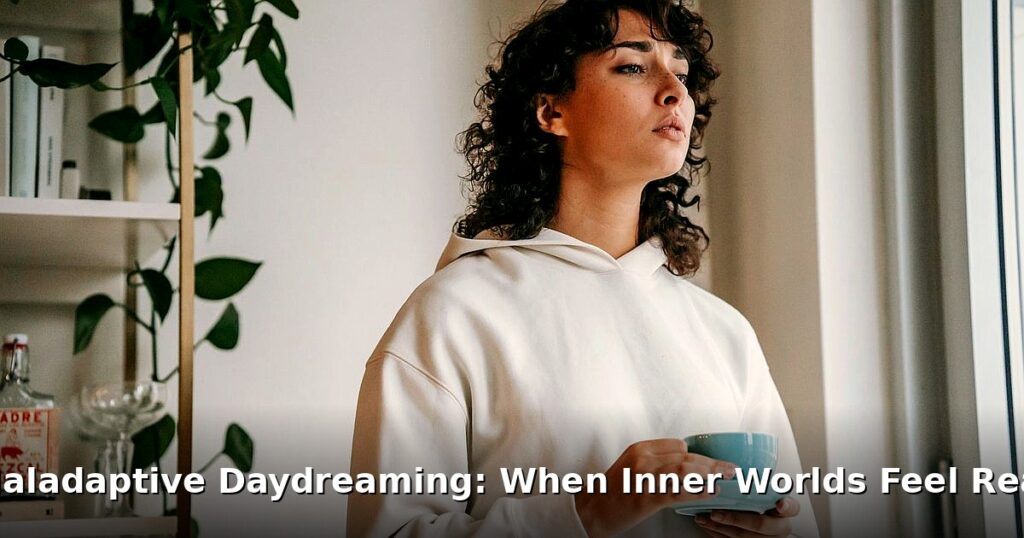

If you’ve been looking into maladaptive daydreaming, imagine waking up one day to a life you’ve built in your mind, a complete existence with love, marriage, and children – only to have it all unravel because a lamp in your living room just didn’t look quite right. That’s the wild, almost unbelievable story of a man who claimed to have lived an entire, rich life within the confines of his own thoughts. For what felt like years, he was a husband, a father, living out a full narrative, until a tiny, misplaced detail snapped him back to a different reality, the one he’d seemingly left behind. The world around him, the one he’d come to know so intimately, began to fracture. A truly unsettling experience, right?
Table of Contents
This isn’t just a fascinating anecdote. It touches on something deeply human: our incredible capacity for an intense imagination and the powerful pull of an immersive inner world. While most of us experience fleeting daydreams, some individuals find themselves almost living a double life, crafting intricate, ongoing stories that feel as real, if not more real, than their actual circumstances. It’s a phenomenon that blurs the lines between what’s happening inside your head and what’s unfolding right in front of you.
The man’s story, while extreme, brings to light a lesser-known but increasingly discussed psychological concept: maladaptive daydreaming. It’s not just zoning out; it’s a profound, often overwhelming engagement with an escapist fantasy that can have significant impacts on a person’s real life. This isn’t your average creative visualization; it’s something much more consuming, something that can hijack your attention and time. Check out our guide on Why Cyclospora Contamination Keeps Returning in Fresh Produce. We covered this in Dietary Sugars: A Central Role in Human Evolution.

what’s Maladaptive Daydreaming?
So, what exactly are we talking about here? Maladaptive daydreaming, a term coined by Professor Eli Somer in 2002, describes extensive, vivid, and narrative-like fantasies that are often triggered by real-world stimuli, like listening to music, watching a movie, or even just being alone. Think of it like directing and starring in your own elaborate, never-ending mental movie.
But here’s the crucial distinction: it’s not just having a powerful imagination. While many creative people enjoy a rich vivid inner world, those who experience maladaptive daydreaming find it incredibly difficult to control or stop these fantasies. They often spend hours lost in these inner narratives, sometimes even physically acting them out through pacing, whispering, or making facial expressions.
The key characteristic that separates it from normal daydreaming or creative storytelling is the distress or impairment it causes in daily life. A normal daydream might be a pleasant escape for a few minutes. Maladaptive daydreaming, however, can lead to neglecting responsibilities, struggling with relationships, poor academic or work performance, and significant feelings of guilt or shame. It’s not just an enjoyable pastime; it’s a compulsion that can feel hard to break, and it often leaves the individual feeling drained rather than refreshed.
Normal Daydreaming vs. Maladaptive Daydreaming
-
Normal Daydreaming:
- Brief and fleeting.
- Easily interrupted.
- Doesn’t interfere with real-world tasks.
- Often a pleasant, temporary mental break.
-
Maladaptive Daydreaming:
- Extensive, lasting for hours.
- Difficult to control or stop.
- Causes significant distress or impairment.
- Often feels compulsive, like an addiction.
- Characterized by complex, narrative-like plots and characters.
Okay, so It’s that last point that really differentiates it. It’s not just random thoughts; it’s an elaborate, ongoing story with consistent characters, settings, and plots. People who experience this often know their “characters” better than some real-life acquaintances. It’s a true escapist fantasy, but one that comes at a cost.
Why Do Some Experience Such Vivid Inner Worlds?
This is where it gets really interesting, and a bit complex. There isn’t one single answer as to why some people develop this intense imagination to the point of maladaptive daydreaming, but researchers have identified several potential underlying factors. Often, it’s seen as a coping mechanism. Think about it: if your real life is stressful, lonely, traumatic, or just plain boring, wouldn’t a vivid inner world be an appealing escape?
Many individuals who report maladaptive daydreaming describe using it to cope with past trauma, chronic loneliness, anxiety, depression, or even just intense boredom. It can become a safe haven, a place where they have control, where they can be the hero, find love, or experience success that feels out of reach in their actual life. Funny enough, it’s a way to self-soothe, to regulate emotions, or to escape overwhelming feelings.
While maladaptive daydreaming isn’t classified as a mental disorder itself in diagnostic manuals like the DSM-5 (though there’s ongoing discussion about it), it frequently co-occurs with other conditions. We often see links to anxiety disorders, depression, and even obsessive-compulsive tendencies. The compulsion to engage in the daydreams, the difficulty stopping, and the distress it causes can certainly echo aspects of OCD. And for those with social anxiety, an inner world where they’re confident and adored can be particularly compelling.
Then there’s the personality aspect. Some people are just naturally more imaginative, more prone to getting lost in thought. For them, the line between healthy creativity and an overwhelming fantasy vs reality can be a bit finer. It’s about how that natural inclination is managed and whether it starts to impinge on their ability to live a fulfilling life in the here and now.

Recognizing the Signs and When to Seek Help for Maladaptive Daydreaming
So, how do you know if your vivid inner world is veering into maladaptive territory? It’s a good question, and one that requires honest self-reflection. Here are some common signs to look out for:
- Spending hours lost in fantasy: You find yourself consistently losing track of time, spending significant portions of your day – sometimes 4-6 hours or more – immersed in your daydreams.
- Strong emotional connection: You feel intense emotions (joy, sadness, anger) tied to your daydream characters and storylines, sometimes more strongly than to real-life events.
- Physical manifestations: You might pace, rock, whisper dialogue, or make facial expressions while daydreaming. It’s almost like acting out parts of your internal narrative without realizing it.
- Difficulty stopping: You try to reduce or stop your daydreaming but find yourself unable to, feeling a strong urge or craving to return to your fantasy world.
- Neglecting responsibilities: Your daydreams frequently cause you to procrastinate on work, school, chores, or social engagements. Big difference.
- Impaired functioning: Your daydreams negatively impact your academic performance, job productivity, personal relationships, or overall quality of life.
- Distress or guilt: You feel ashamed, guilty, or distressed about the amount of time you spend daydreaming, even though you can’t seem to stop.
The key here is the impact. If your fantasy life is causing significant distress or impairing your ability to function in the real world, it’s time to consider reaching out for help. There’s a big difference between enjoying a good book or movie and feeling compelled to escape into your own head for hours on end, neglecting everything else. It’s about when your inner life starts to overshadow and harm your outer life. If you find yourself consistently choosing your fantasy over real-world engagement, and feeling bad about it afterward, that’s a signal.
If these signs resonate with you, or if you suspect your daydreaming disorder is affecting your well-being, please consult a mental health professional. They can help you understand what’s happening and develop strategies to manage it. You don’t have to navigate this alone.
Managing Your Inner World: Practical Strategies
The good news is that if you’re struggling with maladaptive daydreaming, there are strategies that can help you regain control over your inner world and find a healthier balance with your outer life. It’s not about eradicating your imagination – that’s a beautiful thing! – but about managing it so it serves you, rather than consuming you.
Grounding Techniques
Mindfulness and sensory awareness exercises can be incredibly powerful. When you feel yourself slipping into a daydream, try to bring your attention back to your immediate surroundings. Engage your five senses. What do you see, hear, smell, taste, and feel right now? I mean, really focus. Notice the texture of the chair you’re sitting on, the sounds outside your window, the temperature of the air. This helps anchor you in the present moment and can interrupt the pull of the fantasy.
Schedule ‘Daydreaming Time’
This might sound counterintuitive, but for some, setting aside specific, limited times for daydreaming can be helpful. Treat it like a scheduled hobby, not an escape. This creates boundaries and helps prevent the daydreams from spilling over into productive hours. When the urge strikes outside of this time, you can tell yourself, “I’ll save that for my scheduled time later.”
Identify Triggers and Develop Alternatives
Pay attention to what sparks your daydreams. Is it certain music? Stress? Boredom? Loneliness? Once you identify your triggers, you can work on developing alternative, healthier coping mechanisms. If boredom is a trigger, find an engaging real-world activity. If stress is the culprit, try meditation, exercise, or talking to a friend instead of retreating into your mind.
For me, personally, I find that when I’ve a lot of complex thoughts or emotional processing to do, my mind naturally wants to spin elaborate scenarios. It’s like a mental pressure cooker. To keep that from turning into hours of unproductive mental wandering, I’ve found journaling to be a lifesaver. Sitting down and writing out my thoughts, feelings, and even hypothetical scenarios on paper helps me process them in a structured way. It keeps me connected to my ‘real’ to-do list by offloading the mental clutter that could otherwise build up and draw me into an extended daydream. Funny enough, it’s a way of acknowledging my intense imagination without letting it run wild.
Remember, it’s about finding a balance. Your imagination is a gift, a source of creativity and joy. The goal isn’t to shut it down, but to harness its power so that it enhances your life, rather than detracts from it. If you’re struggling to find that balance, seeking professional help is a brave and important step. You deserve to live a full and present life, both inside and outside your mind.
Frequently Asked Questions
Q: Is maladaptive daydreaming a recognized mental disorder?
A: Currently, maladaptive daydreaming isn’t formally recognized in the DSM-5 as a distinct mental disorder. However, it’s an area of ongoing research and clinical interest, and many mental health professionals acknowledge its impact on individuals’ lives.
Q: How is maladaptive daydreaming different from normal daydreaming?
A: Normal daydreaming is usually brief, less immersive, and doesn’t interfere with daily life. Maladaptive daydreaming is extensive, highly vivid, difficult to control, and often causes distress or impairs a person’s ability to function in the real world.
Q: Can therapy help with maladaptive daydreaming?
Fair warning: A: Yes, therapy can be beneficial. Cognitive Behavioral Therapy (CBT) or other therapeutic approaches can help individuals understand the triggers for their daydreams, develop coping strategies, and improve their ability to focus on real-world tasks and relationships.
Q: Are there any medications for maladaptive daydreaming?
A: There are no specific medications for maladaptive daydreaming itself. But, if it co-occurs with other conditions like anxiety, depression, or OCD, medications for those underlying conditions might be prescribed, which could indirectly help manage the urge to daydream maladaptively.