
Ever watched a rocket launch and wondered why do rockets curve instead of blasting straight into the sky? I know I’ve. Seems counterintuitive, right? You want to go up, so… go up! Well, turns out there’s a lot more to it than meets the eye. It’s not as simple as pointing and shooting. And the answer lies in physics, efficiency, and a little thing called gravity.
Table of Contents
The Straight-Up Myth: Why Vertical Ascent Fails
Okay, let’s bust this myth right away. Imagine a rocket stubbornly pushing straight up. What’s wrong with that picture? Plenty, actually. For starters, it’s an incredible waste of fuel. You’re fighting gravity head-on for a prolonged period without gaining any of the horizontal velocity needed to actually achieve orbit. Think of it like running on a treadmill at max incline – you’re expending a ton of energy, but not going anywhere.
Plus, a purely vertical ascent completely ignores the free ride Earth offers. Our planet’s spinning, and launching in the direction of rotation gives a rocket a significant speed boost right off the bat. Why would you skip that? It’s like turning down a head start in a race. Not smart. Check out our guide on Green Glowing Mystery? Identifying & Fixing This Home Issue. We covered this in Lucky Earth? Why We Haven’t Found Other Civilizations.
And then there’s the atmosphere. Rockets need to pick up speed, but doing so at low altitudes where the air is thickest creates massive drag. It’s like trying to sprint through molasses. Drag not only slows you down, but also generates heat, potentially damaging the rocket. The longer you linger in the lower atmosphere, the worse it gets. Not great.

Gravity Turn Explained: How Rockets Efficiently Curve
Enter the gravity turn, a beautiful and efficient maneuver that takes advantage of, well, gravity! Instead of fighting gravity, rockets use it to their advantage to gradually alter their trajectory. It’s kind of like a controlled fall, but with thrust. The rocket begins by ascending vertically for a short period to clear the launchpad and the densest part of the atmosphere. Then, it gently tilts over. This tilt allows gravity to gradually pull the rocket towards a more horizontal path.
By curving through the atmosphere, a rocket spends less time fighting drag at low speeds. This is a huge win for rocket fuel efficiency. Fuel saved translates directly into increased payload capacity or the ability to reach higher orbits. Basically, it’s getting more bang for your buck (or, you know, more satellite for your fuel).
The gravity turn also minimizes the need for active steering. Constantly firing thrusters to adjust course eats up even more fuel. By letting gravity do some of the work, rockets can conserve fuel for the really important part: achieving orbital velocity.
The Physics Behind the Curve: Angles and Velocity
So, what’s the magic behind the curve? It all comes down to angles and velocity. The ideal angle of attack (the angle between the rocket’s nose and its direction of motion) is crucial for maximizing thrust. Too steep, and you’re fighting gravity too much. Too shallow, and you risk burning up in the atmosphere. Finding that sweet spot is key.
The goal is to balance horizontal and vertical velocity. Vertical velocity gets you away from Earth, while horizontal velocity keeps you in orbit. As the rocket curves, it gradually converts vertical velocity into horizontal velocity. Think of it like swinging a ball on a string – you need both upward and sideways motion to keep it circling.
What surprised me was that Calculating the perfect launch trajectory involves some pretty complex math, considering factors like Earth’s rotation, atmospheric density, and the rocket’s thrust-to-weight ratio. But the basic idea is to find the path that gets the rocket to its desired orbit with the least amount of fuel expenditure. It’s a constant balancing act.
Why Do Rockets Curve? It’s All About Orbit
Here’s what most people miss: Ultimately, why do rockets curve? Because orbit isn’t just about going up; it’s about going around. To achieve a stable orbit, a rocket needs to reach a specific horizontal velocity at a specific altitude. Without that horizontal speed, gravity would simply pull the rocket back down to Earth. Remember that old saying, “What goes up must come down”? Well, orbit is the exception, thanks to sideways motion.
Most orbits are elliptical, not perfectly circular. Even the International Space Station has a slightly elliptical orbit. The shape of the ellipse depends on the rocket’s velocity and altitude at the point of orbital insertion. Understanding elliptical orbits is crucial for planning mission trajectories and ensuring that satellites stay where they’re supposed to.
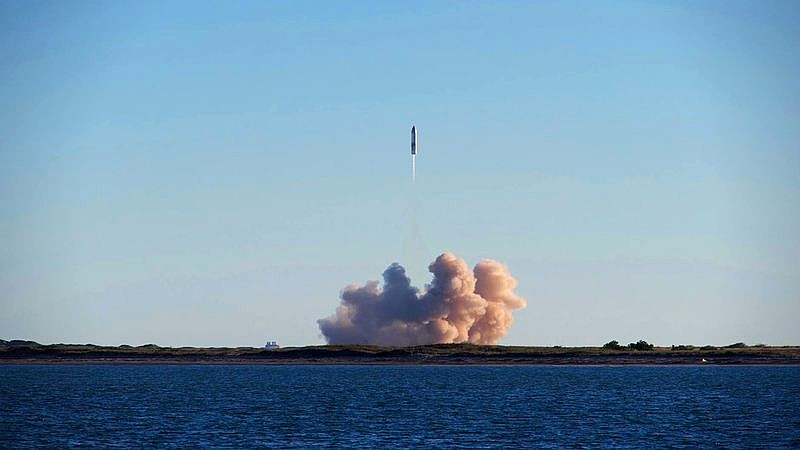
And, as mentioned before, matching Earth’s rotation is a huge help. By launching eastward (in the same direction as the Earth’s spin), rockets get a free boost of several hundred miles per hour. Every little bit counts when you’re trying to escape Earth’s gravity well. Launching westward, on the other hand? That’s just making things harder on yourself.
The Role of Computers and Guidance Systems
While the gravity turn is a naturally efficient maneuver, it’s not entirely passive. Modern rockets are equipped with sophisticated computers and guidance systems that constantly monitor and adjust the trajectory. These systems use sensors to track the rocket’s position, velocity, and attitude. They also take into account external factors like wind and atmospheric conditions. Talk about multi-tasking!
Real-time adjustments are essential for compensating for unexpected events. Wind shear, for example, can exert significant forces on the rocket, potentially throwing it off course. The guidance system detects these disturbances and fires small thrusters to correct the trajectory. It’s like having an autopilot that’s constantly making tiny adjustments to keep you on track. These onboard systems are a critical part of ensuring accurate orbital insertion, delivering payloads to their precise destinations.
The initial rocket launch trajectory is pre-programmed, but the computer can override that based on real-time data. It will adjust the engine’s gimbal (the direction it’s pointing) to steer the rocket. This is all managed automatically, with engineers monitoring everything from the ground.
Common Rocket Launch Mistakes (and How to Avoid Them)
Even with all the technology, rocket launches are still incredibly complex and risky. Plenty can go wrong. One common mistake is overcorrecting for gravity. Trying to force the rocket onto a perfectly vertical path can waste fuel and destabilize the vehicle. It’s better to let gravity do its thing and make gradual adjustments as needed.
Here’s what most people miss: Ignoring wind shear is another big no-no. Strong winds can rip a rocket apart, especially during the early stages of flight. Launch teams carefully monitor weather conditions and may delay a launch if the winds are too strong. NASA and other space agencies have strict weather criteria for launch. Not even close.
Fuel mismanagement can also lead to disaster. Running out of fuel before reaching orbit is obviously not ideal. Careful planning and monitoring of fuel consumption are essential for a successful mission. Better to have a little extra than not enough!
The truth is, Here are a few things that can cause launch failure:
- Overcorrecting for gravity
- Ignoring wind shear
- Fuel mismanagement
- Hardware malfunction (engines, guidance systems, etc.)
- Software glitches
Avoiding these pitfalls requires a combination of careful planning, advanced technology, and a healthy dose of caution. Rocket science isn’t easy, folks.
Frequently Asked Questions
Why don’t rockets just go straight up?
Going straight up wastes fuel fighting gravity without gaining horizontal velocity needed for orbit. A curved trajectory, using a gravity turn, is much more efficient. Not ideal.
what’s a gravity turn?
A gravity turn is a maneuver where the rocket gradually tilts over, using gravity to help change its direction. This minimizes the need to actively steer, saving fuel. It also reduces drag.
How does curving help a rocket reach orbit?
Orbit requires high horizontal velocity. By curving, the rocket gains this horizontal speed while also lifting away from Earth. It’s all about achieving the right balance for optimal space travel.
Is the curve pre-programmed, or adjusted during flight?
Here’s what most people miss: The initial trajectory is pre-programmed, but onboard computers constantly make adjustments based on sensor data and atmospheric conditions to ensure optimal performance. So, it’s both! Initial plan plus real-time corrections.
Can a rocket launch straight up?
While possible in theory, launching straight up would be extremely inefficient and impractical for most orbital missions due to fuel constraints and atmospheric drag. It’s technically possible, but wildly inefficient. Think of it as taking the long way around—a very long way around.
So, next time you see a rocket launch, remember that graceful curve isn’t just for show. It’s a carefully orchestrated dance between thrust, gravity, and the laws of physics. It’s how we reach for the stars, efficiently and (hopefully) safely. And the next time I watch a launch, I’ll remember how all those factors play into what looks like a simple arc across the sky. It’s a pretty cool thought.
Want to learn more about why do rockets curve? Check out the ESA website for more information!