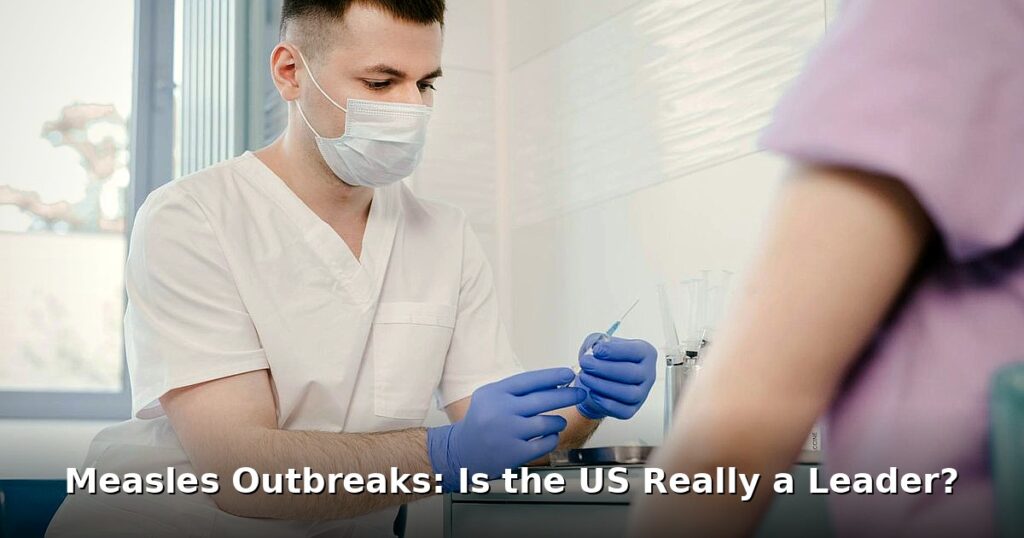

Measles. Just the word probably conjures up images of grainy, old-timey photos and stories from your grandparents. Something largely eradicated, right? Well, not exactly. While the U.S. has made strides, claims about our superior performance in limiting measles outbreaks compared to the rest of the world need a closer look. Because misinformation spreads faster than, well, measles.
Table of Contents
Understanding Measles and Its Impact
Okay, first things first. What is measles? It’s a highly contagious viral disease that spreads through the air when an infected person coughs or sneezes. Seriously contagious. Like, if one person has it, 90% of the people close to that person who aren’t immune will also become infected.
Symptoms? Think fever, cough, runny nose, and those tell-tale red, watery eyes. Then comes the rash – tiny red spots that start on the face and spread downwards. Not fun. But here’s the kicker: measles isn’t just a bad rash. It can lead to serious complications, especially in young children. Pneumonia, encephalitis (brain swelling), and even death are real risks. Check out our guide on Bread and Weight Gain: Why It Happens (According to Science). We covered this in Unhealthy Foods That Are OK: 12 Dietitian-Approved Picks.
Why is measles still a global health concern? Because it preys on the vulnerable. Areas with low vaccination rates are prime breeding grounds. And in a globally connected world, a single outbreak can quickly spread across borders. It can overwhelm healthcare systems in developing nations, and it’s nothing to sneeze at here either.
RFK Jr.’s Claim: US Performance on Measles Outbreaks
Let’s dissect the claim: Is the US really doing better at “limiting outbreaks” than the rest of the world? What does “limiting outbreaks” even mean? Does it refer to the frequency, the size, or the severity of the outbreaks?
Looking at US measles statistics over the past decade, we’ve seen periods of relative calm punctuated by outbreaks. 2019 was a particularly bad year, with over 1,200 cases reported – the highest number since 1992. That said, the US has public health infrastructure, and outbreaks are, generally, contained.
Compared to other developed nations with strong healthcare systems, the US fares reasonably well. But several countries, particularly in Europe, have achieved measles elimination status, meaning sustained interruption of endemic transmission. We’re not quite there yet.
Measles Vaccination Rates: A Crucial Factor
Here’s the deal: vaccines work. The MMR vaccine is safe and effective. But its success hinges on high measles vaccination rates. It’s all about herd immunity – protecting the entire community by ensuring that a critical mass of people are immune. When enough people are vaccinated, it’s difficult for the disease to spread, shielding even those who can’t be vaccinated (like infants too young to receive the vaccine or individuals with certain medical conditions). Sounds good, right?
So, are US vaccination rates high enough? Overall, they’re pretty good, but there are pockets of concern. Some communities, often driven by misinformation or philosophical beliefs, have significantly lower rates. These areas become hotspots for outbreaks. Not great.
Globally, vaccination coverage varies widely. Wealthier nations generally have higher rates, but even they can experience setbacks. Lower-income countries often struggle with access to vaccines and face logistical challenges in reaching remote populations. That’s when you see the big problems.
Comparing Measles Elimination Efforts Globally
The World Health Organization (WHO) has a global measles elimination program with ambitious goals. The aim? To eradicate measles worldwide. It’s a huge undertaking, requiring coordinated efforts from countries around the globe. Learn more about their strategies here. Measles elimination efforts have significantly reduced cases and deaths globally.
And there are success stories. Several countries, including many in the Americas, have officially eliminated measles. They’ve achieved this through consistent, high vaccination coverage and strong surveillance systems to quickly detect and respond to any imported cases. It requires vigilance.
But challenges remain. Vaccine hesitancy, logistical hurdles, and political instability can all derail progress. Some regions continue to struggle with persistent outbreaks, highlighting the need for tailored interventions and increased resources.
The Reality of Measles Outbreaks in the US
Let’s bring it back home. Recent measles outbreaks in the US serve as a stark reminder that the threat is still real. These outbreaks are often linked to unvaccinated individuals and communities. Think about it. One infected traveler visits an area with low vaccination rates, and suddenly you have an outbreak.
Certain areas in the US, often those with strong anti-vaccine sentiment, have demonstrably lower vaccination rates and, consequently, higher risk. These communities are particularly vulnerable. It’s a localized problem with potentially widespread consequences.
So, what can you do to protect yourself and your community? Get vaccinated! Ensure your children are vaccinated on schedule. And spread the word about vaccination. Education is key to combating misinformation and promoting public health. It’s that simple.
Consult Your Doctor for Personalized Advice
What surprised me was that This is super important: talk to your doctor. Discuss your vaccination status and any concerns you may have. They can provide personalized advice based on your individual health history and risk factors. They know your situation best.
What surprised me was that Let’s bust some myths about the MMR vaccine effectiveness. The measles vaccine does not cause autism. This has been thoroughly debunked by numerous scientific studies. Seriously, it’s been put to bed. Don’t let misinformation cloud your judgment. Remember that initial study that sparked the controversy? Retracted. Discredited. False.
Okay, so Where can you find reliable information about measles and vaccination? The Centers for Disease Control and Prevention (CDC) is a great place to start. They offer comprehensive information about measles, vaccination, and outbreak prevention. Your local health department is another valuable resource. And of course, your doctor is your best source for personalized guidance.
My own routine? I get my flu shot every year, and I made sure my kids were fully vaccinated on the recommended schedule. I trust the science, and I trust my doctor. I think it’s the responsible thing to do.
Frequently Asked Questions
Is measles a serious disease?
Yes, measles can be very serious, especially for young children. It can lead to complications like pneumonia, encephalitis (brain swelling), and even death. Vaccination is the best way to prevent measles.
How effective is the measles vaccine?
The MMR vaccine, which protects against measles, mumps, and rubella, is highly effective. Two doses provide about 97% protection against measles. Immunity is long-lasting.
What are the symptoms of measles?
Measles symptoms typically start with fever, cough, runny nose, and red, watery eyes. A rash of tiny, red spots then develops, starting on the face and spreading to the rest of the body.
Why are measles outbreaks still happening?
Measles outbreaks occur when vaccination rates drop below the level needed to maintain herd immunity. This can happen in communities with vaccine hesitancy or where access to vaccines is limited. Not ideal.
Where can I find reliable information about measles and vaccination?
You can find reliable information about measles and vaccination from the CDC (Centers for Disease Control and Prevention), the WHO (World Health Organization), and your healthcare provider. Always consult a doctor for personalized advice.
So, are we doing a stellar job limiting measles cases US vs world? It’s complicated. We have a strong public health system, but we also have pockets of vulnerability. The key is to maintain high vaccination rates, combat misinformation, and remain vigilant. Our health, and the health of our communities, depends on it. Don’t underestimate measles. It’s not a disease of the past. It’s a present danger that requires our attention and action.