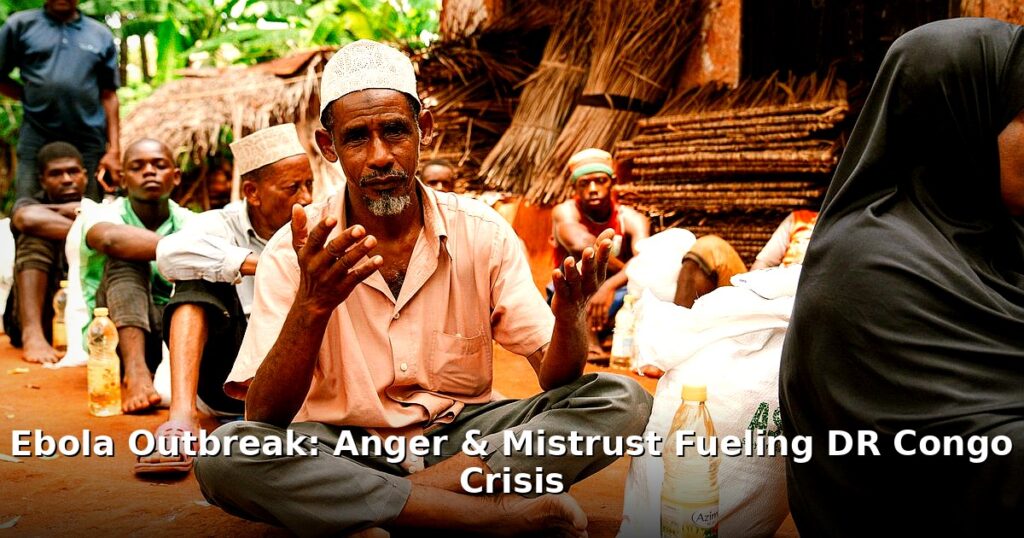

The news coming out of the Democratic Republic of Congo has been tough to hear, hasn’t it? Another Ebola outbreak, and it feels like a familiar, heartbreaking story. But what’s happening right now in the eastern part of the country, specifically with the ongoing Ebola DR Congo response, is different. It’s got layers of complexity that make it incredibly challenging, perhaps more so than any other outbreak we’ve seen in recent memory. And it’s not just about the virus itself; it’s about people, trust, and a deeply troubled region.
Table of Contents
The Current Landscape: Why Ebola in DR Congo is Different
We’ve all heard about Ebola. The terrifying hemorrhagic fever, the rapid spread, the high fatality rates. But this particular outbreak in eastern DR Congo isn’t playing by the old rules. It’s unfolding in active conflict zones, areas where various armed groups operate, making it incredibly dangerous for aid workers to even get in, let alone do their jobs effectively. Imagine trying to conduct contact tracing or set up a treatment center when gunshots are a regular occurrence. Go figure.
This isn’t just a health crisis; it’s a humanitarian catastrophe wrapped in decades of political instability and violence. People there have endured so much. They’ve seen their homes destroyed, their families displaced, and their lives constantly threatened. So, when a new threat like Ebola emerges, their reaction isn’t always what we, from the outside, might expect. Check out our guide on Measles Outbreak in Bangladesh: Understanding the Tragic Child Deaths. We covered this in Ebola Outbreaks in DRC: Understanding Vaccine & Treatment Access.
Previous Ebola responses, while certainly challenging, often took place in more stable environments. Think of the 2014 West Africa outbreak. Horrific, yes, but the infrastructure, while strained, was more intact. In eastern Congo, you’re starting from a place of deep societal fracture. It’s like trying to build a house on quicksand. Everything is shifting, uncertain. And that instability breeds a profound, systemic mistrust.
The truth is,

Anger and Suspicion: The Human Element Hinderings Response
This is where it gets really complicated, and frankly, heartbreaking. The people living in these affected areas have a deep-seated mistrust, not just towards the government, which they often perceive as corrupt or absent, but also towards foreign aid organizations. And who can blame them, sometimes?
They’ve witnessed decades of interventions that haven’t fundamentally changed their plight. They see large international organizations come in, often with different customs and languages, sometimes appearing to prioritize the disease over their immediate needs like security or food. This isn’t to say these organizations aren’t doing vital work, but the optics and the historical context are tough.
Rumors and misinformation, fueled by fear and pre-existing grievances, spread like wildfire. I mean, think about it: if you don’t trust the people telling you about a mysterious, deadly illness, why would you believe their advice? Stories about Ebola being a ploy to make money, or even a foreign-introduced weapon, gain traction. People reject medical intervention, fearing they’ll be experimented on or simply taken away from their families to die in isolation.
Local grievances run deep. There’s a pervasive perception of neglect, exploitation of resources, and unequal distribution of whatever aid does come in. When people feel ignored or taken advantage of, their default setting becomes suspicion. And that suspicion directly impacts public health efforts. Vaccination campaigns falter because people refuse the vaccine. Safe burial practices, designed to stop the spread from highly infectious deceased bodies, are resisted, often violently, because families want to perform traditional rituals. It’s a tragic clash of cultures and intentions, all rooted in a lack of trust.
The Ripple Effect: Violence Against Healthcare Workers
The mistrust and anger have escalated into something truly horrific: direct violence against healthcare workers and Ebola treatment centers. We’ve seen documented attacks – facilities burned, medical staff assaulted, even killed. Can you imagine showing up every day to save lives, knowing you might literally be putting your own life on the line, not just from the virus, but from the very people you’re trying to help?
This violence has a devastating psychological toll on responders. These are incredibly brave individuals, many of them local Congolese, who are trying to do vital, life-saving work. But constant threats, seeing their colleagues attacked, and working in such a hostile environment leads to burnout, trauma, and a significant drop in morale. And when the responders are traumatized, their ability to perform their duties effectively diminishes. It’s just human nature. Seriously.
This violence doesn’t just hurt the individuals; it exacerbates the entire crisis. Attacks disrupt containment strategies. When a treatment center is forced to close or relocate, contact tracing stops, patients flee, and the virus gains an opportunity to spread unchecked. People become even more afraid to seek help, knowing that going to an Ebola center might put them in harm’s way, not from the disease, but from their own community members.
Navigating the Mistrust: Strategies for a Better Path Forward in Ebola DR Congo Response
So, what can be done? It’s not an easy fix, not by a long shot. But there are crucial strategies that, while challenging, offer a glimmer of hope. The most important, in my opinion, is genuine community engagement. This means more than just holding a meeting; it means truly listening. It means understanding the community’s fears, their grievances, and their priorities, even if they seem irrational to outsiders. It’s about building trust from the ground up, one conversation at a time.
Empowering local leaders and traditional healers is absolutely vital. These are the people the community already trusts. If a respected village elder or a traditional healer advocates for vaccination or safe burial practices, that message carries infinitely more weight than one from an unknown foreign doctor. They can bridge the cultural gap, translate complex medical information into understandable terms, and address fears in a way that resonates locally. Pretty wild, right?
Transparent communication is also key. No more arriving with a ready-made solution and expecting compliance. It means explaining why certain measures are necessary, being honest about what’s known and what isn’t, and actively dispelling misinformation. And it has to be done with culturally sensitive approaches. What works in one village might not work in another, even a few miles away. It requires flexibility and a deep respect for local customs.
Fair warning: My personal belief, after reading so much about these kinds of health crises, is that health initiatives thrive when they truly partner with the people they serve, rather than imposing solutions. It’s a shift from “we know best” to “let’s figure this out together.” It’s slower, messier, but ultimately, it’s more sustainable and respectful. And in a context as complex as the Ebola eastern Congo outbreak, it’s the only way forward.
Beyond the Outbreak: Long-Term Implications for Eastern DR Congo
Even if this particular Ebola outbreak is eventually brought under control—and we all hope it will be—the lasting impact on eastern DR Congo will be profound. The public health infrastructure, already fragile, takes another hit. Trust erodes further. And the social fabric of communities, already strained by conflict, becomes even more fragmented.
This crisis underscores the urgent need for sustained investment, not just in emergency health responses, but in foundational elements: healthcare, education, and economic development. You can’t just parachute in with an Ebola vaccine and expect a healthy population if people don’t have clean water, food security, or access to basic medical care for other illnesses.
Ultimately, addressing the root causes of instability and poverty in the region is essential for building resilience against future health crises. Conflict, lack of governance, and economic hardship create the perfect storm for diseases like Ebola to thrive. Until those fundamental issues are tackled, health emergencies will continue to be recurring nightmares. It’s a holistic problem that requires holistic solutions.
It’s a truly daunting situation, and one that requires immense patience, understanding, and a willingness to learn from past mistakes. The people of DR Congo deserve nothing less. they’re not just victims of a virus; they’re survivors navigating a world that often feels stacked against them. And our role, as a global community, is to support them in a way that truly helps, that builds up, rather than inadvertently causing more harm.
Frequently Asked Questions
Q: Why is the Ebola outbreak in DR Congo particularly challenging?
A: The current Ebola outbreak in eastern DR Congo is complicated by ongoing conflict, widespread community mistrust in authorities and aid groups, and persistent misinformation, all of which hinder effective public health responses and safe practices. This combination of factors makes controlling the spread of the virus exceptionally difficult.
Q: How does community mistrust affect Ebola response efforts?
A: Mistrust leads to significant resistance against essential public health interventions. This includes people refusing vaccination campaigns, rejecting safe and dignified burial practices, and even resorting to violence against healthcare workers. Such resistance makes it incredibly difficult to track contacts, isolate cases, and ultimately contain the virus’s spread within affected communities.
Q: What are aid organizations doing to address anger and suspicion?
A: Aid organizations are increasingly focusing on community engagement. This involves working closely with local leaders, listening to community grievances, and trying to understand their perspectives and fears. they’re also prioritizing transparent communication and implementing culturally sensitive approaches to build trust and effectively counter the spread of misinformation.
Q: Is the Ebola virus still a threat in DR Congo?
A: Yes, Ebola remains a serious public health threat in parts of DR Congo, with ongoing outbreaks posing significant challenges. The country has faced multiple outbreaks over the years, and vigilance, strong public health measures, and sustained community cooperation are all essential for effective control and preventing further spread.