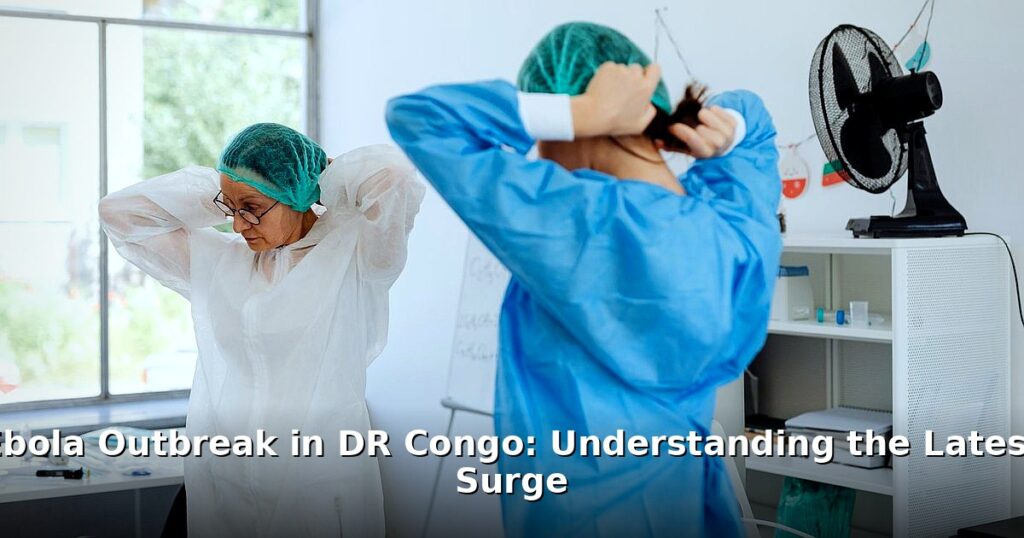

It’s hard to wrap your head around some numbers. Especially when those numbers represent human lives, shattered families, and communities under siege. The situation with Ebola in DR Congo is one of those times. It’s a relentless, heartbreaking struggle that continues to unfold, far from the daily news cycles for many of us, but devastatingly real for those living through it.
Table of Contents
As I pore over the latest reports, a familiar sense of urgency washes over me. The figures are stark: over 3,200 confirmed and probable cases of Ebola virus disease, and a tragic death toll exceeding 1,405. These aren’t just statistics; they’re the embodiment of a profound human crisis. The sheer scale of this particular outbreak in the Democratic Republic of Congo is really sobering, making it the second-largest Ebola epidemic ever recorded.
The Latest Update on Ebola in DR Congo
The current Ebola outbreak, primarily affecting the eastern provinces of North Kivu and Ituri, has been a brutal test for public health efforts. We’re talking about a region already grappling with decades of conflict, displacement, and extreme poverty. The virus doesn’t respect borders, of course, and while the majority of cases remain within DR Congo, there have been concerning spillover cases into neighboring Uganda, sparking fears of wider regional spread. Check out our guide on Ebola Crisis Worsens: Health Workers Strike Amidst Rising Cases. We covered this in Boost Your Protein: 10 Dietitian-Approved Foods for Muscle & More.
Comparing this to past outbreaks really puts things into perspective. The infamous West Africa outbreak from 2014-2016, which resulted in over 11,000 deaths, looms large in our collective memory. While the current DR Congo health crisis hasn’t reached those devastating numbers, its protracted nature and the complex environment in which it’s unfolding make it uniquely challenging. We’re seeing a sustained battle, day in and day out, against a cunning and deadly adversary.
And let’s be clear, 3,200 cases and 1,405 deaths in less than two years? That’s not just a health crisis; it’s a humanitarian catastrophe.
Understanding Ebola Virus Disease (EVD)
For those unfamiliar, let’s quickly revisit what we know about Ebola. It’s a severe, often fatal illness caused by the Ebola virus. And it’s part of the filovirus family, and frankly, it’s one of the scarier viruses out there. But understanding how it works is crucial for prevention and containment.
Ebola isn’t airborne, which is a key distinction and a huge relief. It spreads through direct contact with the blood, bodily fluids (like urine, feces, saliva, sweat, vomit, breast milk, semen, and vaginal fluids), and tissues of infected people or animals. This is why careful handling of patients and safe burial practices are so critical. Contaminated objects, like needles or medical equipment, can also transmit the virus. So, no casual contact spread here. Big difference.
The symptoms of Ebola can appear anywhere from 2 to 21 days after exposure, though typically it’s between 8 and 10 days. This incubation period is a major challenge for detection and contact tracing. Imagine someone feeling perfectly fine, then suddenly developing a fever, severe headache, muscle pain, weakness, and fatigue. These initial symptoms are often non-specific, easily mistaken for malaria or typhoid, which are rampant in the region.
As the disease progresses, things get much worse. Patients often experience vomiting, diarrhea, rash, impaired kidney and liver function, and in some cases, both internal and external bleeding. It’s brutal. The body essentially starts shutting down. This rapid progression and the severity of symptoms are what make Ebola so terrifying and difficult to manage without specialized medical care.
Challenges in Containing Ebola in DR Congo
Now, if dealing with the virus itself wasn’t enough, the response to the Ebola virus latest news in DR Congo has been plagued by a confluence of incredibly difficult circumstances. It’s not just a medical problem; it’s a deeply entrenched socio-political one.
- Security Issues and Conflict: Eastern DR Congo is an active conflict zone. Numerous armed groups operate there, leading to instability and violence. Health workers, often seen as outsiders or even targets, face immense risks. Attacks on treatment centers, personnel, and infrastructure have become distressingly common, forcing pauses in critical vaccination and treatment efforts. It’s hard enough to fight a virus; it’s nearly impossible when you’re also dodging bullets.
- Community Mistrust and Resistance: This is a massive hurdle. Decades of instability, unfulfilled promises from authorities, and past medical interventions that weren’t always culturally sensitive have bred deep-seated mistrust. Misinformation and rumors spread rapidly, leading many to believe Ebola is a hoax, a political tool, or even a curse. This resistance means people hide sick relatives, refuse treatment, and reject safe burial practices.
- Logistical Hurdles: The region’s infrastructure is incredibly poor. Roads are often non-existent or impassable, especially during the rainy season. This makes transporting vaccines, medical supplies, and personnel to remote areas a monumental task. Cold chain requirements for vaccines add another layer of complexity. Getting vital resources to where they’re needed most is a constant battle against geography.
- Cultural Practices: Traditional burial rites, which often involve close physical contact with the deceased, are a significant driver of transmission. In a disease that spreads through bodily fluids, these practices, while deeply meaningful, unfortunately create perfect conditions for the virus to jump from the dead to the living. Educating communities about safe, dignified burial alternatives, while respecting cultural sensitivities, is a delicate but absolutely critical part of Ebola prevention measures.
The Global and Local Response to Ebola in DR Congo
Despite these enormous challenges, the global health community and local responders are working tirelessly. Organizations like the World Health Organization (WHO), Doctors Without Borders (MSF), UNICEF, and countless local NGOs are on the ground, literally putting their lives on the line. Their efforts range from clinical care and contact tracing to community engagement and vaccine campaigns. Pretty wild, right?
One of the true bright spots in this grim picture is the effectiveness of the experimental vaccine, rVSV-ZEBOV. It’s been a real . Administered through a “ring vaccination” strategy (vaccinating contacts of confirmed cases and their contacts, as well as frontline workers), it has shown remarkable efficacy in preventing infection and limiting spread. This isn’t just a shot in the arm; it’s a vital shield against the virus. Experimental treatments, like monoclonal antibody therapies, are also showing promising results in improving survival rates for those who do contract the disease.
Community engagement strategies are evolving, too. Health workers are increasingly trying to involve local leaders, elders, and women’s groups to build trust and tailor public health messages to local contexts. It’s slow, painstaking work, but it’s essential. We’ve learned that a top-down approach just doesn’t work here. You have to meet people where they’re, listen to their concerns, and collaborate. And honestly, it’s about much more than just the virus; it’s about rebuilding trust in systems that have historically failed them.
The impact on local healthcare systems is profound. Already fragile, they’re stretched to their breaking point. Resources are diverted, personnel are exhausted, and basic health services often suffer. It’s a vicious cycle where Ebola exacerbates existing vulnerabilities, hindering the overall DR Congo health crisis response and making it one of the most pressing global health emergencies.
Protecting Yourself and Understanding Risk
Okay, so after all this heavy information, I know some of you might be feeling a bit uneasy. But it’s really important to put the risk into perspective. For individuals living outside the affected regions, the risk of contracting Ebola remains incredibly low. Unless you’re traveling to the specific outbreak zones and engaging in direct contact with sick individuals or their bodily fluids, your personal risk is negligible. This isn’t a global airborne pandemic. Not even close.
But that doesn’t mean we should be complacent about misinformation. In today’s interconnected world, rumors spread faster than viruses sometimes. Always, always, always rely on reputable sources for information about global health emergencies. I personally make it a habit to cross-reference health news from at least three authoritative sources – like the WHO, the CDC (Centers for Disease Control and Prevention), or major university research centers. It helps me get a balanced, evidence-based picture and avoids getting swept up in panic.
General hygiene practices, like regular handwashing with soap and water, are always good habits to maintain, regardless of Ebola. And if you’re considering travel to any region, always check the latest travel advisories from your government’s health or foreign affairs departments. They’ll have the most up-to-date, relevant information.
The situation in DR Congo is a stark reminder of our interconnectedness and the persistent threats posed by infectious diseases. It’s a complex battle, fought on many fronts—medical, social, and political. While the immediate risk to most of us is low, understanding the challenges and supporting the ongoing efforts is a critical part of being a globally aware citizen. We can’t just look away.
Frequently Asked Questions
Q: what’s Ebola and how does it spread?
A: Ebola is a severe, often fatal illness caused by the Ebola virus. It spreads through direct contact with blood, bodily fluids, and tissues of infected people or animals, or contaminated objects. it’s not airborne.
Q: Are there vaccines or treatments for Ebola?
A: Yes, there’s an effective vaccine (rVSV-ZEBOV) being used to protect frontline workers and contacts of confirmed cases. Several experimental treatments are also showing promising results in clinical trials.
Q: Why is it so difficult to control Ebola in DR Congo?
A: Controlling the outbreak in DR Congo faces significant hurdles including ongoing armed conflict, deep community mistrust, logistical challenges in reaching remote areas, and traditional burial practices that can spread the virus.
Q: Is there a risk of Ebola spreading globally from DR Congo?
A: The risk of global spread is considered low due to international surveillance and response efforts, including contact tracing and travel screening. However, vigilance is always necessary.