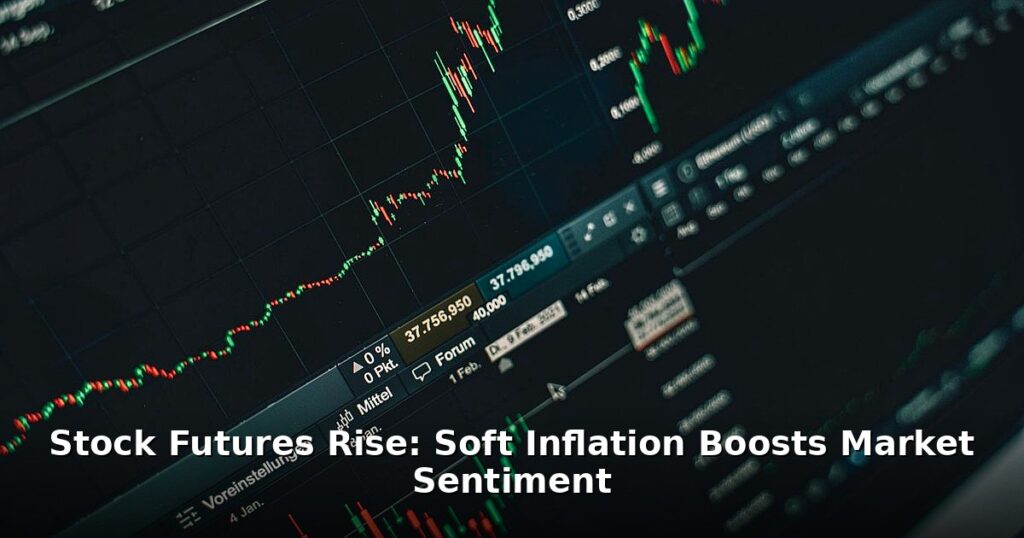

It’s always a big day when the latest inflation numbers drop. And recently, we saw something that got a lot of traders buzzing: a soft inflation reading that sent stock futures rise across the board. If you’ve ever wondered why a seemingly abstract economic number can have such an immediate and dramatic impact on your investment portfolio, you’re in good company. Let’s break down what’s happening and why.
Table of Contents
This isn’t just about good vibes; there’s a direct, measurable chain reaction at play. Understanding this connection is key to deciphering market movements and making informed decisions, or at least, not panicking when the headlines scream.
The Inflation Report: What ‘Soft’ Really Means for Markets
Here’s what most people miss: When we talk about a “soft” inflation reading, what we’re really digging into is the latest Consumer Price Index (CPI) or Personal Consumption Expenditures (PCE) data. These are the big ones. The CPI measures the average change over time in the prices paid by urban consumers for a market basket of consumer goods and services. PCE, on the other hand, tracks what people are actually spending their money on, and it’s the Federal Reserve’s preferred gauge for inflation because it covers a broader range of goods and services and accounts for shifts in consumer behavior. Check out our guide on Chipotle Opens First Restaurant in Mexico: A Bold Market Entry. We covered this in Aldi’s Budget Takeover: How $4 Almond Butter is Disrupting US Groceries.
The truth is, How are these numbers actually calculated? Well, government agencies like the Bureau of Labor Statistics (for CPI) collect thousands of prices for hundreds of items each month. Think groceries, gas, rent, medical care, clothing – the whole nine yards. They then compare these prices to previous periods to see if they’ve gone up, down, or stayed flat. Pretty wild, right?
The truth is, A ‘soft’ reading means that these prices either increased less than anticipated, or in some cases, even decreased. Conversely, a ‘hot’ reading would indicate prices rising faster than expected. The Fed’s sweet spot, their target inflation rate, is generally around 2%. Why 2%? Because a little bit of inflation is actually healthy for an economy; it encourages spending and investment. Too high, and your money loses value. Too low (or deflation), and people might delay purchases expecting prices to fall further, which can cripple economic activity.
So, when we see a soft inflation reading, it suggests that the economy might be cooling down a bit, but not necessarily crashing. It’s often interpreted as a sign that the Fed’s past actions (like raising interest rates) are working as intended, without pushing us into a deep recession.

Why Stock Futures Rise on Soft Inflation News
This is where the rubber meets the road for investors. When we get news of softer inflation, the market reaction inflation data is almost always a sigh of relief. Why? Because lower inflation expectations often translate into a higher probability of the Federal Reserve pausing its interest rate hikes or even, eventually, cutting rates. And that, my friends, is music to the market’s ears.
Think about it: interest rates are the cost of money. When rates are high, borrowing becomes more expensive for companies. This impacts everything from their ability to invest in new projects and expand operations to the cost of servicing existing debt. Higher borrowing costs eat into company profitability. Conversely, lower rates make borrowing cheaper, freeing up capital for growth, innovation, and even stock buybacks. This can directly boost earnings per share, making stocks more attractive.
Moreover, lower rates tend to make future earnings more valuable in today’s dollars. Investors discount future cash flows to arrive at a present value. When the discount rate (which is influenced by prevailing interest rates) is lower, those future earnings are worth more now. Big difference.
This news typically impacts different sectors in varying ways. Growth stocks, particularly in tech or other high-innovation industries, often benefit disproportionately from a soft inflation impact. These companies frequently rely on borrowing to fund their aggressive expansion plans, and their valuations are heavily dependent on projected future earnings. Lower rates mean cheaper growth and higher present values. Value stocks, on the other hand, which are often more mature companies with stable cash flows, might see a positive bump but often less dramatic than their growth-oriented counterparts.
It’s about the expectation of cheaper money. And for markets, cheaper money means easier growth, bigger profits, and more optimistic investor sentiment analysis.
Understanding Futures Contracts
Let’s quickly touch on what stock futures actually are. These aren’t shares of stock you buy and hold. Futures contracts are financial derivatives that obligate the buyer to purchase, or the seller to sell, an asset (like an index or a commodity) at a predetermined price and date in the future. they’re essentially bets on where the market is headed.
When you see “stock futures rise,” it means that traders are anticipating that the broader market (or specific stocks) will open higher once regular trading begins. It’s an early indicator of market sentiment, often driven by overnight news like an inflation report. They provide a glimpse into how investors are positioning themselves before the opening bell, reflecting immediate reactions to economic indicators market.
Market Reaction: Beyond Just Stock Futures
While stock futures rising is a headline grabber, a soft inflation reading ripples through virtually every corner of the financial world. It’s not just about equities. You’ll see significant movement in other key areas.
For one, bond yields are usually the first to react. When inflation fears recede and the prospect of rate cuts increases, bond prices tend to go up, which means their yields go down. The 10-year Treasury yield, a benchmark for everything from mortgage rates to corporate borrowing, is closely watched. A drop here signals investors believe future interest rates will be lower, making existing, higher-yielding bonds more attractive. Not great for new bond issues, but good for current holders.
Then there’s the dollar’s performance against other major currencies. A soft inflation reading in the U.S. can sometimes weaken the dollar. If the Fed is expected to cut rates, it makes dollar-denominated assets less attractive to international investors seeking yield, as they can potentially earn higher returns elsewhere. A weaker dollar can be a mixed bag – it makes U.S. exports cheaper (good for exporters) but makes imports more expensive.
Commodity prices also respond. Gold, often seen as a hedge against inflation, might see some selling pressure if inflation concerns diminish. On the flip side, lower interest rates could potentially stimulate economic activity, which might be good for industrial commodities like oil, depending on the demand outlook. But if the soft inflation signals a broader economic slowdown, demand for oil could also dip. It’s complex.
Looking Ahead: What This Means for Investors
So, what does this all mean for your portfolio? A soft inflation reading certainly paints a more optimistic picture for potential Federal Reserve policy. The most likely scenario is that the Fed will continue to be data-dependent. If inflation continues its downward trend towards that 2% target, we could see an extended pause in rate hikes, followed by eventual rate cuts. This would generally be a supportive environment for equities, particularly growth stocks that thrive on cheaper capital and future earnings potential.
Real talk: Then again, it’s crucial to interpret market volatility in the short term with a healthy dose of skepticism. One good inflation report doesn’t make a trend. The market can be incredibly fickle, swinging wildly on a single piece of news only to reverse course a day later if subsequent data contradicts the initial optimism. And honestly, it often does.
My wish I knew this sooner moment? It’s about not overreacting to single data points. So many times, especially when I was starting out, I’d see a big market move after a CPI report or a jobs number and feel this intense pressure to do something, anything, with my portfolio. Big mistake. True, stock futures rise on good news, but that immediate jump is often the market pricing in probabilities. The real economic picture unfolds over months, not hours.
A disciplined, long-term approach, diversified across different asset classes and sectors, is almost always more effective than chasing headlines. The noise is loud, but the underlying signal often requires patience to discern. Economic indicators market are just one piece of the puzzle, and while important, they rarely tell the whole story in isolation.
Remember, your investment strategy should align with your personal financial goals and risk tolerance. A single inflation report, even a positive one, shouldn’t derail a well-thought-out plan. Stay informed, but don’t let the daily market gyrations dictate your long-term moves. Consult with a qualified financial advisor if you’re unsure about how these broader economic trends might impact your specific investments.
Frequently Asked Questions
What are stock futures?
Stock futures are agreements to buy or sell a specific stock or index at a predetermined price on a future date. they’re used by investors to speculate on future price movements or to hedge existing positions.
How does inflation affect stock prices?
High inflation can erode corporate profits and consumer purchasing power, often leading to higher interest rates which make borrowing more expensive for companies. Soft inflation, conversely, can suggest a more stable economic environment and potentially lower interest rates, which is generally positive for stock prices.
Is a soft inflation reading always good for the market?
Generally, a soft inflation reading, especially when it’s declining from higher levels, is viewed positively by the market as it reduces the likelihood of aggressive interest rate h. Butever, inflation that’s too low (deflation) can also signal economic weakness, which would be negative.
Should I change my investment strategy based on one inflation report?
It’s generally not advisable to make significant changes to your long-term investment strategy based on a single economic data point. Markets can be volatile, and a well-diversified portfolio aligned with your financial goals is usually more resilient than reacting to short-term news. Consult a financial advisor for personalized guidance. For more detailed insights into economic data, you can often find reliable information from sources like The Federal Reserve or the Bureau of Economic Analysis.