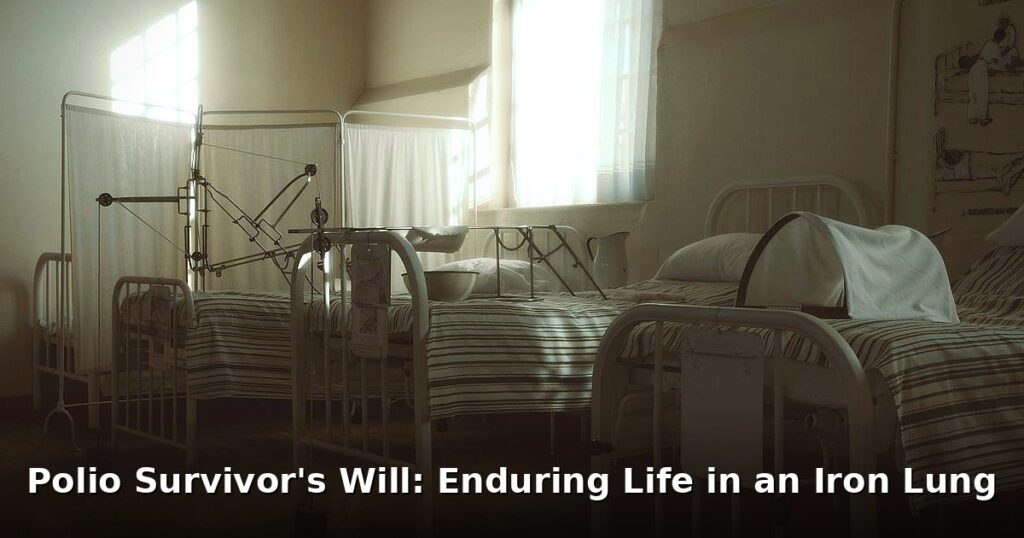

If you’ve been looking into polio survivor iron lung, imagine being perfectly healthy one day, full of life, and then, almost overnight, finding yourself unable to breathe on your own. This was the terrifying reality for thousands during the mid-20th century, a time when polio stalked communities with an indiscriminate cruelty. It wasn’t just a fever or a sore throat; for many, it meant paralysis, and for some, the complete shutdown of the muscles essential for breathing. The only lifeline available for these individuals? A massive, often intimidating, mechanical respirator known as the iron lung. The stories of those who spent hours, days, and even decades in these machines are profound testaments to human will.
Table of Contents
I’ve spent a lot of time reading medical journals and historical accounts about this era, and frankly, it’s humbling. The fear must have been palpable. Polio, or poliomyelitis, is a highly contagious viral disease that attacks the nervous system. While most people who contracted the virus experienced mild symptoms or no symptoms at all, a small but devastating percentage developed paralytic polio. The virus would destroy motor neurons, leading to muscle weakness, paralysis, and in the most severe cases, the inability to breathe independently. This respiratory failure was the real killer, and it necessitated an urgent, dramatic intervention.
Enter the iron lung. Developed in the late 1920s, it looks like something out of a science fiction movie from that era – a giant metal cylinder that encased a patient’s entire body except for their head. It worked by creating negative pressure inside the chamber. When the pressure dropped, the patient’s chest would expand, pulling air into their lungs. Then, as the pressure normalized, the lungs would naturally exhale. It was a brilliant, albeit cumbersome, solution that literally saved lives, keeping the lungs working when the body’s own muscles couldn’t. For many, it was the difference between life and death. The sheer ingenuity in the face of such a crisis is something I really admire about medical history. Check out our guide on Cyclosporiasis Confirmed in NH: What You Need to Know. We covered this in Ozempic Feet: Doctors Warn of This Surprising Weight Loss Side Effect.
A Life Sustained: Days and Decades in an Iron Lung
Living in an iron lung wasn’t just about breathing; it was about existing within a mechanical shell. Imagine that. Your world shrinks to the view from the neck up, with the constant, rhythmic whoosh and thrum of the machine as your soundtrack. For someone like Martha Lillard, a polio survivor iron lung user since 1953, this has been her reality for most of her life. She still spends nights and sometimes more in her iron lung, even today. It’s truly incredible.
Daily life presented an array of challenges that most of us can barely fathom. Personal care, for instance, became a complex ballet of nurses and family members, carefully maneuvering around the massive machine. Things we take for granted – scratching an itch, turning over in bed, even eating – required assistance. Maintaining hygiene was particularly difficult. And then there’s the mobility issue. You’re essentially fixed in place for extended periods. This could lead to skin breakdown, muscle atrophy in areas not directly paralyzed, and just a general feeling of being confined.
But beyond the physical, there was the profound psychological toll. Isolation. The world moves on outside your metal chamber, but you’re tethered. Maintaining connections to family and friends required immense effort and creativity. Some iron lungs had mirrors so patients could see their visitors, others had special trays for books or games. The resilience these individuals displayed is mind-boggling. They had to fight not just the disease, but also the despair, the feeling of being trapped. They cultivated an inner strength that I think few of us ever have to tap into.
The Mental Fortitude of Polio Survivors
It’s one thing to be physically limited; it’s another to maintain your spirit, your intellect, and your desire to engage with the world when your body is largely unresponsive. Many polio survivors in iron lungs found ways to continue their education, often with tutors coming to their homes. They learned to communicate effectively, sometimes dictating letters or using specialized pointers. Their brains were sharp, their personalities vibrant, even if their bodies couldn’t always express it. This kind of fortitude isn’t just admirable; it’s a profound lesson in what it means to be human.
I often wonder, when I’m feeling a bit down about something trivial, about the sheer grit these folks possessed. Imagine the frustration, the anger, the grief they must have processed. And yet, so many chose to focus on what they could do, rather than what they couldn’t. That perspective shift is powerful, and it’s something I try to integrate into my own life, even in small ways.
Beyond the Machine: A Polio Survivor’s Will to Thrive
You might not expect this, but The narrative of polio survivors isn’t just one of suffering; it’s overwhelmingly one of triumph. Take Paul Alexander, another long-term iron lung user. He contracted polio in 1952 at the age of six. Despite spending the majority of his life in the machine, he graduated from law school, became a lawyer, and wrote a memoir. Think about that for a second. Attending classes, studying, taking exams – all while relying on this huge, noisy machine for every breath. His story, and countless others, really underscore the incredible determination of these individuals.
Over time, medical technology advanced. While some long-term iron lung users, like Martha and Paul, found the iron lung to be the most comfortable and effective solution for their specific breathing needs, many others were able to transition to more modern portable ventilators. These positive pressure machines offered greater freedom and mobility, drastically changing the life in an iron lung for future generations of respiratory patients. But for those who stuck with the iron lung, it wasn’t a failure to adapt; it was a deeply personal choice based on what best suited their bodies and comfort.
The Power of Community and Personal Determination
These achievements weren’t realized in a vacuum, of course. They were built on a foundation of unwavering family support, dedicated medical professionals, and often, strong communities. Advocacy played a huge role too. Survivors and their families pushed for better accessibility, more inclusive education, and greater understanding of the challenges faced by people with disabilities. They became powerful voices, shaping policy and public perception.
And let’s not forget the simple, yet profound, power of personal determination. It’s that inner spark, that refusal to be defined solely by an illness. It’s about finding joy, purpose, and connection despite immense physical hurdles. When I think about resilience in chronic illness, these stories immediately come to mind. They’re not just survivors; they’re thrivers, educators, advocates, and inspirations.
The Legacy of Polio and Lessons in Resilience
The story of polio is, thankfully, largely one of victory. The widespread adoption of the polio vaccine, pioneered by Jonas Salk and Albert Sabin, stands as one of humanity’s greatest public health achievements. It virtually eradicated wild polio in most parts of the world, saving millions of lives and preventing countless cases of paralysis. The sight of children suffering in iron lungs became a rare memory, the power of scientific innovation and global cooperation. It’s a powerful reminder of what we can achieve when we prioritize public health.
But, the legacy of polio isn’t entirely in the past. Many survivors, decades after their initial illness, now face new challenges in the form of post-polio syndrome (PPS). This condition involves new muscle weakness, fatigue, pain, and other symptoms that can be debilitating. It’s a cruel twist for those who fought so hard to regain independence. Understanding PPS and providing ongoing support for survivors is a critical part of the continuing story of polio long-term effects.
These stories of polio survivors and their unwavering spirit teach us so much about resilience chronic illness management. They highlight holistic care – not just treating the physical symptoms, but also addressing the mental, emotional, and social needs of patients. They show us the profound impact of empathy, the necessity of accessible design, and the vital role of advocacy in empowering individuals with disabilities. Their lives are a living history of medical progress and human endurance, a powerful narrative that continues to inspire modern approaches to chronic illness and disability advocacy. We owe it to them to remember their struggles and celebrate their triumphs. Pretty wild, right?
Frequently Asked Questions
Q: What exactly is an iron lung and how does it work?
A: An iron lung is a type of negative pressure ventilator, a large machine that encloses most of the body, leaving the head free. It creates negative pressure around the chest, causing the lungs to expand and draw in air, mimicking natural breathing for those with paralyzed respiratory muscles. Turns out, it was a revolutionary piece of equipment for its time, truly life-saving.
Q: Are there still people using iron lungs today?
A: While rare, a very small number of individuals still rely on iron lungs. Most polio survivors who needed mechanical ventilation transitioned to more modern and less cumbersome positive pressure ventilators, but some found the iron lung to be uniquely effective and comfortable for their specific needs, often after decades of use. It’s their adaptability and the machine’s reliability.
Q: What challenges did polio survivors in iron lungs face daily?
A: Daily challenges included severely limited mobility, complete dependency for all personal care (like eating, hygiene, and turning), the risk of skin breakdown due to prolonged immobility, psychological isolation from the outside world, and the constant hum and presence of the machine itself. Maintaining education, social connections, and a sense of personal autonomy required immense creativity, patience, and support from their families and caregivers.
Q: How did the polio vaccine impact the use of iron lungs?
A: The development and widespread use of the polio vaccine dramatically reduced new cases of paralytic polio, virtually eliminating the need for new patients to rely on iron lungs. It stands as one of public health’s greatest triumphs, saving countless lives and preventing lifelong disability, effectively relegating the iron lung to a historical artifact for most people, though it remains a crucial lifeline for a few long-term polio survivors.