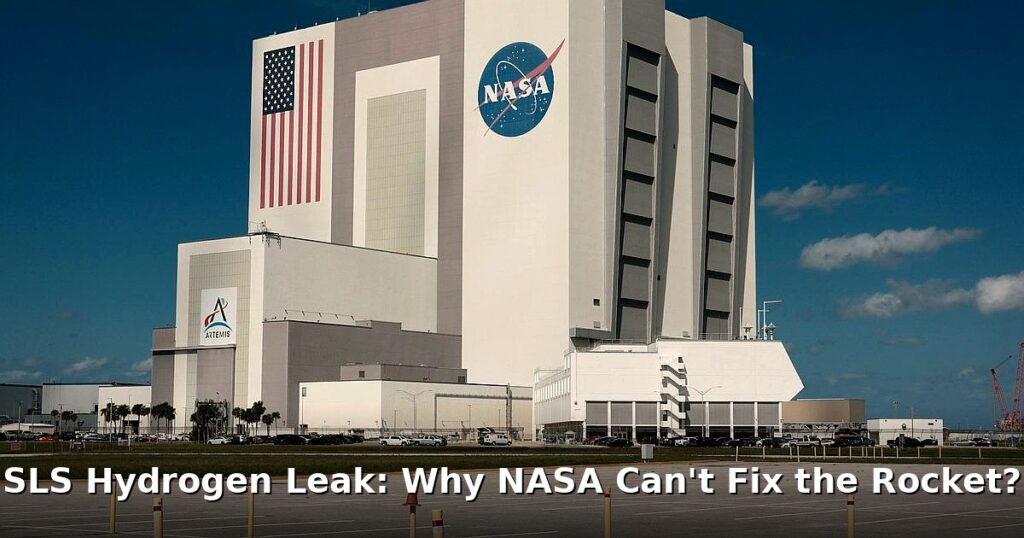

Here’s the thing about plumbing: you fix one leak, another pops up. Seems like NASA’s having the same problem, only their pipes are attached to a giant rocket and the “water” is super-cooled liquid hydrogen. We’re talking about the Space Launch System, or SLS, and it seems like every time they get ready to rumble, they’re wrestling with another SLS hydrogen leak. It kinda makes my own DIY disasters look like child’s play.
The SLS, of course, is the cornerstone of the Artemis program, NASA’s ambitious plan to return humans to the Moon and eventually venture on to Mars. These leaks haven’t only delayed launches but also raised serious questions about the long-term viability of the rocket’s design and the program itself. Is it a design flaw? A maintenance nightmare? Or is it just the finicky nature of dealing with one of the universe’s most elusive elements? Let’s get into it.
## The Inconvenient Truth About Liquid Hydrogen
Liquid hydrogen: sounds cool, right? In theory, it’s the ideal rocket fuel. It packs a serious punch in terms of energy per pound, meaning you can get more thrust with less weight. And weight, when you’re trying to escape Earth’s gravity, is everything. But there’s a catch – several, actually.
First off, hydrogen is the smallest molecule in existence. Seriously, it’s tiny. This makes it incredibly difficult to contain. It can seep through microscopic imperfections in materials that would easily hold other liquids or gases. Think of it like trying to hold sand in a screen door – you’re going to have a bad time.
And then there’s the temperature. To keep hydrogen in liquid form, you gotta chill it down to a bone-chilling -253°C (-423°F). I mean, really cold. At these cryogenic temperatures, materials contract, seals become brittle, and even the tiniest gap can become a major leak. Imagine the pipes under your kitchen sink shrinking and expanding every time you turn on the hot water – disaster waiting to happen, right? It’s basically the same principle, only on a vastly more complex and expensive scale. That’s why a rocket fuel leak is such a big deal.

## Chasing Leaks: NASA’s Whack-a-Mole
So, what’s NASA been doing to fix these pesky leaks? Well, they’ve been throwing the book at it, trying everything from replacing seals to tweaking the torque on bolts. The SLS uses a variety of seals and connections in its fuel system, each designed to withstand the extreme temperatures and pressures involved. These include flanges, which are essentially bolted connections between pipes, and various types of gaskets and O-rings to create a tight seal.
I remember one launch attempt where they suspected a leak in a quick disconnect fitting. These fittings are designed to allow for rapid connection and disconnection of fuel lines. They tried replacing the seal, tightening the bolts, even adjusting the way the fitting was aligned. Nothing seemed to work. It was like chasing a ghost.
The real challenge is diagnosing these leaks while the rocket’s sitting on the launchpad, fully fueled and ready to go. It’s a massively complex system, and pinpointing the exact source of a leak can be like finding a needle in a haystack… a very cold, very dangerous haystack. They use pressure tests, where they pump the system up to operating pressure and monitor for any drop in pressure that would indicate a leak. They also use gas detectors to sniff for escaping hydrogen and sometimes even visual inspections, looking for telltale signs like frost or vapor plumes. But even with all this high-tech gear, it can still be a frustrating and time-consuming process.
## Design Flaws, Material Choices, and Procedure Problems
Where does the problem really lie? Is it a fundamental design flaw in the SLS? Are the materials used in the fuel system not up to the task of handling cryogenic hydrogen? Or are the fueling and preparation procedures somehow contributing to the problem? Honestly, it could be a combination of all three.
Maybe the design of the seals themselves isn’t optimal. Perhaps they’re not providing enough compression or aren’t able to maintain a tight seal under the extreme temperature changes. And speaking of materials, are they using the right ones? Certain metals and polymers become brittle at cryogenic temperatures, which can compromise the integrity of seals and connections. It’s possible that a seemingly minor material choice is having a major impact on the leak rate.
And then there are the procedures. Are they fueling the rocket too quickly? Are they putting too much stress on the system during the fueling process? Are there any steps in the preparation that could be introducing stress or damage to the seals and connections? I know from my own experience that even a small mistake during installation can lead to big problems down the road.
It’s also worth considering potential vendor or manufacturing issues with the parts themselves. Were the seals manufactured to the correct specifications? Were they properly inspected before being installed? A faulty batch of seals could easily explain a recurring leak problem.
## Artemis on Hold? The Stakes Are High
All these delays caused by the SLS hydrogen leak issues have major implications for the Artemis program. Every delay adds to the already astronomical cost of the program and pushes back the timeline for returning humans to the Moon.
And it’s not just about NASA. The Artemis program involves international partnerships with space agencies from Europe, Canada, and Japan. Repeated delays can strain these relationships and potentially jeopardize the overall success of the mission. What happens if these partners lose faith in the program?
If the hydrogen leak issue persists, NASA might have to consider contingency plans. Could they redesign the fuel system? Explore alternative fuels that are easier to handle? Maybe even consider a different rocket altogether? These are tough questions that need to be addressed if the SLS continues to be plagued by leaks.
And let’s be clear: this isn’t just about lunar missions. The technologies and capabilities developed for Artemis are intended to pave the way for future missions to Mars. If we can’t reliably handle liquid hydrogen on the Moon, it doesn’t bode well for a long-duration mission to the Red Planet.
## Is This Just an SLS Problem?
Now, is the SLS uniquely cursed, or are hydrogen leaks just a common headache in rocketry? Well, liquid hydrogen has been used as a rocket fuel for decades, so it’s not exactly a new problem. The Space Shuttle, for example, also used liquid hydrogen and experienced its share of leaks over the years.
But the SLS seems to be experiencing these leaks with unusual frequency. It raises questions about whether the design, materials, or procedures used in the SLS are somehow making it more susceptible to leaks than other rockets.
In the long term, the space exploration community needs to develop better solutions for handling cryogenic fuels. This could involve developing new materials that are more resistant to extreme temperatures, designing seals that are less prone to leaking, or even exploring alternative fuels that are easier to store and handle. Maybe some kind of self-healing sealant? A guy can dream, right?
The NASA SLS is pushing the boundaries of space exploration. But right now, it’s being held back by something that, frankly, seems like it should be solvable. Let’s hope they can nail this problem soon, so we can get back to the important stuff: exploring the cosmos. The alternative is a multi-billion dollar rocket sitting on the launchpad, leaking money and dreams into the Florida sky.
## Frequently Asked Questions
Q: Why is hydrogen used as rocket fuel?
A: Liquid hydrogen is used in rockets because it’s a very lightweight fuel that contains a lot of energy. When combined with liquid oxygen, it creates a powerful explosion that can propel a rocket into space.
Q: Why is hydrogen so hard to contain?
A: Hydrogen is the smallest molecule, making it prone to leaking through even the tiniest imperfections in seals and connections. It also requires extremely cold temperatures to stay in liquid form, which can cause materials to contract and leak.
Q: How does NASA detect hydrogen leaks?
A: NASA uses a variety of sensors and monitoring equipment to detect hydrogen leaks. These include gas detectors, pressure sensors, and visual inspections to identify any signs of escaping hydrogen, such as frost or vapor plumes.