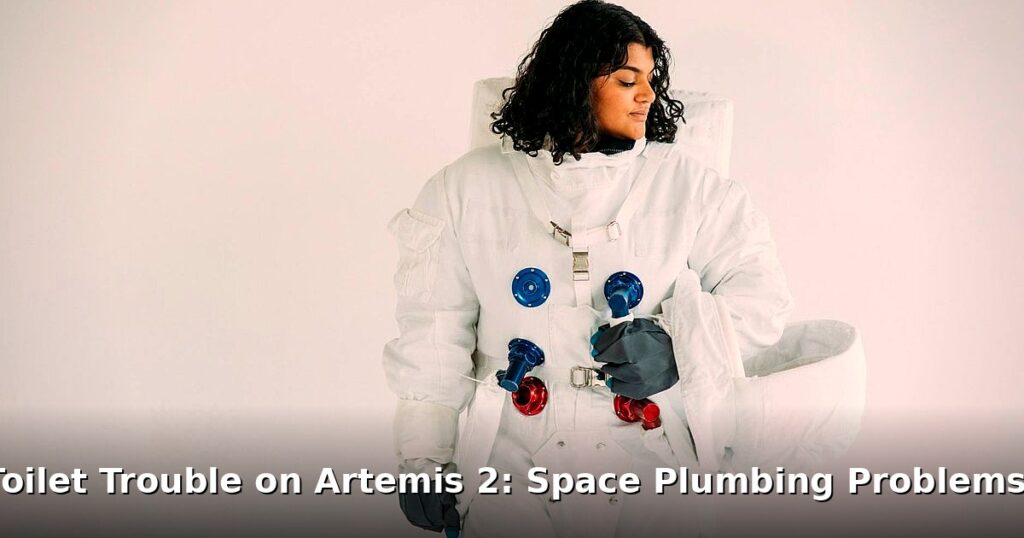

Okay, so imagine this: you’re strapped into a tiny metal can, hurtling towards the Moon. Awesome, right? Now imagine the toilet breaks. Not so awesome. That’s potentially the situation facing the Artemis 2 toilet, and it highlights a critical (and often overlooked) aspect of space travel: waste management. Yep, we’re talking about pee and poop in zero gravity. Fun!
Table of Contents
- Houston, We Have a Plumbing Problem: Artemis 2 Toilet Troubles
- What’s Wrong With the Space Toilet Anyway?
- Why a Broken Toilet is a Big Deal on a Moon Mission
- NASA’s History of Space Toilet Technology (and Troubles!)
- How Will NASA Fix the Artemis 2 Toilet?
- The Future of Space Sanitation: Cleaner, Greener, More Reliable?
- Frequently Asked Questions
Houston, We Have a Plumbing Problem: Artemis 2 Toilet Troubles
The Artemis 2 mission is a big deal. Scheduled to launch no earlier than September 2025, it will send a crew of four astronauts on a journey around the Moon. It’s a crucial step towards establishing a long-term lunar presence and, eventually, missions to Mars. But before they can even think about lunar bases, NASA needs to make sure the basics are covered. And that includes a functioning toilet.
Reports have surfaced suggesting potential issues with the Artemis 2 waste management system. Specifics are a little vague right now, but the mere possibility of a malfunction underscores how vital these systems are. We take for granted that we can just, you know, go whenever we need to. Astronauts don’t have that luxury. Waste management in space isn’t just about hygiene; it’s about survival. Check out our guide on Sahara’s Richat Structure: NASA’s Geological Wonder Discovery. We covered this in Solar Flare No Threat to Artemis 2 Moon Launch: Here’s Why.
Why is this so important? In a closed environment like a spacecraft, every single system needs to work flawlessly. A malfunctioning toilet can lead to:
- Unpleasant odors (to say the least).
- Potential health hazards from bacterial growth.
- Psychological distress for the crew. No one wants to be stuck in a smelly tin can for days on end.
Let’s be honest: dealing with bodily functions is already a bit awkward. Now try doing it upside down, in zero gravity, with three other people watching (okay, maybe not watching directly, but still…). The gross reality is that space travel involves some pretty unglamorous necessities.
What’s Wrong With the Space Toilet Anyway?
The Artemis 2 mission will be using NASA’s Universal Waste Management System (UWMS), the agency’s latest and greatest attempt at a zero gravity toilet. This isn’t your grandma’s porcelain throne. The UWMS is a marvel of engineering, designed to handle both liquid and solid waste efficiently and hygienically. The key is air flow. Instead of relying on gravity (obviously not an option in space), the UWMS uses a powerful vacuum system to suck waste away from the body.
It’s a bit like a super-powered airplane toilet, but way more complex. The system separates liquid and solid waste. Liquids are routed to the Urine Processor Assembly (UPA), which…well, we’ll get to that in a minute. Solids are compressed and stored for later disposal. The whole thing is designed to minimize odor and prevent the spread of bacteria. Big difference.
Here’s what most people miss: So, what could be going wrong? A few possibilities:
- Sensor issues: These toilets rely on sensors to detect fill levels and activate the vacuum system. Faulty sensors could lead to overflows or backups.
- Mechanical failures: Pumps, valves, and other mechanical components can break down under the stress of launch and the harsh space environment.
- Clogging: Even with careful diet control, clogs can happen. Especially if the astronauts are feeling a little adventurous with their freeze-dried meals.
And then there’s the Urine Processor Assembly (UPA). This is where things get really interesting (and a little gross). The UPA is basically a sophisticated water recycling system. It takes urine and processes it into potable water. Yes, you read that right. Astronauts drink their own pee. It’s filtered and purified to meet stringent quality standards, of course. But still. Gotta admire their commitment to resourcefulness. NASA has been doing this for a while on the International Space Station, and you can read more about the ISS water recovery system on NASA’s website. The UPA is critical for long-duration missions because it reduces the amount of water that needs to be launched from Earth. Less weight = less fuel = lower costs.
Why a Broken Toilet is a Big Deal on a Moon Mission
Let’s be clear: a broken toilet isn’t just an inconvenience; it can seriously impact the mission. The consequences of a malfunctioning waste management system range from unpleasant to downright dangerous.
For starters, there’s the impact on crew health. Improper waste disposal can lead to bacterial contamination, increasing the risk of infections and other illnesses. And let’s not forget the psychological toll. Living in a confined space with a malfunctioning toilet would be incredibly stressful and demoralizing. Astronauts already face immense pressure; they don’t need the added burden of a smelly and unsanitary environment. Worth it.
Then there’s the issue of mission duration. If the toilet can’t be repaired, the mission might have to be cut short. There’s only so much waste the spacecraft can hold, and no one wants to be swimming in it. NASA undoubtedly has redundancy systems and backup plans in place. They might have spare parts on board, or they might be able to MacGyver a solution using existing materials. But there’s no guarantee.
I had a similar experience with a leaky fridge once. It wasn’t life-threatening, but it was incredibly annoying. Constant dripping, moldy smells, ruined food…it was a nightmare. And that was just a fridge in my kitchen! Imagine dealing with something similar on a spacecraft, thousands of miles from Earth. The psychological impact can’t be overstated. Cleanliness matters.
NASA’s History of Space Toilet Technology (and Troubles!)
Believe it or not, NASA has been dealing with space toilet issues for decades. The Apollo missions used a rather rudimentary system involving bags and adhesive cuffs. It was messy, uncomfortable, and not exactly foolproof. Things improved with the Space Shuttle program, which featured a more sophisticated vacuum-based toilet. But even that system had its share of problems.
The International Space Station (ISS) uses an even more advanced toilet system, but it’s still not perfect. There have been numerous reports of malfunctions and repairs over the years. The reality is that designing a reliable toilet for zero gravity is incredibly challenging. It’s not just about getting the waste from point A to point B. It’s about doing it safely, hygienically, and without creating a biohazard.
All missions face the same challenges of waste management. It’s not just an Artemis problem. NASA has learned a lot from past experiences, and those lessons have informed the design of the UWMS. But space is a harsh and unforgiving environment, and even the best-engineered systems can fail.
How Will NASA Fix the Artemis 2 Toilet?
Real talk: So, what happens if the Artemis 2 toilet actually breaks? Well, hopefully the crew can fix it. Astronauts are highly trained to troubleshoot and repair all sorts of equipment. They might be able to replace faulty sensors, unclog pipes, or even fabricate new parts using onboard resources. Ground control will provide remote diagnostics and guidance, walking the crew through the repair procedures step-by-step.
But if the problem is more serious, the options are limited. NASA might have to adjust the mission timeline or even abort the mission altogether. It’s a worst-case scenario, but it’s one that they have to be prepared for. The Artemis program is ambitious, but safety is always the top priority.
The outcome of this will definitely impact upcoming missions like Artemis 3. You can bet NASA engineers will be poring over the data from Artemis 2 to identify any design flaws and prevent similar issues in the future. Maybe we will see a completely new waste management system.
The Future of Space Sanitation: Cleaner, Greener, More Reliable?
Look, The challenges of space sanitation are driving innovation in waste management technology. Researchers are exploring closed-loop systems that can recover valuable resources from waste. Imagine a toilet that not only processes urine into water but also extracts methane for fuel or nutrients for growing food. Now that’s resourcefulness!
Real talk: 3D printing and advanced materials are also playing a role. Lighter, more durable components can reduce the risk of mechanical failures. And 3D printing could allow astronauts to fabricate replacement parts on demand, minimizing the need to carry bulky spares. These advancements aren’t just for space; they could also have applications here on Earth, leading to more sustainable waste management solutions for our planet. Think about it: if we can figure out how to recycle waste in space, we can certainly do a better job of it here at home. Big difference.
Sustainable waste management will be essential for long-term space colonization. As we venture further into the solar system, we’ll need to create self-sufficient habitats that can recycle and reuse all resources. The humble toilet, it turns out, is a key piece of the puzzle. And who knows? Maybe one day, space toilets will be so advanced that they’ll be a selling point for lunar condos. “Luxury living with zero-gravity plumbing!”
Frequently Asked Questions
Look, Here are some common questions about the Artemis 2 mission and space toilets:
Q: what’s the Artemis 2 mission?
A: Artemis 2 is a planned crewed mission that will send astronauts around the Moon. It’s a crucial step towards establishing a long-term lunar presence.
Q: what’s the Universal Waste Management System (UWMS)?
A: The UWMS is NASA’s latest space toilet design. It’s designed to be more efficient, hygienic, and comfortable for astronauts in zero gravity. The system relies on vacuum suction and air flow to direct waste.
Q: Why is waste management so important in space?
A: In a closed environment like a spacecraft, proper waste management is vital for crew health, hygiene, and the overall success of the mission. Malfunctioning systems can lead to serious health risks and mission delays.
Q: How do astronauts pee and poop in space?
Here’s what most people miss: A: Astronauts use specially designed toilets that suction and airflow to collect urine and feces in a zero-gravity environment. Waste is either stored for later disposal or processed into water.
Q: What happens to the waste collected on space missions?
A: Collected urine is often processed into potable water using advanced filtration and purification systems. Solid waste is typically stored on board and either returned to Earth for analysis or disposed of in a designated burn-up reentry vehicle.
Hopefully, the Artemis 2 mission will proceed without any toilet-related drama. But even if there are some plumbing problems, it’s a reminder that space exploration is full of unexpected challenges. And that even the most mundane aspects of life – like going to the bathroom – become incredibly complex when you’re floating in zero gravity. So, next time you flush your toilet, take a moment to appreciate the miracle of modern plumbing. And spare a thought for the astronauts of Artemis 2, who may be facing a slightly more complicated situation.