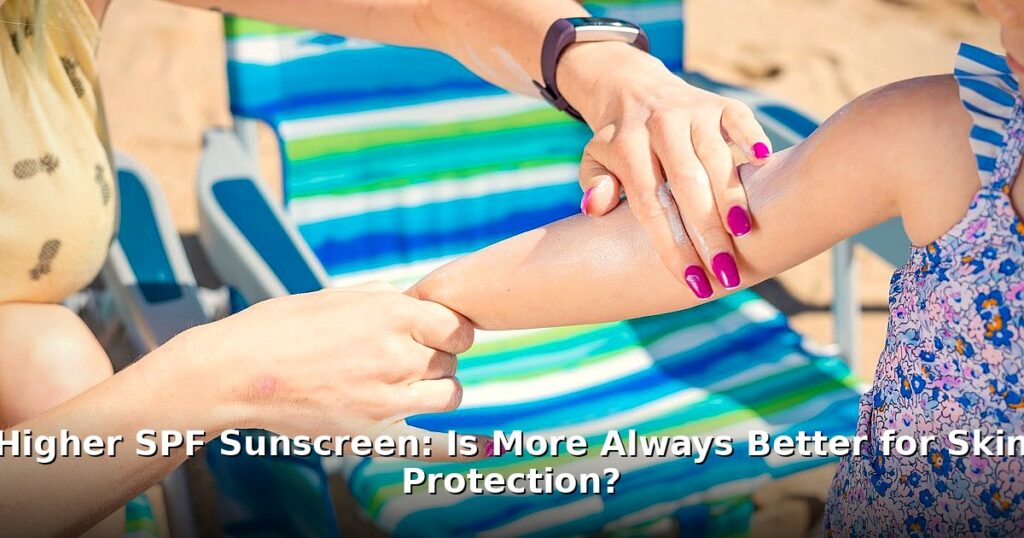

If you’ve been looking into higher SPF sunscreen, we’ve all been there, standing in the sunscreen aisle, staring at a wall of bottles. SPF 30, SPF 50, SPF 70, even SPF 100! It’s easy to think that if SPF 30 is good, then SPF 100 must be, like, super-duper amazing. More protection, right? That little voice in your head might even be screaming, “Go big or go home!”
Table of Contents
For years, I totally fell into that trap. I’d grab the highest number I could find, figuring it was the ultimate shield against the sun’s rays. But after diving into a bunch of research papers – yeah, I’m that friend who actually reads them – I realized something pretty eye-opening: higher SPF sunscreen, those big numbers don’t always mean what we think they do. In fact, experts are pretty clear that chasing the highest SPF isn’t always the best strategy for daily sun protection.
It turns out, there’s a lot more to sun protection than just a number on a bottle. And understanding what those numbers actually signify can make a huge difference in how effectively you protect your skin. Check out our guide on 7 Subtle Signs Your Blood Sugar Is Too High, According to Dietitians. We covered this in Rid Your Yard of Mosquitoes: My 6 Proven Strategies.
Understanding SPF: What Do Those Numbers Really Mean?
Let’s break down the SPF numbers explained. SPF stands for Sun Protection Factor. And despite what many assume, it’s not a linear scale of protection. It primarily measures protection against UVB rays. These are the rays that cause sunburn, redness, and are a major contributor to skin cancer.
Here’s the basic idea: if your skin normally takes, say, 10 minutes to start reddening in the sun without any protection, an SPF 15 sunscreen would theoretically allow you to stay in the sun for 15 times longer (150 minutes) before burning. SPF 30 would be 30 times longer (300 minutes), and so on. But this is purely theoretical, and it assumes perfect application – which, let’s be honest, rarely happens in real life.
The really important thing to understand is that SPF isn’t a measure of “strength” in the way we often think about it. It’s more about time. And here’s where the common misconception comes in: many people believe SPF 30 offers twice the protection of SPF 15. Not quite. It’s less about doubling the protection and more about blocking a higher percentage of those pesky UVB rays. Big difference.
Think of it like this: SPF 15 blocks about 93% of UVB rays. SPF 30 blocks approximately 97%. And SPF 50? That gets you to around 98%. See how the jump isn’t as dramatic as the numbers might suggest? It’s not a direct proportional increase in blockage.
The Diminishing Returns of Higher SPF Sunscreen
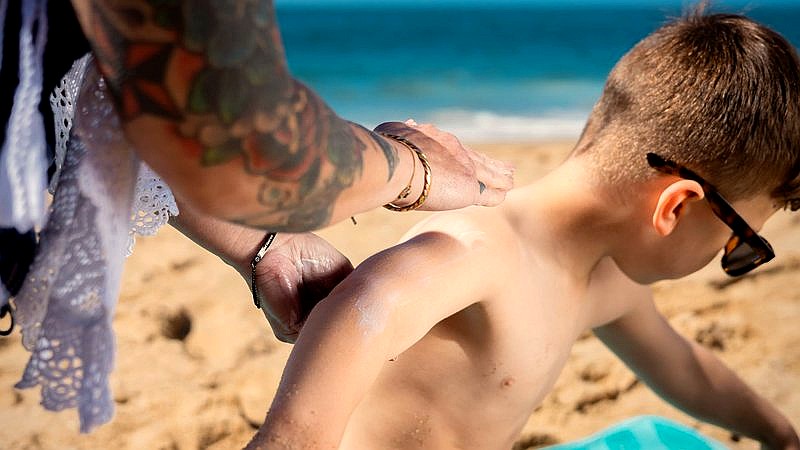
This brings us to what’s often called the “plateau effect.” Once you hit a certain SPF, the additional protection you get from going higher becomes really, really marginal. As I just mentioned, the difference between SPF 30 blocking 97% of UVB rays and SPF 50 blocking 98% is just one measly percentage point. And SPF 100? That blocks about 99%.
So, while SPF 100 technically offers a tiny bit more protection than SPF 50, we’re talking about a 1% difference in UVB blockage. Is that tiny fraction really worth the extra cost or the potentially thicker, greasier feel of some of those ultra-high SPF formulas? For most everyday situations, probably not.
This minimal difference is precisely why many dermatologists and health organizations recommend SPF 30 as a baseline for daily sun protection. It offers substantial protection without giving you a false sense of invincibility. And that false sense of security is actually one of the biggest downsides of extremely higher SPF sunscreen numbers.
When people slather on SPF 70 or 100, they often feel like they’re good for the entire day. Like they’ve donned an invisible suit of armor. This can lead to less frequent reapplication, staying out in the sun for much longer, and generally being less careful with other sun safety measures. Not great. Ironically, this overconfidence can actually lead to less effective sun protection overall, because the sunscreen simply wears off or gets rubbed away.
Sunscreen Myths Debunked: It’s Not Just About the Number
It’s time to bust some of those common sunscreen myths. The idea that a higher number means you can apply it once and forget it? Totally false. The belief that SPF is the only factor in choosing a sunscreen? Also incorrect. It’s a piece of the puzzle, but far from the whole picture.
Beyond the Number: What Truly Matters for Sun Protection
Okay, so if chasing the highest SPF isn’t the be-all and end-all, what is? The answer lies in a few key factors that often get overshadowed by the SPF number.
Broad-Spectrum Protection: Your UVA and UVB Shield
This is probably the single most important thing to look for on a sunscreen label, even more than the SPF number itself. You absolutely need a sunscreen that says “broad-spectrum” on the bottle. What does that mean? It means it protects against both UVA and UVB rays.
- UVB rays: These are the “burning” rays that contribute to sunburn and skin cancer. SPF primarily measures protection against these.
- UVA rays: These are the “aging” rays. They penetrate deeper into the skin, contributing to wrinkles, fine lines, dark spots, and yes, also play a significant role in skin cancer development. SPF alone doesn’t tell you anything about UVA protection.
So, an SPF 50 sunscreen that isn’t broad-spectrum is actually doing you a disservice, leaving you vulnerable to UVA damage. Always, always check for that broad-spectrum label. It’s non-negotiable for comprehensive daily sun protection.
The Best Sunscreen Application: Quantity and Coverage
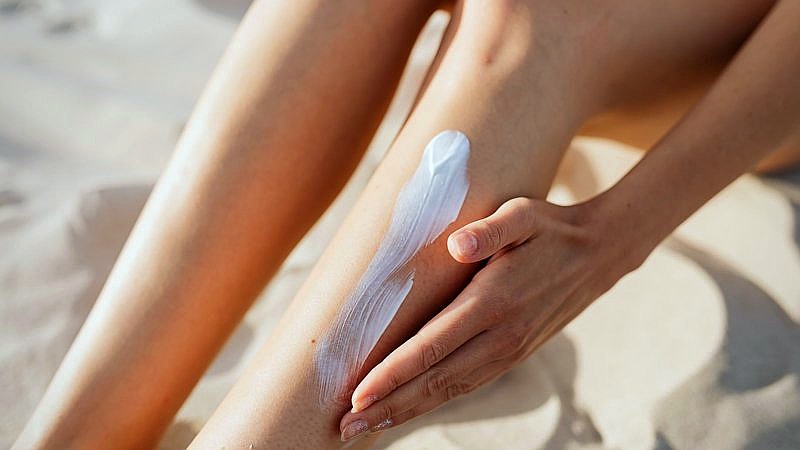
This is where most of us fall short. We tend to apply far too little sunscreen. To achieve the SPF listed on the bottle, you need to apply a generous amount – about a shot glass full (one ounce) for your entire body, and a nickel-sized dollop for your face and neck. Think about it: that’s a lot more than most of us typically use.
Here’s what most people miss: And it’s not just about quantity; it’s about even coverage. Missed spots are prime targets for sunburn. Take your time, rub it in thoroughly, and make sure you hit all exposed areas, including ears, neck, tops of feet, and scalp if you’re not wearing a hat. My trick is to apply it in sections, making sure each area gets its due. It takes a little longer, but it’s worth it.
Frequent Reapplication: The Unsung Hero of Sun Safety
No matter how high the SPF, no sunscreen is truly “all-day” protection. Sunscreen breaks down over time, it gets rubbed off by clothing, towels, or sand, and it washes away with sweat or water. This is why reapplication is absolutely critical.
The general rule of thumb is to reapply at least every two hours. If you’re swimming, sweating heavily, or towel drying, you need to reapply even more frequently – immediately after those activities. This is one of the most important takeaways from understanding best sunscreen application. It’s what truly ensures continuous protection.
Beyond the Bottle: Other Sun Safety Measures
Sunscreen is an essential tool, but it’s just one part of a comprehensive sun protection strategy. Don’t forget these other crucial steps: Go figure.
- Seek shade: Especially during peak sun hours (usually 10 AM to 4 PM).
- Wear protective clothing: Long-sleeved shirts, pants, and clothing with UPF (Ultraviolet Protection Factor) ratings offer excellent protection.
- Don a wide-brimmed hat: This protects your face, neck, and ears.
- Grab sunglasses: Look for ones that block 99-100% of UVA and UVB rays to protect your eyes and the delicate skin around them.
These measures, combined with proper sunscreen use, are your best defense against sun damage. They’re not just add-ons; they’re integral components of smart sun safety.
My Personal Sunscreen Habits & Expert Recommendations
After all my reading and research, my own approach to sunscreen has definitely evolved. I used to be an SPF 70 or nothing kind of person. Now, I pretty consistently reach for an SPF 30 or SPF 50 broad-spectrum formula. For me, SPF 30 is my daily go-to for running errands, walking the dog, or just being outside for short periods. If I know I’m going to be outside for longer, or doing something active like hiking, I’ll definitely opt for SPF 50, but my focus remains on diligent reapplication.
I keep a small tube in my purse, another in the car, and one on my desk at all times. It’s become a habit to reapply, even if I’m just sitting by a window. It’s not just about avoiding a sunburn; it’s about protecting against the cumulative damage that leads to premature aging and, more seriously, skin cancer. And honestly, it makes me feel better knowing I’m doing my best for my skin.
The general consensus among dermatologists and health organizations aligns with this: an SPF of 30 to 50, broad-spectrum, is generally sufficient for most people for most activities. The critical factor isn’t just the number, but how consistently and correctly you apply it, and how often you reapply.
Of course, if you have specific skin concerns, a history of skin cancer, or will be spending prolonged periods in intense sun (like at high altitudes or near the equator), it’s always a good idea to consult with a dermatologist. They can provide personalized advice tailored to your skin type and lifestyle. But for everyday purposes, don’t get hung up on chasing the highest SPF number. Focus on the fundamentals, and your skin will thank you for it.
Frequently Asked Questions
Q: Is SPF 50 really better than SPF 30?
A: While SPF 50 blocks slightly more UVB rays (about 98%) compared to SPF 30 (about 97%), the difference is quite small. Experts suggest that consistent and proper application is more critical than chasing extremely high SPF numbers.
Q: How often should I reapply sunscreen, even with higher SPF?
What surprised me was that A: Regardless of the SPF number, sunscreen should be reapplied at least every two hours, or more frequently if you’re swimming, sweating, or towel drying. High SPF doesn’t extend the duration of its effectiveness.
Q: Does higher SPF mean I don’t need broad-spectrum protection?
A: Absolutely not. SPF only measures protection against UVB rays. You always need a ‘broad-spectrum’ sunscreen to protect against both UVB (burns) and UVA (aging, skin cancer) rays, no matter the SPF number.
Q: Can I skip other sun protection methods if I use a high SPF sunscreen?
A: No, sunscreen is just one part of a comprehensive sun protection strategy. It’s still important to seek shade, wear protective clothing, hats, and sunglasses, especially during peak sun hours, even when using high SPF.