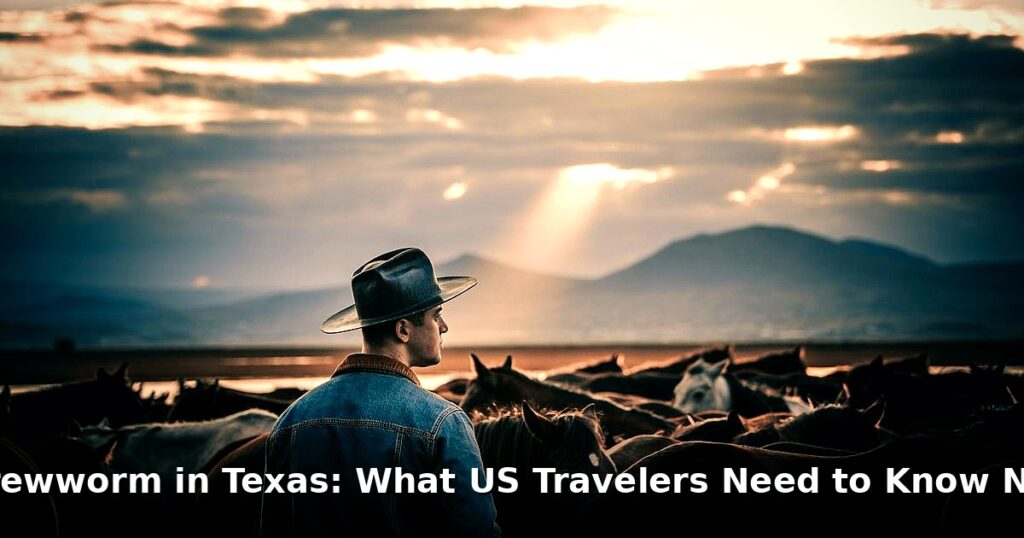

There’s a smell I remember from childhood road trips through the rural South – a mix of damp earth, sun-baked hay, and something vaguely metallic. It wasn’t unpleasant, just… distinct. Now, hearing about the return of the screwworm in Texas, that memory has taken on a sharper, more unsettling edge. It reminds me of the unseen things lurking in those quiet landscapes, things that can turn tranquil into terrifying.
Table of Contents
- The Unexpected Arrival: Screwworm in Texas
- Understanding the Threat: what’s the Flesh-Eating Screwworm?
- Traveler’s Guide: Protecting Yourself from Screwworm in Texas and Beyond
- The Broader Picture: Impact on Local Economies and Agriculture
- Staying Informed: Resources for Travelers and Residents
- Frequently Asked Questions
The news hit like a gut punch for anyone familiar with agricultural history in the U.S.: the flesh-eating screwworm, a parasite thought long-vanquished, has reappeared. And not just anywhere, but in Texas livestock. This isn’t just a farmer’s problem; it’s a stark reminder of how interconnected our world is, and how easily a seemingly eradicated threat can make a comeback, especially with increased global travel and climate shifts.
The Unexpected Arrival: Screwworm in Texas
It was confirmed not long ago, a single case in a stray dog in Uvalde County. Then, more. Suddenly, the specter of the flesh-eating screwworm US-wide was very real again. For decades, this country had been free of Cochliomyia hominivorax, the New World screwworm. Its eradication in 1966 was a monumental achievement, coordinated efforts between the U.S., Mexico, and Central American nations using sterile insect techniques. Check out our guide on Trump’s Proposed 10% Tariffs: What Travelers Should Know. We covered this in Uncovering Authentic Experiences: Travel Beyond the Brochure.
The truth is, I remember reading about it – millions of sterile male screwworm flies released from planes, disrupting breeding cycles until the parasite simply fizzled out. It was a victory for livestock, a boon for ranchers, and a huge relief for public health. For a while, that metallic smell was just a smell. No longer tied to the fear of open wounds infested with wriggling larvae. But now? That progress is being tested.
The reappearance of screwworm in Texas is deeply concerning. For animal health, obviously, it’s a crisis. But it also raises questions about our vigilance and preparedness. What does this mean for our borders, our biosecurity? And, perhaps most unsettlingly, what does it mean for us, as humans, if this parasite starts spreading beyond its initial confines? Not great.
That initial case, the stray dog, was a wake-up call. It signaled that something had breached our defenses. Whether it hitched a ride on an animal crossing the border, or through other means, the fact remains: it’s here. And once a pest like this establishes itself, containment is a brutal, expensive, and often drawn-out fight.
Understanding the Threat: what’s the Flesh-Eating Screwworm?
Let’s not sugarcoat it: the flesh-eating screwworm isn’t pleasant. The adult fly, looking a bit like a housefly but with iridescent blue-green markings, is the least of your worries. It’s the larvae, the maggots, that do the damage. A female fly lays her eggs in an open wound of any warm-blooded animal. Could be a scratch, a tick bite, a surgical incision, or even a newborn’s navel. After about a day, the eggs hatch.
And then the real horror begins. These tiny larvae, or screwworms, burrow deep into the living flesh. They secrete enzymes that liquefy tissue, creating a pocket where they can feed and grow. They literally eat living tissue. And as they grow, they enlarge the wound, which then attracts more female flies to lay more eggs. It’s a vicious, accelerating cycle. An animal can succumb to massive tissue damage, secondary infections, and septicemia if left untreated. A lot to unpack there.
Livestock, like cattle, sheep, and goats, are particularly vulnerable. A small cut can quickly become a large, festering, maggot-filled lesion. Pets, too, especially those that spend time outdoors, are at risk. Imagine your beloved dog or cat with an unhealing wound, growing larger by the day, filled with these parasites. It’s a nightmare scenario for any animal owner.
Now, here’s the part that often gets people worried, and rightly so: screwworm symptoms humans might experience. While extremely rare, humans can get screwworm infestations. It’s not a common occurrence, by any stretch, but cases have been documented, especially in areas where the parasite is endemic. Usually, this happens when a person has an open wound that gets exposed to the flies, or if they’re in close contact with infested animals. The symptoms in humans are similar to animals: an unhealing wound, pain, discharge, and visible larvae. If you suspect anything like this, prompt medical attention is absolutely critical. This isn’t something to mess around with.
The Life Cycle of a Menace
- Egg Laying: Female flies are attracted to open wounds on warm-blooded animals. They lay masses of 10-400 eggs along the wound edges.
- Larval Stage (Screwworm): Eggs hatch in 12-24 hours. The larvae burrow into the living tissue, feeding and growing for 5-7 days. They’re distinctive for their “screw-like” appearance, which is how they got their name.
- Pupation: Mature larvae drop from the wound to the ground and burrow into the soil, pupating for 7-10 days (or longer in cooler conditions).
- Adult Fly: The adult fly emerges, mates, and starts the cycle anew, often within days. A single female can produce thousands of offspring in her lifetime.
Traveler’s Guide: Protecting Yourself from Screwworm in Texas and Beyond
So, what does this mean for you, the traveler? Should you cancel that trip to the Texas Hill Country? Probably not. The risk to humans is incredibly low. But vigilance, as always, is key, especially if you’re traveling to affected areas or planning to spend time in agricultural or rural settings. Common sense goes a long way here.
First and foremost, avoid contact with unfamiliar animals. That cute stray dog? Maybe give it a wide berth for now. Farm animals? Admire them from a distance. This isn’t just about screwworms; it’s good practice for avoiding all sorts of zoonotic diseases. If you’re working with livestock, wear appropriate protective clothing and be meticulous about wound care.
Pay attention to your own body. Practice good hygiene, especially if you have any cuts, scrapes, or open sores. Keep them clean and covered. If you notice a wound that isn’t healing, or seems to be getting worse, or developing any unusual discharge, get it checked out by a medical professional. Promptly. Don’t wait. The same goes for any pets you might be traveling with. Always keep an eye on them. Check them regularly for any new wounds or unusual behavior.
What surprised me was that For those of us traveling to affected areas, staying informed is paramount. Check the USDA Animal and Plant Health Inspection Service (APHIS) website or the Texas Animal Health Commission for current advisories. They’ll have the most up-to-date information on any specific regions or counties that might be under quarantine or heightened surveillance. As of now, the primary concern remains livestock, but understanding where the battle is being fought helps you make smart decisions about your travel plans.
I always carry a small first-aid kit when I travel, especially when I’m off the beaten path. Antiseptic wipes, bandages, medical tape – the basics. It’s not just for screwworms, of course, but it’s a good habit to have. A clean wound is always less appealing to a parasitic fly.
The Broader Picture: Impact on Local Economies and Agriculture
The reappearance of the screwworm in Texas is a heavy blow for ranchers. Texas livestock health is directly tied to the state’s economy. These animals are their livelihoods. An outbreak can lead to significant financial losses due to animal deaths, treatment costs, and restrictions on movement or sale of livestock. It’s not just the immediate cost; it’s the long-term impact on breeding programs, market access, and the overall reputation of Texas beef, sheep, and goat industries.
Government agencies like the USDA and the Texas Animal Health Commission (TAHC) are already mobilizing, deploying resources for containment and eradication efforts. This means surveillance, quarantines, and potentially re-implementing sterile insect release programs. It’s a massive undertaking, requiring significant funding and coordination. They’re the ones on the front lines, and their work is critical.
But what about tourism? Texas is a vast state, and most of it’s far from agricultural areas. Still, rural tourism, agritourism, and hunting operations could feel a pinch. If there are movement restrictions on animals, or heightened public anxiety, people might simply opt for other destinations. It’s a ripple effect, spreading from the initial point of infestation to related industries. No one wants to visit a farm if they’re worried about their pet, or worse, themselves. It’s understandable. However, it’s important to remember that the vast majority of Texas is unaffected, and the risk to humans remains low.
This situation underscores the delicate balance of our ecosystems and economies. One tiny fly, seemingly insignificant, can unleash a torrent of problems. It’s a stark reminder that we can never truly let our guard down against these kinds of threats.
Staying Informed: Resources for Travelers and Residents
Panic is never the answer. Information is. For the most accurate and up-to-date information on the screwworm in Texas, always go to official sources. The Centers for Disease Control and Prevention (CDC) and the USDA APHIS websites are invaluable. They provide factual information about the parasite, its current status, and prevention guidelines. Local health authorities, like the Texas Department of State Health Services, will also have specific advisories for residents.
If you see something suspicious, report it. This isn’t the time to “wait and see.” If you notice an animal with an unhealing wound, especially one that looks like it’s infested with maggots, contact your local veterinarian or animal health officials. For livestock, the Texas Animal Health Commission is the go-to. Early detection and reporting are absolutely crucial for containment. Every single case reported, every single infested animal treated or contained, helps in the larger eradication effort.
So, go enjoy your travels. Explore the beauty of Texas. Just do it with a healthy dose of awareness and responsibility. Be mindful of your surroundings, especially in rural areas. Keep an eye on yourself, your family, and your pets. And if you encounter something truly unusual, say something. That simple act could make a huge difference in protecting our animals and our communities from this persistent, unwelcome guest.
Frequently Asked Questions
Q: what’s a screwworm and why is it dangerous?
A: A screwworm is the larva of a parasitic fly that feeds on the living tissue of warm-blooded animals. It’s dangerous because it can cause severe tissue damage, infection, and even death if left untreated in animals, with rare human cases also possible.
Q: Has the flesh-eating screwworm been in the US before?
A: Yes, the screwworm was eradicated from the United States in 1966 through extensive efforts. Its recent re-emergence in Texas marks a significant and concerning new development.
Q: How can travelers protect themselves from screwworms?
A: Travelers should avoid contact with unfamiliar animals, practice good wound hygiene, and seek medical attention for any unhealing cuts or sores. Staying informed about local advisories in affected areas is also crucial.
Q: What are the signs of screwworm infestation in animals?
A: Signs in animals include open wounds that don’t heal, discharge from wounds, and visible larvae (maggots) within the wound itself. Affected animals may also show signs of discomfort or distress.
Q: Is it safe to travel to Texas given the screwworm report?
A: Yes, travel to Texas is generally safe. The risk to humans is extremely low, and the outbreak is primarily a concern for livestock. Stay informed about specific local advisories if traveling to known affected agricultural regions.