
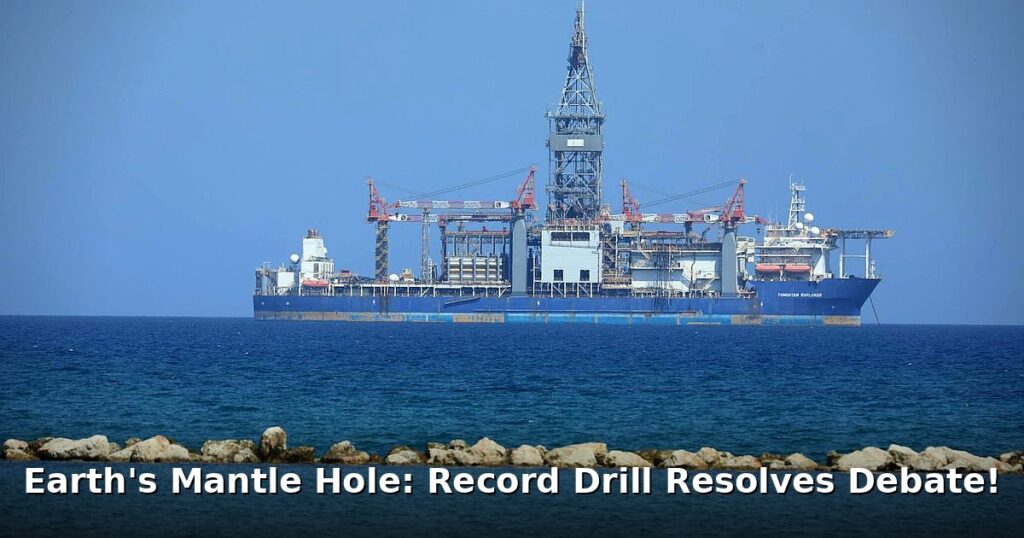

Imagine trying to peel an onion, but instead of layers of skin, you’re dealing with miles of solid rock and magma hotter than lava. That’s basically what scientists are up against when they try to reach Earth’s mantle hole. And recently, they’ve made a HUGE breakthrough. A record-breaking borehole has been drilled, potentially unlocking secrets that have been buried for billions of years. Finally, a way to test some long-held geological theories.
Table of Contents
The Quest to Reach Earth’s Mantle: Why?
So, why go to all this trouble? What’s so interesting about the Earth’s mantle anyway? Well, it’s all about understanding our planet’s past, present, and maybe even its future. No joke.
- Understanding Earth’s formation and composition: The mantle makes up about 84% of Earth’s volume. Getting a sample is like getting a piece of the original recipe for planet Earth. We can analyze its composition to understand what ingredients were present at the beginning.
- Studying tectonic plate movement at depth: Tectonic plates float on the mantle. Understanding the mantle’s behavior helps us understand why these plates move, causing earthquakes and volcanic eruptions.
- Searching for unique minerals and geological processes: Who knows what kind of crazy minerals might be lurking down there? High pressure and temperature environments can create materials we’ve never seen before.
- Comparing theory with actual mantle samples: For decades, scientists have been developing theories about the Earth’s mantle composition. Now, finally, they have actual samples to test those theories against. Big difference.
It’s kinda like trying to bake a cake without knowing the ingredients. You can guess, but until you taste it (or in this case, analyze it), you won’t really know what you’re dealing with. And that’s why this mantle drilling project is so important. Check out our guide on Giant Octopus Discovery: Kraken-Like Creature Found?. We covered this in Why Rockets Curve? Understanding Launch Trajectory.
Record-Breaking Hole: The Drilling Project Details
Okay, so how did they actually do it? This wasn’t exactly a weekend DIY project. I’ve done some pretty ambitious projects around my house, but this is on another level. Drilling into the Earth’s mantle is incredibly difficult for a number of reasons.
- Location of the drilling site: One clever trick? They didn’t try drilling through the thick continental crust. Instead, they chose a spot in the ocean where the oceanic crust is much thinner. Makes sense, right? Less rock to drill through.
- Technology and engineering challenges: The technology is mind-boggling. We’re talking about drills that can withstand extreme pressures and temperatures, and drill strings that are miles long. it’s truly impressive.
- International Ocean Discovery Program (IODP): This wasn’t a solo mission. The International Ocean Discovery Program (IODP), a collaborative effort involving scientists from many countries, spearheaded the project.
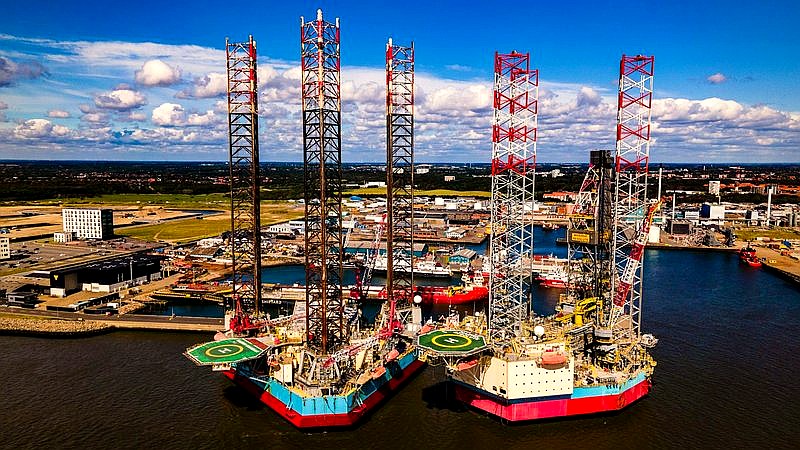
- The drillship and equipment used: The drillship, the Chikyu, is a marvel of engineering. It’s equipped with advanced drilling technology and a riser system that allows drilling in very deep water.
Imagine the logistics! Keeping the drill stable in the ocean, dealing with unpredictable weather, and making sure everything works perfectly miles beneath the surface. It’s human ingenuity and persistence.
The Mantle Drilling Project’s Obstacles
Let’s be real, it wasn’t all smooth sailing. Drilling that deep comes with its own set of problems. The extreme pressure can crush equipment. The high temperatures can melt or damage sensitive components. And then there’s the risk of the borehole collapsing. It’s a tough job, but someone’s gotta do it.
What the Earth’s Mantle Hole Revealed
Look, So, what did they find down there? What secrets did this record-breaking Earth’s mantle hole unlock? This is where it gets really interesting.
- Evidence supporting or refuting existing theories about mantle composition: The mantle samples provided concrete evidence about the types of rocks and minerals that make up the mantle. Some theories were confirmed, others were challenged. That’s science for you.
- New discoveries about the interaction between the crust and mantle: They learned more about how the Earth’s crust and mantle interact with each other, including the exchange of elements and fluids. Who knew there was so much going on down there?
- Implications for understanding earthquakes and volcanic activity: Understanding the mantle’s composition and behavior can help us better predict earthquakes and volcanic eruptions. That’s a pretty big deal.
- Data on the temperature, pressure, and chemical composition at those depths: They collected invaluable data on the temperature, pressure, and chemical composition at those depths. This data will be analyzed for years to come.
And all of this new information is helping to refine our understanding of how the Earth works. It’s like getting a software update for our planet.
Resolving Decades of Geological Debate
Geologists have been arguing about certain things for decades. Now, thanks to this project, some of those debates are finally being put to rest. Not all of them, of course. But some. Science is like that — slow progress with occasional leaps forward. Big difference.
For example, there have been long-standing debates about the role of water in the mantle. The mantle samples have provided evidence that water is present in the mantle, and that it plays a role in mantle convection. This is big because:
- The mantle samples provided concrete evidence: Actual rock samples are way more convincing than computer models. It’s like showing someone a picture of a unicorn vs. actually finding one.
- The impact of the findings on future research directions: These findings are shaping the direction of future research. Scientists are now focusing on understanding the role of water in the mantle in more detail.
- Why this project is a data goldmine: The amount of data collected is staggering. It will take years to analyze everything. This is a goldmine for geologists.
It’s not just about confirming or refuting theories, it’s about sparking new questions and inspiring new research. That’s the beauty of scientific exploration.
The Future of Mantle Exploration: What’s Next?
This record-breaking mantle drilling project is just the beginning. There are already plans for future drilling projects, and advancements in technology are making it easier to explore the deep Earth. No joke.
- Plans for future drilling projects and advancements in technology: Scientists are developing new drilling techniques and technologies that will allow them to drill even deeper into the Earth.
- The potential for discovering new resources in the deep Earth: Who knows what kind of valuable resources might be lurking down there? There could be rare minerals or even new forms of energy.
- international collaboration in scientific exploration: These projects are too big and too expensive for any one country to undertake alone. International collaboration is essential.
But what does all this mean for you and me? How might these findings affect our daily lives?
Well, for one thing, a better understanding of earthquakes and volcanic eruptions could help us save lives. Improved resource management could lead to a more sustainable future. And who knows, maybe one day we’ll be able to harness the Earth’s internal heat for clean energy. It’s not outside the possibility. Huge.
It’s a reminder that there’s still so much to learn about our planet. And that by exploring the depths of the Earth, we can gain a better understanding of ourselves and our place in the universe. Pretty cool, huh?
Frequently Asked Questions
Why is drilling into Earth’s mantle important?
Drilling into the Earth’s mantle gives scientists access to material that formed billions of years ago. This allows them to study the planet’s composition, formation, and processes in ways not possible with surface-level observations.
Where was the record-breaking Earth’s mantle hole drilled?
The record-breaking hole was drilled in an area of the ocean where the Earth’s crust is thinner. This makes it easier to access the mantle without drilling through miles of solid rock.
What kind of equipment is used to drill into the mantle?
Specialized drillships equipped with advanced drilling technology are required. These ships use long drill strings and sophisticated sensors to withstand the extreme pressures and temperatures found at such depths.
What are the potential benefits of mantle research?
Mantle research can help us better understand plate tectonics, earthquakes, and volcanic activity. It can also lead to the discovery of new resources and a greater appreciation for the history and evolution of our planet.
How does this compare to the Kola Superdeep Borehole?
The truth is, The Kola Superdeep Borehole was drilled on land, while the mantle drilling project targets oceanic crust, which is significantly thinner, thus providing a more direct path to the mantle. Both projects aimed to learn about Earth’s deep interior but use different methods and locations.
So, next time you’re digging in your garden, remember that there’s a whole world of mystery and discovery waiting to be uncovered beneath your feet. And who knows, maybe someday you’ll be part of the next big mantle drilling project!