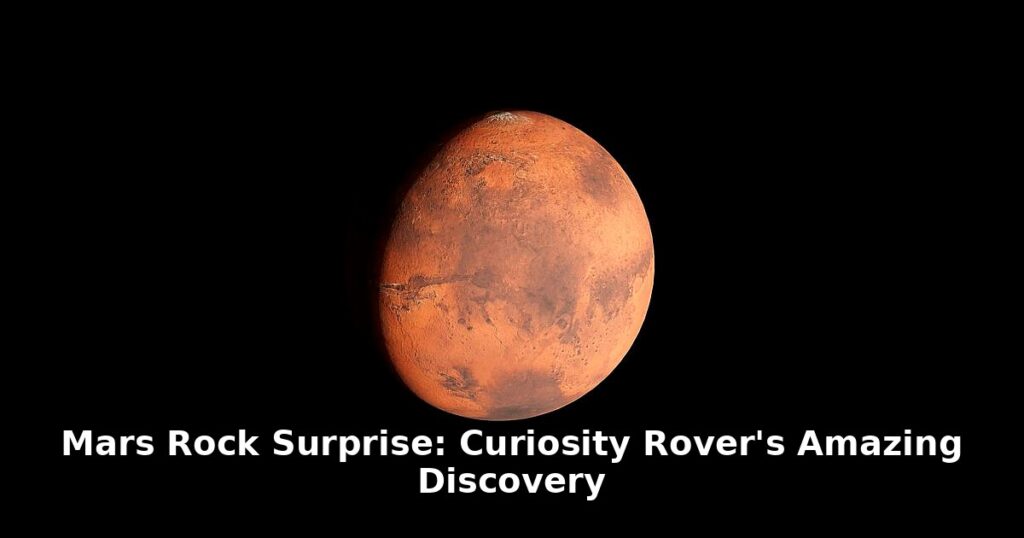

Imagine cracking open a geode and finding not crystals, but clues to an ancient, potentially life-bearing world. That’s kind of what happened on Mars. NASA’s Curiosity rover, trundling along in Gale Crater, drilled into a seemingly ordinary rock and unearthed a Mars rock surprise that has scientists buzzing.
Table of Contents
Curiosity’s Martian Mission
Curiosity isn’t just a joyride. It’s a sophisticated mobile laboratory sent to Mars to investigate whether the planet ever had the right environmental conditions to support microbial life. This SUV-sized rover is equipped with a suite of instruments designed to analyze Martian rocks, soil, and atmosphere.
Here’s what most people miss: Gale Crater, a vast impact basin containing a towering mountain called Mount Sharp, was chosen as Curiosity’s landing site because scientists believed it held evidence of past water activity. Layers of sediment within the crater provide a geological record spanning billions of years. Not even close. Check out our guide on Artemis II Risks: Why NASA Isn’t Being Completely Honest. We covered this in New Launch Date: Risk Assessment Clears Moon Mission.
And Curiosity’s got the tools to read it. It can drill into rocks, collect samples, and then analyze their chemical composition using its onboard instruments. Pretty neat, huh?
Over the years, Curiosity has made several groundbreaking discoveries, including evidence of ancient streambeds, organic molecules, and the building blocks of life. Each finding adds another piece to the puzzle of Mars’ past. Seriously.
‘Sutton Island’ and the Drill That Thrilled
The rock target in question was nicknamed ‘Sutton Island’ by the Curiosity team. It’s part of a geological unit within Gale Crater that’s been of particular interest due to its location and appearance. It looked promising.
But why Sutton Island? Scientists selected this particular rock because its texture and layering suggested it might have formed in a different environment than other rocks Curiosity had previously analyzed. Basically, it looked unique and worth a closer look.
Drilling into a Mars rock isn’t exactly easy. Curiosity uses a drill at the end of its robotic arm to bore into the rock’s surface. The resulting powder sample is then collected and delivered to the rover’s internal instruments for analysis.
When the data came back from ‘Sutton Island’, it was clear that something was different about this sample. Very different.
Silica Surprise: Unveiling the Unexpected
What made the ‘Sutton Island’ rock so special? The big reveal was the surprisingly high concentration of silica – a compound of silicon and oxygen – that was detected within the sample. Silica is a common mineral on Earth, found in things like quartz and sand. But finding so much of it in one spot on Mars was unexpected. A lot to unpack there.
High silica content in rocks often indicates that the rock has interacted with water over a long period. On Earth, silica-rich rocks can form in environments like hot springs or lakebeds. And, well, you can guess what that implies for ancient Mars.
But how high was “high,” you ask? Some measurements indicated silica concentrations as high as 90% in certain portions of the rock. That’s an extremely high level, suggesting a significant amount of water activity in the area.
The discovery is similar to findings in certain geological formations on Earth, such as those found near volcanic hot springs. These environments are known to support microbial life, adding weight to the idea that similar environments on Mars could have been habitable.
Think about it: if you found a rock on Earth with that much silica, you’d immediately start thinking about water, and maybe even life. So why not on Mars?
Evidence of Water: Was Mars Habitable?
The mineral composition of the ‘Sutton Island’ rock strongly supports the theory that Gale Crater was once home to a long-lasting lake environment. The high silica content suggests that the rocks interacted with freshwater for an extended period, creating conditions that could have been favorable for microbial life. This is key evidence in the ongoing search for evidence of water on mars.
Curiosity has found other evidence supporting past habitability. Things like ancient stream beds, chemical building blocks of life, and minerals that form in the presence of water. It all adds up.
All of this feeds into our understanding of Mars’ potential for past life. If Mars once had a stable, freshwater environment, it raises the possibility that life could have emerged there. Whether it did is a question that future missions will hopefully answer.
Fair warning: But were the conditions right? That’s the million-dollar question. We know there was water. We know there were some of the necessary ingredients. But did it all come together in the right way? We simply don’t know yet.
The Road Ahead: Curiosity and Future Missions
Curiosity isn’t done yet! It continues to explore Gale Crater, climbing higher up Mount Sharp and analyzing new rock formations. Each new sample helps scientists refine their understanding of the ancient mars environment.
Meanwhile, other Mars missions, like the Perseverance rover and the Ingenuity helicopter, are exploring different parts of the planet. Perseverance is collecting samples that will eventually be returned to Earth for further analysis. What a thought!
These missions build upon each other, each answering some questions and raising even more. For example, studying the mars mineral composition in different locations is helping scientists create a more detailed picture of the planet’s geological history and potential for past or present life.
The ultimate goal? To determine whether life ever existed on Mars. And while we’re not there yet, each discovery, like the curiosity rover discovery at ‘Sutton Island,’ brings us closer to answering that fundamental question.
And let’s not forget the long-term goal: sending humans to Mars. Understanding the planet’s environment and resources is crucial for planning future manned missions. Can you imagine walking on Mars and seeing these things firsthand? I sure can.
You might not expect this, but The gale crater findings give us so much information. It’s truly an exciting time for space exploration. I can’t wait to see what they discover next!
Frequently Asked Questions
Q: What did the Curiosity rover find inside the Mars rock?
A: Curiosity discovered an unusually high concentration of silica within the ‘Sutton Island’ rock. This finding suggests that the area may have once hosted long-lasting freshwater environments.
Q: Why is the silica discovery on Mars significant?
A: High silica levels indicate that the rock interacted with water over a prolonged period. This strengthens the argument that Gale Crater could have been habitable in the distant past.
Q: How does this discovery help us understand the history of Mars?
The truth is, A: By analyzing the rock’s composition, scientists can piece together a clearer picture of Mars’ ancient environment. This includes its climate, geological processes, and potential to support microbial life.
Q: what’s Curiosity’s main goal on Mars?
Look, A: Curiosity’s primary mission is to assess whether the Gale Crater region has ever had environmental conditions favorable for microbial life. It does this by studying the rocks, soil, and atmosphere of Mars.
Q: What other evidence suggests Mars was once habitable?
A: Previous Curiosity findings include evidence of ancient stream beds, chemical building blocks of life, and other minerals that form in the presence of water. All of these discoveries support the possibility of a once-habitable Mars.
So, what do you think? Was Mars ever truly alive? The evidence is mounting, and the future of Mars exploration is incredibly bright. Maybe one day, we’ll have a definitive answer. In the meantime, you can follow NASA’s updates and mission logs on their official website. And for more in-depth research articles, check out JPL’s website — happy exploring!