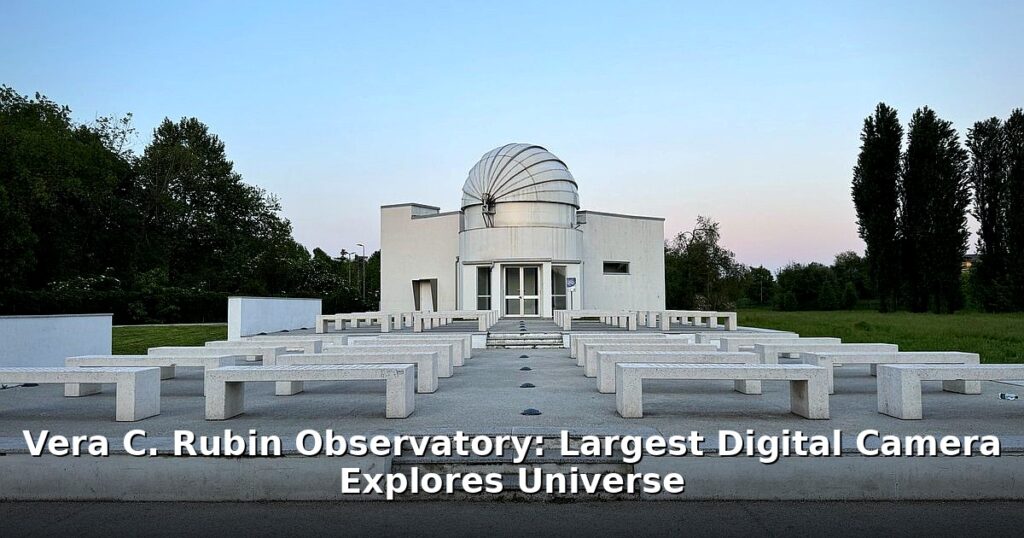

Imagine, for a moment, standing on the edge of the known universe, not with your eyes, but with a lens so powerful it can see across billions of light-years. That’s not just a sci-fi dream anymore. High up in the Chilean Andes, something truly monumental is taking shape: the Vera C. Rubin Observatory. This isn’t just another telescope; it’s a , redefine our understanding of the cosmos with the largest digital camera ever built.
Table of Contents
- Peering Beyond: The Vera C. Rubin Observatory and Its Mission
- The Largest Digital Camera Ever Built: A Technological Marvel
- Unlocking Cosmic Secrets: What the LSST Will Discover
- Experiencing the Cosmos: Astronomy in Northern Chile
- The Future of Astronomy: Democratizing Data and Inspiring Generations
- Frequently Asked Questions
For me, the romance of astronomy has always been tied to travel. The hunt for truly dark skies, the feeling of insignificance and wonder as you stare up at a diamond-dusted canvas – it’s a pilgrimage. And Chile, with its impossibly clear, bone-dry air, has always been a special stop on that journey. Now, it’s home to a project that will essentially create a 3D movie of the universe over the next decade. Think about that for a second. A decade-long survey, every night, mapping everything that moves or changes in the southern sky.
Peering Beyond: The Vera C. Rubin Observatory and Its Mission
The Vera C. Rubin Observatory, named after the pioneering astronomer who provided compelling evidence for dark matter, isn’t built to study a single star or galaxy in exquisite detail. Its mission is far grander: to take a census of the entire visible southern sky, repeatedly, over ten years. This ambitious undertaking is called the Legacy Survey of Space and Time (LSST), and it’s designed to capture the dynamic, ever-changing nature of the universe. Check out our guide on Monaco Bomb Attack: Suspect Flees After Injuries, Investigation Underway. We covered this in US-Iran Tensions: ‘Stand Down For Now’ & Talks ‘On Track’.
Why does this matter? Well, for starters, most of the universe is still a complete mystery to us. We talk about stars and galaxies, but those make up only about 5% of everything. The rest? It’s largely composed of dark energy and dark matter. These enigmatic components don’t interact with light, making them incredibly difficult to observe directly. The LSST survey aims to shed some serious light (pun intended) on these cosmic unknowns.
Here’s the thing — Beyond dark energy and dark matter, the observatory will be a watchtower for transient events. Imagine catching a supernova exploding in real-time, not just seeing its lingering light years later. Or tracking asteroids that could pose a threat to Earth. It will also map the intricate structure of our own Milky Way galaxy, revealing secrets about its formation and evolution. It’s a cosmic surveillance system, constantly scanning for the unexpected. Big difference.
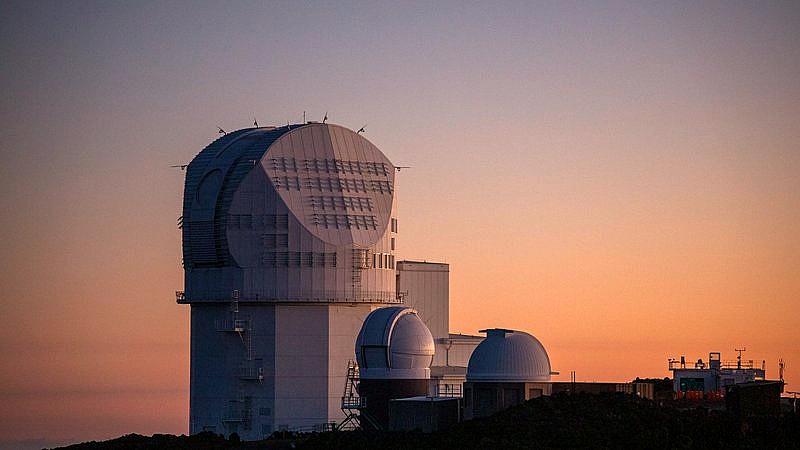
The Largest Digital Camera Ever Built: A Technological Marvel
I’ll be honest — At the heart of the Vera C. Rubin Observatory is the LSST Camera, a true behemoth of modern engineering. Forget your smartphone camera; this thing is roughly the size of a small car. And its resolution? A mind-boggling 3.2 gigapixels. That’s enough to see a golf ball from 15 miles away, if you could just get it in focus. It’s not just big, it’s incredibly precise.
This isn’t a point-and-shoot operation. The camera works by capturing vast, wide-field images of the night sky every few nights. It does this by using a sophisticated cooling system to keep its 189 individual charge-coupled device (CCD) sensors at an incredibly low temperature, ensuring minimal electronic noise. Each exposure is a quick, crisp shot, allowing the telescope to cover a massive amount of sky in a relatively short period.
The engineering challenges involved in creating and installing such a massive, delicate, and precise instrument are almost as staggering as the cosmic questions it aims to answer. Think about transporting something that heavy and fragile up a remote mountain in the Andes, then integrating it perfectly into a complex optical system. It’s human ingenuity and collaboration on a global scale. You can read more about the camera’s incredible specs on the Rubin Observatory’s website.
Unlocking Cosmic Secrets: What the LSST Will Discover
The LSST survey isn’t just about pretty pictures. It’s about collecting data on an unprecedented scale to build nothing less than a 3D movie of the cosmos. By repeatedly imaging the same patches of sky over ten years, scientists will be able to detect subtle changes, movements, and variations in brightness that reveal the universe’s dynamic processes. This constant monitoring will allow them to create detailed maps of cosmic structures, watch galaxies evolve, and track celestial bodies.
Real talk: And what about those big mysteries? Dark energy and dark matter. By observing how gravity distorts light from distant galaxies – a phenomenon called weak gravitational lensing – the LSST will provide crucial data to test various cosmological models. We’re talking about putting theories of universal expansion and the fundamental forces of nature to the ultimate test. It’s a bold attempt to truly understand the fabric of reality.
But it’s not all about the grand, universal scale. The survey will also be a prolific detector of new asteroids, potentially hazardous ones included, and countless supernovae – the explosive deaths of stars that are critical for understanding how elements are forged in the universe. Imagine the sheer volume of data this will generate: petabytes of information flowing in, creating a digital universe for scientists to explore. This isn’t just observation; it’s a data deluge that will require new computational techniques to process and analyze. Worth it.
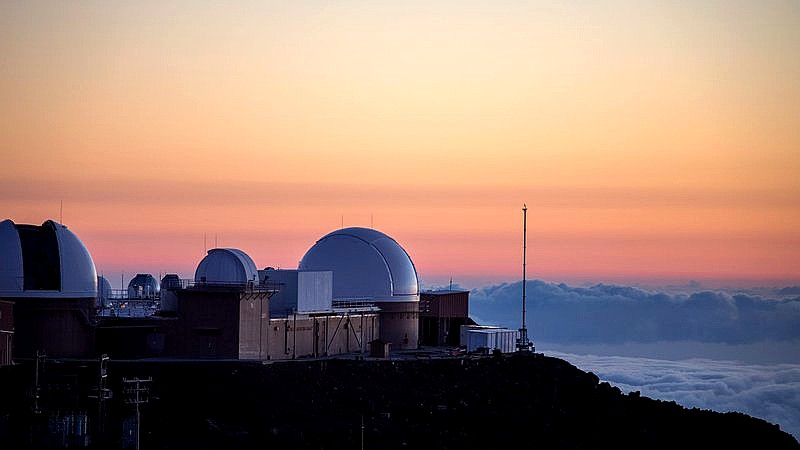
Experiencing the Cosmos: Astronomy in Northern Chile
For any traveler with a penchant for the night sky, northern Chile is already legendary. The Atacama Desert is one of the driest places on Earth, meaning virtually no cloud cover. The high altitude means less atmospheric interference, and the lack of light pollution (seriously, it’s almost non-existent in many areas) creates an unparalleled stargazing experience. It’s a natural fit for astronomical observatories, which is why so many major facilities, including the Vera C. Rubin Observatory, have chosen this location.
I remember my first time in the Atacama, years ago. The air was so crisp, so dry, it almost hurt to breathe, but in a good way. And the scent! That unique mix of ancient dust, a hint of mineral, and the faint, distant woodsmoke from a small village fire. Then you step outside and look up. It’s not just dark; it’s a velvety black, so deep it feels like you could fall into it. And the stars? They don’t just twinkle; they blaze. The Milky Way isn’t a faint band; it’s a luminous river of light, so bright you can see your shadow. It’s an experience that rearranges your priorities, makes you feel utterly small and yet profoundly connected.
While direct visits to the Vera C. Rubin Observatory itself are typically restricted for operational reasons, northern Chile astronomy tourism offers fantastic alternatives. The Elqui Valley, for instance, is a designated International Dark Sky Sanctuary and boasts numerous public observatories like Observatorio Mamalluca or Observatorio Cerro Mayu. Many offer guided tours, sometimes in multiple languages, with powerful telescopes for public viewing. It’s an incredible opportunity to connect with the cosmos in a way you simply can’t in most populated parts of the world. Just remember to book in advance, especially during peak season, and dress warmly – desert nights get surprisingly chilly!
Beyond organized tours, simply finding a quiet spot away from any town, pulling up a chair, and looking up is an experience in itself. The Southern Cross, the Magellanic Clouds – these aren’t just names in a book; they’re vibrant, tangible objects in the Chilean night sky. It’s a reminder of why we build these incredible machines, why we strive to look further: to quench that innate human thirst for understanding what’s beyond.
The Future of Astronomy: Democratizing Data and Inspiring Generations
One of the most exciting aspects of the Vera C. Rubin Observatory and its LSST survey isn’t just the data it will collect, but how it will be shared. This isn’t a closed-door project. The LSST data will be made publicly available to the global scientific community and, importantly, to the public. Imagine a high school student in Kansas or an amateur astronomer in Japan having access to the same raw data as a research professor at a top university. This democratization of astronomical data is a powerful concept, potentially unlocking discoveries from unexpected corners.
Okay, so This accessibility, combined with the sheer scope of the project, is bound to inspire the next generation of scientists and engineers. When kids see images from the largest digital camera ever built, revealing galaxies being born or asteroids zipping across our cosmic backyard, it sparks curiosity. It encourages them to ask “how?” and “why?” – fundamental questions that drive scientific progress. The Vera C. Rubin Observatory isn’t just about answering questions; it’s about igniting new ones.
The long-term impact of a decade-long survey, constantly monitoring the universe, is hard to overstate. It will provide a comprehensive baseline, a cosmic timeline against which future observations can be compared. But it will undoubtedly uncover phenomena we haven’t even conceived of yet. Our understanding of dark energy dark matter, the expansion of the universe, and the very structure of our cosmos is poised for a profound shift. We’re on the cusp of a new era of discovery, all thanks to this incredible eye on the universe, perched high in the Chilean desert.
Frequently Asked Questions
Q: what’s the Vera C. Rubin Observatory?
A: The Vera C. Rubin Observatory is a new astronomical facility in Chile, home to the largest digital camera ever built. Its primary mission is to conduct the Legacy Survey of Space and Time (LSST), providing an unprecedented view of the southern night sky.
Q: How big is the LSST Camera?
A: The LSST Camera boasts an astonishing 3.2 gigapixels, making it the largest digital camera ever constructed. It’s roughly the size of a small car and can capture wide-field images of the universe with incredible detail.
Q: what’s the Legacy Survey of Space and Time (LSST)?
A: The LSST is a ten-year astronomical survey that will repeatedly image the entire visible southern sky. Its goals include mapping dark energy and dark matter, discovering transient events like supernovae, and creating a detailed census of the solar system. Seriously.
Q: When will the Vera C. Rubin Observatory begin its survey?
A: The Vera C. Rubin Observatory is expected to begin its full Legacy Survey of Space and Time operations in late 2024 or early 2025, after final commissioning and calibration of its instruments.
Q: Can the public visit the Vera C. Rubin Observatory?
A: While direct public access to the Vera C. Rubin Observatory itself is typically limited due to its active research environment, northern Chile offers excellent opportunities for astronomy tourism. Visitors can explore nearby dark sky parks and other observatories with guided tours.