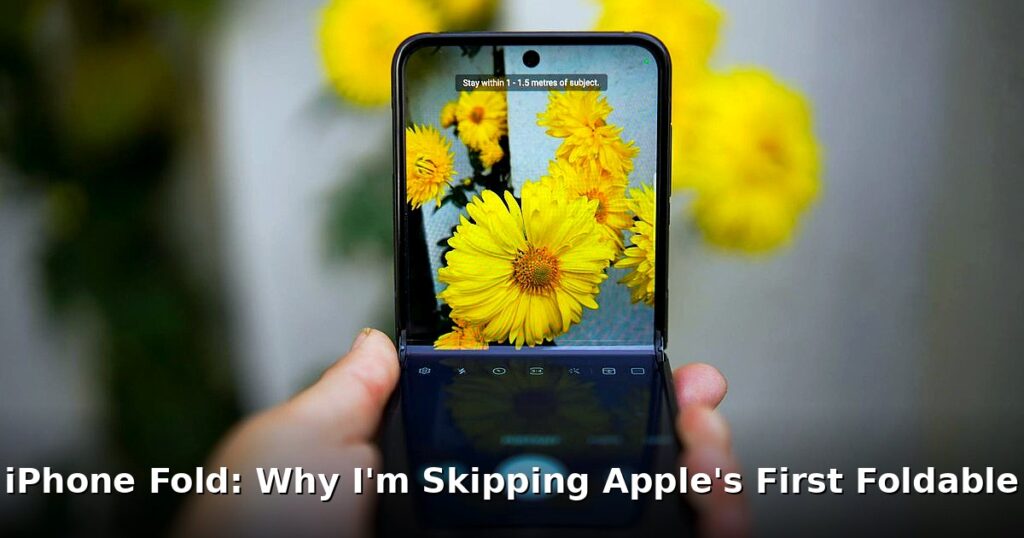

The whispers are getting louder. The renderings are getting slicker. The hype? Approaching fever pitch. Yes, I’m talking about the elusive iPhone Fold. For years, we’ve heard rumors of Apple joining the foldable phone fray, and lately, those rumors have transformed into what feels like an imminent announcement. But despite my love for shiny new gadgets (and, admittedly, a healthy dose of Apple fandom), I’m just not convinced I’ll be rushing to buy one. At least, not yet.
Table of Contents
- iPhone Fold Rumors: Hype Train or Reality?
- Durability Doubts: My Foldable Phone Concerns
- The Price is Probably Bonkers: Prepare for the iPhone Fold Premium
- Software Optimization: Will iOS Truly Shine on a Foldable?
- Waiting for iPhone Fold 2 (or 3): Playing the Long Game
- What Would Make Me Buy an iPhone Fold?
- Frequently Asked Questions
iPhone Fold Rumors: Hype Train or Reality?
So, what are these rumors, anyway? Well, the latest scuttlebutt points to a device with an 8-inch display when unfolded, rivaling the size of an iPad Mini. Some leaks suggest a design that’s more akin to a book (like the Samsung Galaxy Fold), while others hint at a clamshell design (a la the Galaxy Z Flip). We’re also hearing about potential features like a super-tough hinge, a next-generation display technology, and, of course, a price tag that’ll make your eyes water.
There’s no denying the excitement. An Apple foldable phone would be a huge deal. It’d be the company’s first major foray into a completely new form factor since the Apple Watch. And honestly, the idea of having a pocketable device that unfolds into a mini-tablet is undeniably appealing. But here’s the thing: I’ve been burned before. I’ve seen the promises of revolutionary tech fall flat. And foldable phones, I’ve some serious reservations. Check out our guide on Pokemon Pokopia Fixes Incoming: Patch Details and What to Expect. We covered this in Pokémon Pokopia Sales Explode: 2.2 Million Units Sold in 4 Days.
Durability Doubts: My Foldable Phone Concerns
My biggest concern with the iPhone Fold? Durability. And it’s not just theoretical hand-wringing. I’ve seen friends struggle with their foldable phones from other manufacturers. Cracked screens, failing hinges, and general fragility seem to be par for the course. These aren’t cheap devices, mind you. We’re talking about phones that cost as much as (or more than) a high-end laptop!
That hinge mechanism is a particularly worrying point. It’s a complex piece of engineering that needs to withstand constant opening and closing. Can Apple really create a hinge that’s both smooth and durable enough to last for years of daily use? Maybe. But I’m skeptical. I’ve seen too many hinges fail on laptops, and those don’t even get folded in half! I remember buying a “ruggedized” laptop a few years back. It was supposed to withstand drops and spills. It lasted six months before the screen hinge gave way. Not great.
And let’s not forget about the screen itself. Foldable displays are inherently more susceptible to damage than traditional glass screens. They’re made of flexible materials that are more easily scratched and dented. I’m not saying Apple can’t overcome these challenges. They’ve certainly got the engineering prowess to give it a shot. But until I see real-world evidence of a foldable phone that can withstand the rigors of daily life, I’m going to remain cautious.
The Price is Probably Bonkers: Prepare for the iPhone Fold Premium
Okay, let’s talk about the elephant in the room: the price. We all know that Apple products aren’t exactly budget-friendly. And when you combine the “Apple tax” with the technology of a foldable phone, you can expect a price tag that’ll make you gasp. How much? My guess is north of $2,000. Easily.
Samsung’s Galaxy Z Fold series already commands a hefty premium, and other foldable phones aren’t much cheaper. Given Apple’s brand cachet and reputation for high-quality materials, I wouldn’t be surprised if the iPhone Fold ends up being the most expensive foldable on the market. So, is it worth it? Does the added functionality of a foldable phone justify the significantly higher cost compared to a regular iPhone?
That’s the million-dollar question (or, in this case, the two-thousand-dollar question). For me, the answer is a resounding “maybe not.” I use my iPhone every day, but I’m not sure I need a foldable screen. I already have an iPad for tasks that require a larger display. Would an iPhone Fold truly my workflow, or would it just be an expensive novelty? I suspect the latter. But I’m open to being proven wrong. Worth it.
Software Optimization: Will iOS Truly Shine on a Foldable?
Hardware is only half the battle. A great foldable phone also needs great software. And that’s another area where I’ve some reservations. Is Apple’s iOS really ready for the foldable form factor? I’m not so sure.
I’ll be honest — Sure, iOS is a polished and user-friendly operating system. But it’s primarily designed for a single, rectangular screen. How will apps adapt to the unique screen size and aspect ratio of a foldable phone? Will developers be willing to put in the extra effort to optimize their apps for a relatively niche device? And will Apple be able to ly integrate the foldable experience into iOS without introducing bugs and glitches? These are all valid questions, and I don’t have all the answers.
I’ve used other foldable phones, and the software experience has often been clunky and inconsistent. Apps don’t always scale properly, multitasking can be awkward, and the transitions between folded and unfolded modes can be jarring. I’m hoping Apple can do better, but I’m not holding my breath. And that’s coming from someone who generally loves iOS!
The App Problem
Think about Instagram, for example. Will stories look stretched and weird? What about games designed for a specific aspect ratio? Software is often an afterthought. And on a foldable, bad software would ruin the whole experience.
Waiting for iPhone Fold 2 (or 3): Playing the Long Game
So, here’s my plan: I’m going to wait. I’m going to let the early adopters beta test the first-generation iPhone Fold. I’ll watch the reviews, read the forums, and see how the device holds up in the real world. And then, maybe, just maybe, I’ll consider buying the iPhone Fold 2 or 3. By then, Apple will have hopefully ironed out the kinks, improved the design, and optimized the software. And, who knows, the price might even come down a bit.
I’m a firm believer in the “never buy the first generation of anything” philosophy. Early adopters often face more bugs, design flaws, and compatibility issues. It’s better to let the manufacturer work out the problems before you jump in. Plus, the later generations usually offer significant improvements in performance, battery life, and features. Patience is a virtue, especially expensive gadgets.
What Would Make Me Buy an iPhone Fold?
Okay, Apple, if you’re listening, here’s what it would take to change my mind:
- Significantly improved durability: I need to see real-world evidence that the iPhone Fold can withstand the rigors of daily use without falling apart. I’m talking drop tests, scratch tests, and hinge-stress tests. Show me the data!
- Innovative software features: I don’t just want iOS running on a bigger screen. I want to see features that truly take advantage of the foldable form factor. Think multitasking, intelligent app scaling, and innovative ways to use the flexible display.
- Competitive pricing: I know Apple products are expensive, but the iPhone Fold needs to be priced competitively with other foldable phones on the market. If it’s significantly more expensive than the competition, I’m out.
I’m not asking for the moon. I just want a foldable phone that’s durable, functional, and reasonably priced. Is that too much to ask? I hope not. Apple has the potential to the foldable phone market. But they need to do more than just copy existing designs. They need to innovate. And I’ll be watching closely to see if they can pull it off. The future of the Apple foldable phone depends on it. You can also follow tech news and rumors on sites like The Verge to stay updated.
I’m willing to reconsider my position in the future if Apple addresses my concerns. I want to be excited about the iPhone Fold. I want to believe that it’s more than just a gimmick. But until I see real-world evidence that it’s a durable, functional, and reasonably priced device, I’m going to stick with my regular iPhone. It’s reliable. It works. And I don’t have to worry about folding it in half.
Frequently Asked Questions
Q: what’s the iPhone Fold release date?
A: The iPhone Fold release date is currently unknown, with rumors suggesting a possible launch as early as 2026. Apple hasn’t officially confirmed any plans for a foldable iPhone.
Q: How much will the iPhone Fold cost?
A: Estimates suggest the iPhone Fold could cost upwards of $2000, placing it at the higher end of the foldable phone market. The final price will depend on the features and storage capacity.
Q: Are foldable phones durable?
A: Durability is a major concern with foldable phones. The flexible screens are more susceptible to scratches and damage compared to traditional smartphone displays, and the hinge mechanisms can also be prone to failure. You can research phone durability standards on sites like the National Institute of Standards and Technology (NIST) website.
Q: What are the benefits of a foldable phone?
A: Foldable phones offer a larger screen size in a more compact form factor, making them ideal for multitasking, media consumption, and gaming. They can also provide a unique user experience with features like split-screen apps and flexible camera modes. Huge.
Q: Will Apple make a foldable iPad?
A: While the initial rumors focused on an iPhone Fold, some reports suggest Apple may also be considering a foldable iPad. A foldable iPad could offer a tablet-sized display that folds down into a more portable form.