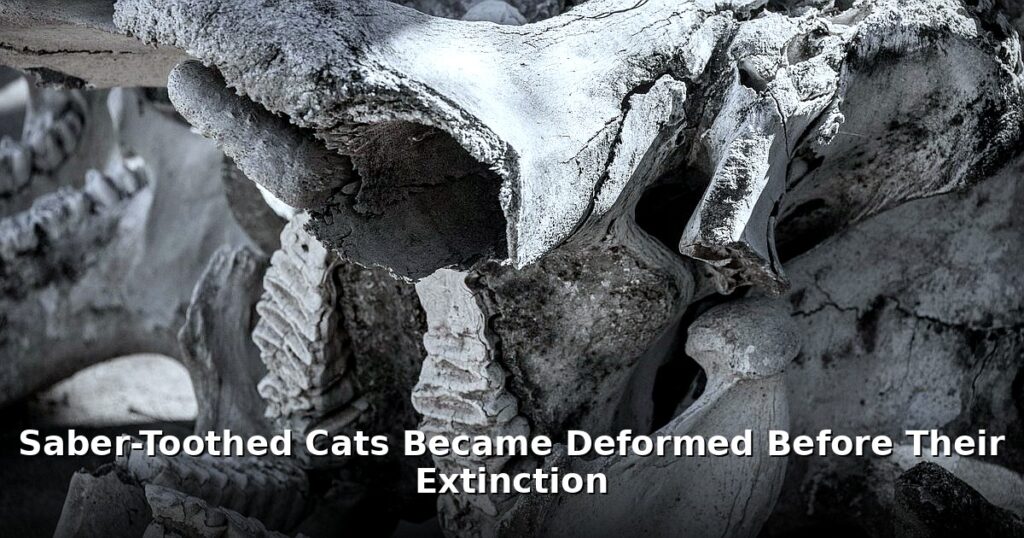

Imagine a world where giant predators roamed, their massive fangs glinting in the prehistoric sun. For millions of years, the saber-toothed cats, or Smilodon fatalis to be precise, were the undisputed kings of their domain. These weren’t your average house cats, not by a long shot. We’re talking about beasts the size of a modern lion or tiger, but often stockier, more powerfully built, and armed with those legendary, terrifying canines.
Table of Contents
They lived during the Pleistocene epoch, sharing the landscape with woolly mammoths, giant ground sloths, and eventually, early humans. Their role in that ancient ecosystem was simple: apex predator. They kept herbivore populations in check, ensuring the delicate balance of life continued. And those teeth? Not just for show. They were specialized weapons, likely used for precision killing, delivering a deep, fatal stab to the throat or belly of large, struggling prey.
You see them in museums, those massive skulls, and you can’t help but feel a shiver. A truly magnificent creature, perfectly adapted for its time. Or so we thought. Because new research is painting a much sadder, more uncomfortable picture of the final days of these incredible animals. Check out our guide on Uranus’ Extreme Tilt: Seasons of Light and Darkness. We covered this in Unveiling GJ 887 d: Our Second Closest Habitable Planet Neighbor.
Saber-Toothed Cats Faced Deformities Before Extinction
I’m always fascinated by what scientists can learn from old bones. It’s like forensic archaeology, piecing together a story from fragments. And the story coming out of the La Brea Tar Pits, home to thousands of Smilodon remains, is pretty grim. Researchers, notably from the Natural History Museum of Los Angeles County, have been doing some serious detective work, meticulously examining hundreds of saber-toothed cat skeletons.
What they’re finding is alarming: widespread evidence of a debilitating smilodon bone disease. We’re not talking about a few isolated cases, either. It’s a significant percentage of the population showing signs of severe skeletal deformities. Think about that. An apex predator, strong and fearsome, but many of them hobbled by chronic health issues.
The specific types of deformities observed are heartbreaking. Scientists have documented issues like osteochondrosis, a developmental problem where cartilage fails to properly turn into bone, leading to painful joint malformations. Imagine trying to run down a bison with a hip that’s basically crumbling. Not great. They’ve also found evidence of abnormal bone growth, lesions, and general skeletal dysplasia, indicating systemic problems rather than just isolated injuries.
These aren’t minor aches and pains. These are conditions that would have profoundly impacted an animal’s ability to survive. Hunting, for a saber-toothed cat, wasn’t a leisurely stroll. It was a high-stakes, physically demanding endeavor. Every pounce, every struggle with a massive mammal, relied on peak physical condition. A cat with compromised joints or painful bone growth would be slower, weaker, and less effective. It would struggle to catch prey, leading to starvation. It would be more vulnerable to injury during a hunt, and less able to defend itself against rivals or other threats. A true struggle for existence.
What Caused These Prehistoric Health Issues?
So, the big question is: why? What turned these magnificent hunters into ailing creatures? The scientists have a few compelling hypotheses, and they often point to a confluence of factors, which is usually the case when you’re looking at something as complex as ancient predator health.
One major culprit likely ties into the drastic environmental changes happening during the late Pleistocene. The planet was experiencing significant climate shifts, going through cycles of warming and cooling, with massive glaciers expanding and retreating. This wasn’t just a weather report; it fundamentally reshaped habitats. Forests became grasslands, or vice-versa. Water sources shifted. And with habitat changes comes resource scarcity.
When resources become scarce, animal populations shrink and become more isolated. This leads directly to another major hypothesis: inbreeding and reduced genetic diversity. If a population is small and isolated, individuals are more likely to mate with close relatives. This might sound like a minor issue, but it’s actually catastrophic over generations. Inbreeding concentrates undesirable genes, leading to a higher incidence of genetic disorders and, you guessed it, skeletal deformities and other health problems. It’s a vicious cycle.
The truth is, We see this phenomenon in modern animal populations today. Take cheetahs, for example. They’ve gone through several genetic bottlenecks, and as a result, they have extremely low genetic diversity. This makes them highly susceptible to diseases and birth defects. Zoos and conservationists work tirelessly to manage breeding programs to prevent further inbreeding. So, it’s not a stretch to imagine something similar, but on a grander scale, affecting saber-toothed cats during their decline. When you look at modern extinction patterns, genetic diversity is often a key indicator of a species’ resilience.
The Role of Diet and Contaminants
Another fascinating, albeit less proven, idea is the potential impact of diet or environmental contaminants. While not as heavily researched for Smilodon, some scientists ponder if changes in their prey’s diet, or even direct ingestion of certain minerals or toxins through their food chain, could have contributed to bone development issues. It’s a speculative thought, but in a changing world, everything is interconnected.
For now, the leading theories for these widespread ancient predator health issues revolve around the environmental squeeze and the resulting genetic bottlenecks. It paints a picture of a species under immense pressure, suffering from within even before external factors delivered the final blow.
Connecting Deformities to the Great Extinction Event
So, how do a bunch of sick cats lead to the extinction of an entire species? It’s rarely one single thing, especially with events as massive as the Pleistocene megafauna decline. Instead, it’s usually a devastating ‘one-two punch,’ or even a ‘one-two-three-four’ combo that hits a species when it’s already down.
Imagine a population of saber-toothed cats, many of them suffering from debilitating bone deformities. Their hunting efficiency is down. Their ability to reproduce successfully might be compromised. Their overall population numbers are dwindling. They’re already weakened. Now, throw in a rapidly changing habitat – forests giving way to open plains, or vice versa, depending on the region. Their familiar hunting grounds are gone. Their preferred prey species are either migrating or disappearing altogether.
This is where the deformities become a critical vulnerability. A healthy population might adapt, shift their hunting strategies, or move to new areas. But a population plagued by smilodon bone disease is far less resilient. They can’t chase new prey as effectively. They can’t compete as well against other predators. They simply can’t cope with the added stress. It’s like trying to run a marathon with a broken leg.
What surprised me was that The impact of this internal weakness, combined with external pressures, created a perfect storm for the saber-toothed cats. It made them far more susceptible to the ultimate extinction causes saber-toothed cats faced. It highlights a crucial lesson for us today about species vulnerability. Even the mightiest species can be brought to its knees by a combination of internal health issues and external environmental pressures. It underscores genetic diversity in modern conservation efforts. And that matters.
Beyond the Deformities: Other Factors in Smilodon’s Demise
While the new research on deformities is eye-opening, it’s important to remember that the extinction of the saber-toothed cats, and indeed most of the Pleistocene megafauna, was a complex interconnected factors. The deformities certainly weakened them, making them more vulnerable, but other forces were at play.
One of the most significant factors was the expansion of humans. As early humans spread across continents, they became formidable competitors. Not only did they hunt many of the same large prey animals that saber-toothed cats relied on, but they also introduced new pressures. Human populations were growing, developing more sophisticated hunting tools, and altering landscapes. This direct competition for food, combined with the general disruption humans brought, likely put immense stress on an already struggling Smilodon population.
Then there’s the issue of changing prey availability. As the Ice Age ended, many of the megaherbivores that saber-toothed cats hunted—like mammoths, mastodons, and giant ground sloths—began to decline. Whether due to climate change, human hunting, or both, their numbers dwindled. And if your primary food source disappears, what do you eat? A specialized predator like Smilodon, with teeth designed for taking down large, thick-skinned prey, would struggle to adapt to smaller, faster prey. It’s a classic case of an animal being too specialized for a rapidly changing world.
The demise of the saber-toothed cats wasn’t just about a disease. It was a complex, tragic story of environmental upheaval, human competition, and a species simply running out of options. The smilodon bone disease and genetic issues likely accelerated their decline, pushing them over the edge when combined with these other powerful forces. It’s a stark reminder that even the most formidable creatures aren’t immune to the pressures of a changing world, and understanding the pleistocene megafauna decline helps us better protect species today. No joke.
Frequently Asked Questions
Q: what’s a saber-toothed cat?
What surprised me was that A: Saber-toothed cats, or Smilodon, were prehistoric felines known for their incredibly long, sharp canine teeth. They lived during the Pleistocene epoch and were apex predators in their ecosystems.
Q: What kind of deformities did saber-toothed cats have?
The truth is, A: Recent research suggests saber-toothed cats suffered from various bone deformities, including issues with joint development and abnormal bone growth. These conditions would have severely hampered their ability to hunt and survive.
Q: Did deformities cause saber-toothed cats to go extinct?
A: While not the sole cause, bone deformities likely played a significant role by weakening populations, making them less resilient to environmental changes, dwindling food sources, and competition from other predators, including early humans.
Q: When did saber-toothed cats live and go extinct?
A: Saber-toothed cats lived from about 2.5 million years ago until roughly 10,000 years ago, at the end of the last Ice Age. Their extinction was part of a larger megafauna extinction event.