

For months, if not years, it felt like everyone was watching the Japanese yen with a mix of fascination and dread. Its slide against the U.S. dollar wasn’t just a slow trickle; it was a cascade, pushing the USD/JPY pair to levels not seen in decades. Then, in the blink of an eye, something shifted. We saw what’s been widely reported as a significant yen intervention, and the currency market hasn’t quite been the same since.
Table of Contents
But what was really going on? Was it just about a number on a screen, or was there a deeper message being sent? Let’s peel back the layers and figure out what Japan’s actions truly mean for the global financial stage.
The Setup: Why the Yen Was on a Wild Ride
To understand the intervention, you first need to grasp the sheer pressure the yen was under. For a long time, the Japanese currency was a poster child for weakness. We watched as the USD/JPY steadily climbed, breaking through the 150 mark and even brushing against 160 at various points. This wasn’t just historical; it was unprecedented in recent memory. Check out our guide on BP Profit Surge: Understanding Big Oil’s Q3 Earnings Amid Criticism. We covered this in Amazon & Apple Stocks: Q3 Earnings Drama Closes a Turbulent Month.
The primary culprit? A massive divergence in monetary policy. On one side, you had the Bank of Japan (BoJ), stubbornly clinging to its ultra-loose stance. They maintained negative interest rates and an aggressive bond-buying program, essentially flooding the market with yen to stimulate their economy and fight deflation. On the other side, the U.S. Federal Reserve was doing the exact opposite. Aggressive interest rate hikes became their weapon of choice against inflation, making the dollar a much more attractive asset for investors seeking higher returns.
This interest rate differential created a powerful carry trade. Investors would borrow cheap yen, convert it to dollars, and invest it in higher-yielding U.S. assets. It was practically a one-way bet, and it put immense downward pressure on the yen. The economic implications for Japan were significant. While a weaker yen can make Japanese exports more competitive, the rapid depreciation meant soaring import costs. Energy, food, raw materials—everything became more expensive, fueling inflation in a country that had battled deflation for decades. Not great for the average consumer, whose purchasing power was eroding fast.
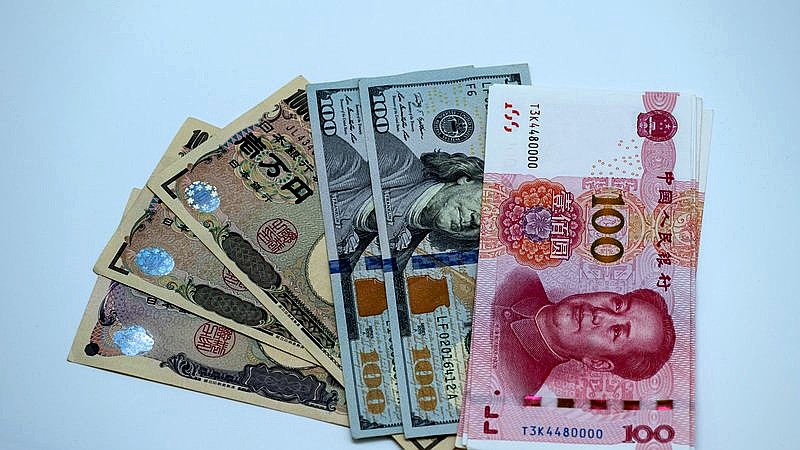
The Act: What Happened During the Yen Intervention
So, Japan had a problem. The yen’s fall was becoming disorderly, and the economic pain was mounting. That’s when we saw the Ministry of Finance (MoF), often acting through the Bank of Japan, step in. While interventions are rarely announced in real-time to maximize their impact, there were strong suspicions and later confirmations of Japan’s actions.
We saw rumored interventions in September and October of 2022, which caused sharp but temporary swings in the USD/JPY. More recently, in April and May 2024, similar dramatic moves in the currency market once again pointed to official action. The Japanese government confirmed they had indeed intervened, though not the precise timing or scale initially. The mechanism is fairly straightforward: to strengthen the yen, the MoF sells its vast holdings of U.S. dollars and buys yen. This increases the demand for yen and the supply of dollars, pushing the yen’s value higher.
Fair warning: The scale of these operations has been eye-watering. Data from the Ministry of Finance eventually revealed that Japan spent an astounding ¥9.8 trillion (roughly $62 billion at current exchange rates) on currency intervention between late April and late May 2024. This follows earlier interventions in 2022 that totaled over $60 billion. These aren’t small adjustments. And these are colossal sums designed to send an unmistakable message.
Beyond the Headlines: The Real Message of the Yen Intervention
It’s easy to look at the numbers and assume Japan was simply trying to hit a specific exchange rate, like pushing USD/JPY back below 155. But from what we understand, the real message embedded in this Japan currency strategy goes deeper than just the absolute level. It’s about the speed of depreciation. Japanese officials repeatedly used phrases like “excessive volatility” and “one-sided moves” to describe their discomfort. Not ideal.
This signals intent. Japan isn’t necessarily against a weaker yen in principle—it can help exporters, after all. But they’re strongly against rapid, speculative moves that disrupt economic planning and create uncertainty. The intervention served as a powerful warning to currency market participants, especially speculative traders, that Japan wouldn’t passively stand by while its currency was pushed around. It’s a reminder that governments do have tools, albeit often short-term ones, to push back against what they perceive as irrational exuberance or panic.
Think of it as adding a new, albeit rarely used, weapon to the Bank of Japan policy arsenal. Even if the underlying monetary policy (low interest rates) remains unchanged, the explicit threat of future interventions now hangs over the market. Traders will have to factor in the “Japan put” (or rather, the “Japan call” for a stronger yen) when making their bets, knowing that aggressive moves could trigger a response. This creates a psychological barrier, aiming to temper future speculative attacks on the yen.
Market Reactions and Global Implications
The immediate impact on USD/JPY was, predictably, dramatic. When the interventions hit, the yen strengthened sharply, often by several big figures in a matter of minutes. But here’s a wish I knew this sooner moment: currency interventions, especially unilateral ones, rarely reverse fundamental trends. They can buy time, smooth volatility, and send a signal, but they struggle to counter sustained interest rate differentials or broader economic forces. So, while the yen initially bounced, it often gradually returned to its prior depreciating trend once the immediate impact faded.
The ripple effects of this kind of significant currency market impact extend beyond just the yen. Other currencies, particularly those in Asia with strong trade ties to Japan, can experience some spillover. Commodity markets also feel the heat. A stronger yen (or weaker dollar) can impact the price of dollar-denominated commodities like oil, as it affects the purchasing power of non-dollar buyers. This also sends a broader message to other central banks globally.
It reminds them that currency stability is a legitimate policy concern, and intervention, while a last resort, remains on the table. In a world increasingly concerned about inflation and trade imbalances, Japan’s actions highlight the delicate balance central banks must strike between domestic policy goals and their currency’s international value.
What Comes Next for the Yen and Japanese Policy?
What surprised me was that This is the million-dollar question. While the yen intervention bought time and sent a clear signal, its limitations are also clear. Without a fundamental shift in monetary policy, particularly from the Bank of Japan, the underlying pressures on the yen will likely persist. The BoJ has slowly started to normalize policy, ending negative rates in March 2024, but their interest rates remain significantly lower than those in the U.S. and Europe.
We could see further BoJ policy adjustments. This might include additional, albeit gradual, interest rate hikes, or a more aggressive tapering of their bond-buying program (quantitative tightening). These steps would reduce the supply of yen and make holding yen-denominated assets more attractive, directly addressing the interest rate differential. Then again, the BoJ is incredibly cautious, wary of stifling nascent economic growth.
Ultimately, the outlook for the yen’s value remains heavily influenced by external factors. U.S. Federal Reserve policy, specifically the trajectory of their interest rates, will continue to be a dominant force. If the Fed starts cutting rates, the interest rate differential will narrow, alleviating some of the downward pressure on the yen. Global economic conditions, geopolitical events, and investor risk appetite will also play significant roles. The forex market stability is a complex dance, and Japan is just one player, albeit a very determined one.
You might not expect this, but For more detailed insights into Japan’s economic policy and the BoJ’s stance, you might find the official Bank of Japan website a valuable resource. Also, reports from the Ministry of Finance Japan can offer further context on their currency strategy.
Frequently Asked Questions
Q: what’s a currency intervention?
A: A currency intervention involves a central bank or government buying or selling foreign currency in the open market to influence its exchange rate. The goal is typically to stabilize the domestic currency or achieve a specific economic objective.
Q: Why did Japan intervene in the yen market?
A: Japan intervened primarily to counter what it deemed ‘excessive’ and ‘one-sided’ depreciation of the yen against the US dollar. While a weaker yen has some benefits for exporters, its rapid decline raised import costs and fueled inflation, causing economic instability.
Q: Was the yen intervention successful?
A: The intervention provided a temporary respite and signaled Japan’s strong disapproval of speculative currency moveme. That saidver, its long-term success is debated, as fundamental economic policies (like interest rate differentials) often have a greater impact on currency value than short-term interventions.
Q: How does yen weakness affect ordinary Japanese citizens?
A: A weaker yen makes imported goods, like energy and food, more expensive, directly impacting household budgets through higher prices. While it can boost export-oriented companies, the overall effect for many citizens is a reduction in purchasing power both domestically and abroad.