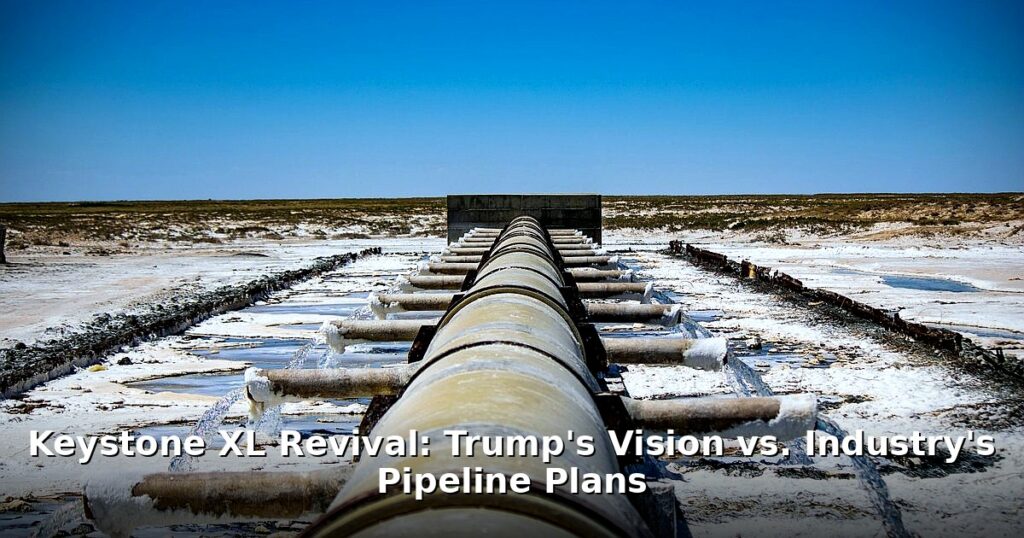

It’s funny how some ideas just never quite die, isn’t it? Like a zombie in a B-movie, they just keep shambling back into the spotlight, no matter how many times they’ve been put down. The Keystone XL pipeline is definitely one of those ideas, especially in the political arena. We’ve seen it rise, fall, and now, with former President Donald Trump eyeing another run for the White House, it’s back on the table.
Table of Contents
- The Keystone XL Pipeline: A Brief History and Its Political Pulse
- Trump’s Resurfacing of the Keystone XL Pipeline Project
- Why the Oil & Gas Industry Has Moved On (Mostly)
- The Evolving Economics of Crude Oil Transport
- Future Outlook: Political Will vs. Market Forces for the Keystone XL Pipeline
- Frequently Asked Questions
But here’s the thing: while the political rhetoric around the Keystone XL pipeline project remains , the energy industry itself has largely moved on. The economics have shifted. The market has adapted. And that, my friends, is where the real story lies.
The Keystone XL Pipeline: A Brief History and Its Political Pulse
Let’s rewind a bit. The Keystone XL pipeline was initially proposed back in 2008 by TC Energy (then TransCanada). Thing is, the idea was simple: build a 1,700-mile pipeline, approximately 1,200 miles of which would be in the U.S., to carry about 830,000 barrels of crude oil per day from the Alberta oil sands in Canada down to refineries on the U.S. Gulf Coast. The main goal? To provide a more direct, efficient, and supposedly safer route for Canadian heavy crude, thereby enhancing North American energy independence. Check out our guide on US National Debt Hits $40 Trillion: What It Means for You. We covered this in Costco’s Senior Healthcare Play: A Medicare Partnership Explained.
It sounds straightforward enough, right? Not so much. From the get-go, the project became a lightning rod. Environmental groups saw it as a climate disaster waiting to happen, specifically because of the carbon-intensive nature of extracting oil from the oil sands. Landowners along the proposed route worried about eminent domain and potential spills.
The project ping-ponged between presidential administrations. George W. Bush’s administration gave it an initial nod. Obama deliberated for years, ultimately rejecting the cross-border permit in 2015, citing concerns about its contribution to climate change and the lack of significant long-term economic benefits for Americans. Then, Donald Trump, during his first term, made it a symbol of his “America First” energy policy, reviving the permit with a stroke of his pen in 2017. Construction even began in some areas.
But the legal battles continued, and the political tides turned again. Shortly after taking office in January 2021, President Biden revoked the permit, effectively canceling the project. Big difference. TC Energy officially pulled the plug in June 2021. It was a saga, to say the least. Big difference.
You might not expect this, but
Trump’s Resurfacing of the Keystone XL Pipeline Project
Now, as we inch closer to another presidential election, Trump is once again talking about bringing back Keystone XL. His rationale remains consistent: it’s about energy independence, American jobs, and cutting through what he views as burdensome regulations. He’s repeatedly stated that if elected, he would reverse Biden’s decision and push to get the pipeline built.
From a policy standpoint, a future Trump administration could attempt to fast-track its revival through executive actions, similar to what he did in 2017. He could re-issue the presidential permit, potentially try to bypass some environmental review processes, and lean on federal agencies to clear regulatory hurdles. The political will, from his perspective, is clearly there.
The “America First” energy independence argument is a powerful rallying cry for his base. So yeah, the idea is that more domestic (or near-domestic) crude oil transport strengthens the U.S. economy, creates blue-collar jobs, and insulates the country from geopolitical instability in other oil-producing regions. It’s a narrative that resonates with many, despite the complexities of global oil markets.
Why the Oil & Gas Industry Has Moved On (Mostly)
Here’s where it gets interesting, and frankly, a bit more grounded in reality than the political rhetoric. While politicians may be stuck in a time warp, the energy industry isn’t. Capital is agile, and it seeks returns. It doesn’t wait around for decades for a single project to get unstuck from regulatory quicksand.
The economic landscape that existed when Keystone XL was first conceived has changed dramatically. A massive shale boom in the U.S. d domestic crude oil production. Places like the Permian Basin in Texas and New Mexico became prolific producers, shifting the focus from Canadian imports to internal logistics. Global oil prices have also seen wild swings, influencing investment decisions. No joke.
Instead of waiting for one mega-project, the industry adapted. They began optimizing existing US oil infrastructure. This meant expanding capacity on current pipelines, reversing flows on others, and building smaller, more targeted pipeline segments to connect new production areas to refineries. This approach is less flashy, but highly effective.
Here’s the thing — And let’s not forget the rise of rail and other transport methods. While pipelines are generally the most cost-effective way to move large volumes of crude over long distances, rail transport became a surprisingly viable alternative. It’s more expensive per barrel, yes, but it offers flexibility and can reach areas not served by pipelines. Even trucking plays a role for shorter hauls or remote locations. These aren’t ideal long-term solutions for everything, but they filled the gap.
My wish I knew this sooner moment? I really underestimated how quickly and completely capital can pivot in the energy sector. Politicians talk about projects for years, sometimes decades. Industry, on the other hand, if it can’t get a clear path in one direction, will find another. They have to. Shareholder value depends on it. The agility of capital in the energy sector often outpaces political timelines, leaving these “legacy” projects as more political footballs than economic imperatives.
The Evolving Economics of Crude Oil Transport
Today, the discussion around crude oil transport economics is far more nuanced than “build a big pipeline.” We have to look at where the oil is actually being produced and where it needs to go. North American crude oil production, particularly light sweet crude from U.S. shale plays, has reshaped refinery needs and logistics. Canadian heavy crude is still important, especially for some specialized refineries, but the overall picture is different.
Building new, large-scale pipelines like Keystone XL now faces a much tougher cost-benefit analysis. The upfront capital expenditure is enormous, measured in billions. And there’s significant regulatory risk and potential for long delays, which can kill a project’s financial viability. Compare that to upgrading existing networks: often cheaper, faster, and with fewer regulatory hurdles and less public opposition. It’s a pragmatic choice for many energy companies.
Investor sentiment has also undergone a dramatic shift. There’s increasing scrutiny of long-term fossil fuel projects, particularly those with significant environmental footprints or regulatory uncertainty. ESG (Environmental, Social, and Governance) factors are now a major consideration for institutional investors. Projects that face years of legal battles and public protest are simply less attractive, even if the underlying commodity demand is there.
Companies are under pressure to demonstrate a path toward decarbonization and sustainability. Sinking billions into a project that generates massive public outcry and potentially becomes a stranded asset in a future lower-carbon economy? That’s a tough sell to shareholders these days. The U.S. Energy Information Administration (EIA) provides some fantastic data on this shift in production and infrastructure.
Future Outlook: Political Will vs. Market Forces for the Keystone XL Pipeline
So, where does this leave the Keystone XL pipeline? Even if a future administration were to throw its full weight behind reviving it, the hurdles are immense. Regulatory approval would still be a maze. Environmental impact assessments would face renewed challenges. Indigenous groups along the route would likely reignite their legal battles. The financial commitment from TC Energy or another major player would be a huge question mark, given their past experience and the current investment climate.
Market demand and the broader energy transition are also powerful forces. While crude oil will be a critical part of the energy mix for decades to come, the narrative is shifting towards renewable energy and reduced carbon emissions. Major oil companies themselves are investing heavily in cleaner technologies and diversifying their portfolios. This larger trend impacts how investors view long-term fossil fuel projects.
The likelihood of any major, long-delayed pipeline project like Keystone XL actually breaking ground and being completed in the current climate is, frankly, pretty low. Worth noting — the window of opportunity for such a project has likely closed. The economics, the investor sentiment, and the relentless march of time have all worked against it. It’s not just about politics anymore; it’s about the cold, hard reality of the market.
Ultimately, the story of the Keystone XL pipeline serves as a fascinating case study in the intersection of politics, economics, and environmental policy. It shows how even the most politically charged projects eventually have to face the realities of the market. And in this case, the market has largely moved on.
Frequently Asked Questions
Q: What was the main purpose of the Keystone XL pipeline?
A: The Keystone XL pipeline was designed to transport crude oil from the Alberta oil sands in Canada to refineries in the U.S. Gulf Coast, aiming to increase North American energy independence and provide a more efficient transport route for Canadian oil.
Q: Why was the Keystone XL pipeline project canceled?
A: The project faced significant opposition from environmental groups and was ultimately canceled by President Biden’s administration shortly after he took office, citing climate change concerns and the project’s limited benefits to U.S. energy independence. And that matters.
Q: Has the energy industry found alternatives for crude oil transport?
A: Yes, the industry has increasingly relied on expanding existing pipeline networks, rail transport, and even trucking to move crude oil. These alternatives, while sometimes more costly or less efficient, have filled the gap left by the cancellation of large projects like Keystone XL. You can find more detailed information on TC Energy’s official website regarding their current operations and past projects.
Q: What are the economic arguments for reviving Keystone XL?
A: Proponents argue that reviving the Keystone XL pipeline would create jobs, reduce reliance on foreign oil imports, and provide a secure, efficient means of transporting crude oil to U.S. refineries, potentially lowering fuel costs.