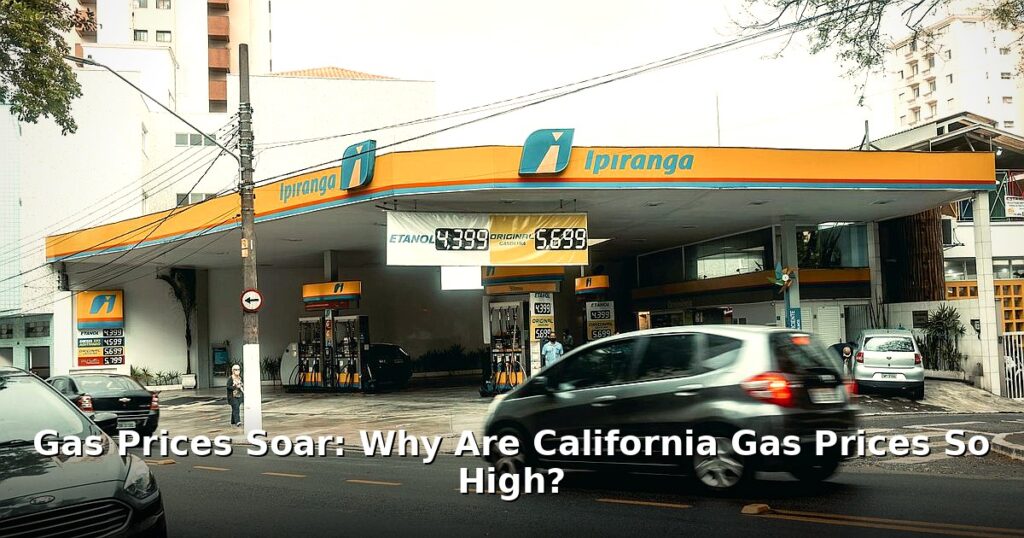

Ouch. That’s the sound my wallet made this week at the pump. If you live in Southern California, you’ve probably felt the same pain. California gas prices have jumped again, with Los Angeles County seeing some of the highest averages in the nation.
Table of Contents
Southern California Gas Prices Jump: What’s Happening?
The average price for a gallon of regular gas in Los Angeles County is hovering around $5.17, according to AAA. And that’s no small change. It’s quite a bit higher than the national average, which is somewhere in the $3.60 range right now. We’re not just talking pennies here.
I’ll be honest — To put things in perspective, we were paying closer to $4.80 just a few weeks ago. This recent spike is hitting consumers hard, impacting everything from daily commutes to the cost of goods transported across the region. It’s not just filling up the tank; it’s a ripple effect. Check out our guide on Neiman Marcus Ala Moana Closing: What Shoppers Should Know. We covered this in Market Reaction ‘Benign’? Goldman Sachs CEO’s Take.

Comparing the Numbers
- Los Angeles County Average: ~$5.17/gallon
- California State Average: Higher than most of the US, naturally
- National Average: ~$3.60/gallon
Seriously, why does it always hurt more here?
Why Are California Gas Prices So High Right Now?
Okay, let’s break down why we’re shelling out so much more for gas than the rest of the country. It’s not just one thing; it’s a perfect storm of factors affecting gas prices. Several things are at play here.
Refinery Issues and Maintenance
California’s refineries are complex beasts, and when they go down for maintenance (planned or unplanned), it impacts supply. Reduced supply? Higher prices. Simple economics, really. These shutdowns can cause temporary but significant price spikes.
California’s Unique Fuel Blend (CARB)
Ah, CARB. The California Air Resources Board mandates a special fuel blend designed to reduce emissions. This is great for the environment. But, it’s more expensive to produce than standard gasoline, adding to the cost. It’s a trade-off.
War in Iran and Global Oil Supply
This is where things get a bit more complicated. Any geopolitical instability in major oil-producing regions can send ripples through the global oil market. And a war involving Iran? That’s a major concern. Just something to think about.
Speculation and Market Manipulation
Fair warning: Now, I’m not saying this is happening, but it’s worth mentioning that speculation and market forces can also influence prices. Traders betting on future price increases can drive up costs, even if there’s no immediate supply shortage. It’s a complex game.
Taxes and Fees
California has some of the highest gas taxes and fees in the nation. These taxes fund infrastructure projects and other state initiatives. they’re a big part of the reason Los Angeles gas prices are so high.
The Geopolitical Connection: Iran and Global Oil Markets
Iran is a significant player in the global oil market. It holds a substantial amount of the world’s proven oil reserves. Any disruption to Iranian oil production or exports can have a major impact on prices worldwide.
Real talk: Think of it like this: if a major supplier suddenly can’t deliver, everyone else has to scramble to fill the gap. Increased demand? Higher prices. It’s pretty straightforward.
Potential for Further Price Increases
If tensions in the Middle East escalate, we could see even higher gas prices. The market hates uncertainty, and geopolitical instability creates plenty of it. This uncertainty often translates to higher prices at the pump. I hope that’s not the case, obviously.
Alternative Oil Sources
While other countries can increase oil production to compensate for any shortfall from Iran, there are limits. It takes time to ramp up production, and some countries may not have the capacity to significantly increase their output. Plus, political considerations can play a role. The U.S. Energy Information Administration (EIA) is a great resource to track these trends.
How To Save Money on Gas During Price Surges
Okay, enough doom and gloom. What can you do to ease the pain at the pump? Plenty, actually. Here are some strategies to consider:
Improve Fuel Efficiency
- Drive smoothly: Avoid sudden acceleration and braking.
- Maintain your vehicle: Keep your tires properly inflated and get regular tune-ups.
- Lose the extra weight: Remove unnecessary items from your car to reduce weight.
Use Gas Price Comparison Apps
Apps like GasBuddy and Gas Guru can help you find the cheapest gas prices in your area. Shop around! It can make a difference.
Consider Alternative Transportation
- Public transit: Explore bus and train options.
- Biking: Great for short trips and exercise.
- Carpooling: Share rides with colleagues or neighbors.
Cash Back Credit Cards and Gas Rewards Programs
Some credit cards offer cash back or rewards points on gas purchases. Look into these programs and see if they make sense for you. Every little bit helps. Worth it.
Wish I Knew This Sooner: Route Planning
This is something I wish I’d learned years ago: plan your routes efficiently to minimize driving distance. Combine errands into a single trip and avoid congested areas. It saves time and gas. Win-win.
Will California Gas Prices Keep Rising?
Predicting future gas prices is like trying to predict the weather. It’s difficult, and there are no guarantees. Ho. Butperts are constantly monitoring the market and making forecasts.
Several factors could influence future price fluctuations:
- Economic conditions: A strong economy typically leads to higher demand and prices.
- Weather: Extreme weather events can disrupt oil production and transportation.
- Geopolitical events: As we’ve discussed, tensions in the Middle East can have a big impact.
Real talk: Long-term, the trend is toward increased adoption of electric vehicles and alternative energy sources. But gasoline will likely remain a significant part of the transportation mix for years to come. The California Air Resources Board (CARB) website has a lot of information on these trends.
Disclaimer: I’m not a financial advisor, and this isn’t financial advice. Market predictions are subject to change. So, you know, grain of salt and all that.
Frequently Asked Questions
Q: Why are gas prices so high in California compared to other states?
A: California has stricter environmental regulations and a unique fuel blend, leading to higher production costs. State taxes and fees also contribute to the difference.
Q: How does the situation in Iran affect gas prices in California?
A: Geopolitical instability in major oil-producing regions like the Middle East can disrupt global oil supply, leading to price increases worldwide, including in California.
Q: What can I do to save money on gas?
A: Improve your driving habits, maintain your vehicle, use gas price comparison apps, and consider alternative transportation options. Gas rewards credit cards can also help.
Q: Are gas prices expected to keep rising in California?
You might not expect this, but A: Future gas prices are difficult to predict and depend on many factors. Refinery issues, global events, and economic conditions all play a role, so monitor the news for updates.
Q: what’s CARB gasoline?
A: CARB gasoline refers to the California Air Resources Board’s reformulated gasoline. It’s designed to reduce air pollution but is more expensive to produce.
Rising California gas prices are a challenge, no doubt. But by understanding the factors at play and taking proactive steps to save money, you can mitigate the impact on your wallet. Stay informed, drive smart, and maybe consider that bike ride. You might even enjoy it.