

Ever feel like there’s something missing? Like you’re only seeing half the picture? Well, the universe feels that way too. Turns out, everything we can see – stars, planets, galaxies – is just a tiny fraction of what’s actually out there. A big chunk of the cosmos is made of something called dark matter, and it’s way weirder than anything you’ll find at your local hardware store. And get this – scientists have confirmed the existence of entire galaxies dominated by this stuff. We’re talking about a dark matter galaxy where normal, visible matter is just a garnish.
what’s a Dark Matter Galaxy, Anyway?
Okay, let’s break it down. Dark matter is, well, dark. As in, it doesn’t interact with light. Doesn’t absorb it, doesn’t emit it, doesn’t even reflect it. So, we can’t see it with telescopes. But we know it’s there because of its gravitational pull. It tugs on things we can see, like stars and galaxies, causing them to move in ways they wouldn’t if only the visible matter were present. Not even close.
Now, imagine a galaxy where the vast majority of the mass is dark matter. We’re talking 99.99% dark matter and 0.01% regular matter (stars, gas, dust). That’s a dark matter galaxy in a nutshell. It’s like a ghostly framework of dark matter holding a few sprinkles of stars. And these things are real. Case in point: Dragonfly 44. You might also enjoy: Boeing Starliner Failure: NASA Chief’s Scathing Review. You might also enjoy: Autonomous Cytopathology: Edge Tomography for Faster Diagnosis.
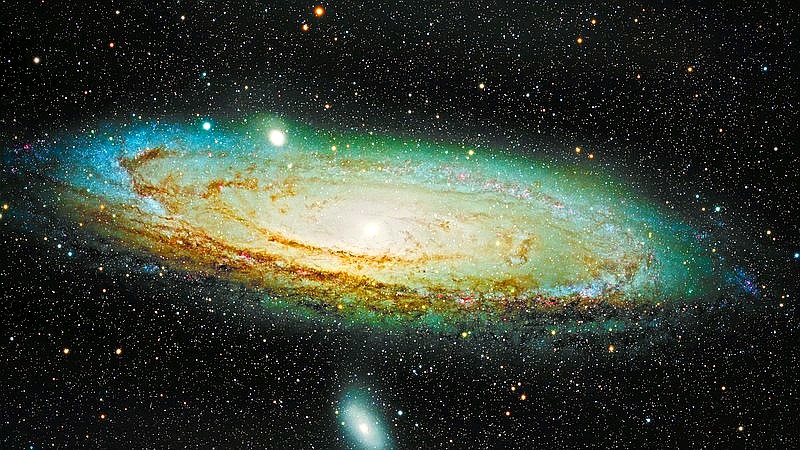
Dragonfly 44 is a prime example of a dark matter galaxy. It’s a diffuse, ultra-faint galaxy located about 330 million light-years away in the Coma Cluster. And it’s seriously lacking in stars compared to its size. That’s because it’s mostly… you guessed it… dark matter. It’s so cool and mysterious, and I’m always excited to learn more about outer space and our constantly expanding universe.
The Hunt for the Unseen: Discovering Dragonfly 44
So, how do you find something you can’t see? Good question. Dragonfly 44 was discovered using the Dragonfly Telephoto Array – a telescope designed to find faint, extended objects in the sky. This telescope is particularly good at spotting these ultra-diffuse galaxies. It’s like using a special magnifying glass to find dust bunnies under your couch – except the dust bunnies are entire galaxies made of invisible stuff.
The evidence for Dragonfly 44’s dark matter dominance comes from studying the movement of its globular clusters – dense groups of stars that orbit the galaxy. By measuring the velocity dispersion of these clusters (how fast they’re moving relative to each other), astronomers can estimate the galaxy’s total mass. Turns out, Dragonfly 44 has way more mass than can be accounted for by its stars alone. Like, a LOT more. This suggests a massive halo of dark matter surrounding the galaxy, holding it all together. Big difference.
Observing and studying these galaxies isn’t easy. They’re faint, far away, and well, mostly invisible. Astronomers use a variety of techniques, including long exposure times and sophisticated data analysis, to tease out the faint signals from these cosmic ghosts. And there’s a lot of debate, too. Always is when you’re pushing the boundaries of what we know. Some people think Dragonfly 44 might not be as dark-matter-dominated as initially thought. But it’s still a fascinating object, no matter what.
Why Should You Care About Some Invisible Galaxy?
Okay, so maybe you’re thinking, “Who cares about some faint galaxy made of stuff I can’t see?” Fair enough. But studying dark matter galaxies like Dragonfly 44 can actually help us understand some pretty fundamental things about the universe. Like, what is dark matter, anyway? And how did galaxies form in the first place?
Here’s what most people miss: These galaxies challenge our current theories of galaxy formation. According to the standard model, galaxies form when dark matter halos pull in gas, which then cools and condenses to form stars. But Dragonfly 44 has far fewer stars than expected for its dark matter halo. So, something must have stunted its star formation. Maybe it got stripped of its gas by interactions with other galaxies in the Coma Cluster. Or maybe dark matter behaves in ways we don’t yet understand. The universe is weird.
The implications extend beyond just galaxy formation. Understanding dark matter is crucial for understanding the overall structure and evolution of the universe. It affects the way galaxies cluster together, the way light bends as it travels through space, and even the fate of the cosmos itself. And it’s a big deal.
Dark Matter Decor: Because Science Can Be Stylish
Here’s what most people miss: Alright, let’s bring this back down to Earth (literally). So, we’ve got these invisible galaxies floating around in space. Fascinating, but what does it have to do with your living room? Well, hear me out. The abstract concepts of astronomy can actually inspire some pretty cool home decor. Seriously.
Think about it: galaxies are beautiful swirling patterns of light and color. You could incorporate nebula-themed art into your space – think vibrant blues, purples, and pinks swirling across a canvas. Or, get a star projector and turn your bedroom ceiling into a miniature cosmos. Instant ambiance. Dark color palettes, obviously, fit the theme, too. Deep blues, grays, and blacks can create a sophisticated and mysterious atmosphere. And for a real conversation starter, you could try to explain to your guests that your paint color is inspired by the density fluctuations in the early universe. Good luck with that. Seriously.
And I had to pitch it: DIY dark matter sensory deprivation chamber? Okay, I’m kidding. Mostly. But you could definitely create a darkened, quiet space in your home for meditation and contemplation. Think of it as your personal dark matter research lab – a place to ponder the mysteries of the universe (or just escape the kids for a few minutes).
Busting the Myths: What Dark Matter Isn’t
Time for some myth-busting. Dark matter is one of those things that gets thrown around a lot, but people often have misconceptions about what it actually is. So, let’s clear a few things up.
- Dark matter isn’t antimatter. Antimatter is real stuff, but it annihilates when it comes into contact with regular matter, releasing energy. Dark matter doesn’t seem to do that.
- Dark matter isn’t just ‘missing’ matter. It’s not like we’re just not seeing regular matter hiding somewhere. The evidence suggests it’s a fundamentally different type of substance.
- We can’t ‘see’ dark matter directly. This is a big one. We infer its presence through its gravitational effects. We see how it tugs on things we can see, and that tells us where it’s and how much of it there’s.
The most important thing to remember is that dark matter makes up a HUGE portion of the universe. Estimates vary, but it’s generally believed to account for about 85% of the total mass. That means everything we can see – all the stars, planets, and galaxies – is just a tiny sliver of the cosmic pie. Crazy, right?
Peering into the Darkness: The Future of Dark Matter Research
What does the future hold for dark matter research? Well, scientists are working hard to unravel its mysteries. There are a number of exciting missions and experiments on the horizon that could help us learn more.
The Vera C. Rubin Observatory, currently under construction in Chile, will conduct a massive survey of the sky, mapping billions of galaxies and searching for subtle distortions caused by dark matter’s gravity. It’s gonna be awesome.
Meanwhile, underground laboratories around the world are conducting experiments to try and directly detect dark matter particles. These experiments use incredibly sensitive detectors to look for faint interactions between dark matter and ordinary matter. It’s like searching for a needle in a haystack – but the needle is made of invisible stuff, and the haystack is buried deep underground. Not ideal.
Look, I’m optimistic (cautiously, of course). Maybe someday we’ll be able to harness dark matter’s energy to power our homes! Okay, that’s probably science fiction. But who knows what the future holds? One thing’s for sure: the quest to understand dark matter will continue to push the boundaries of science and challenge our understanding of the universe. Stay curious!
Frequently Asked Questions
Q: What exactly is dark matter?
Dark matter is a mysterious substance that makes up a large portion of the universe’s mass but doesn’t interact with light, making it invisible to telescopes. We know it’s there because of its gravitational effects on visible matter.
Q: How do scientists know dark matter galaxies exist?
Scientists infer the existence of dark matter galaxies by observing the motion of stars and gas within them. The speeds are much higher than they should be if only visible matter were present, indicating the presence of a large amount of unseen mass (dark matter).
Q: Can we ever see dark matter?
Currently, we can’t directly see dark matter. However, scientists are conducting experiments to try and detect dark matter particles interacting with ordinary matter. There’s hope that future technologies might allow us to directly observe it.