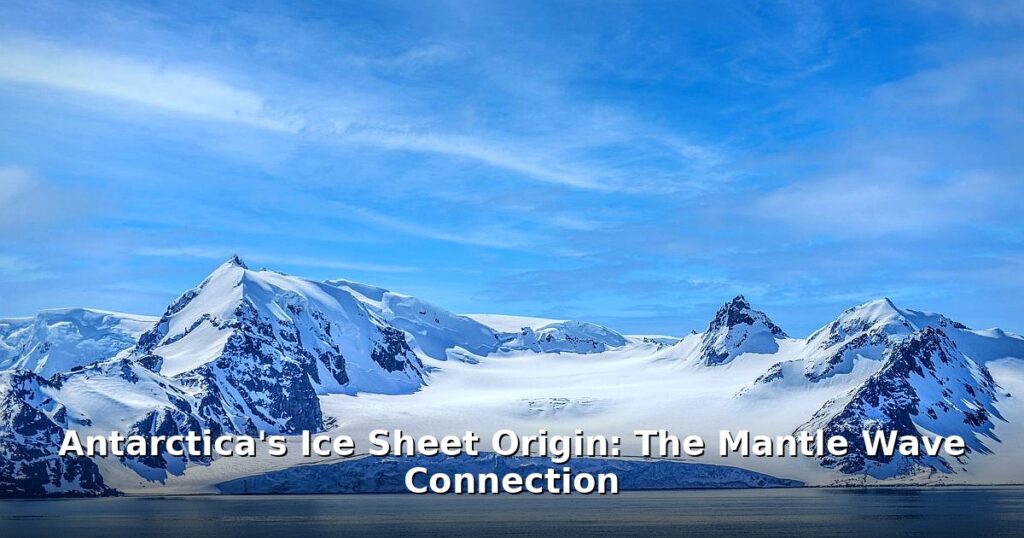

I’ve always been fascinated by how our planet works, from the massive DIY project of building a deck to the truly incomprehensible forces that shape continents. And lately, I’ve been reading about something that really blew my mind: the Antarctica ice sheet origin story. We’re talking about a continent covered in ice, right? Seems pretty straightforward. But what if I told you that this massive ice sheet, the one that makes Antarctica the coldest place on Earth, started forming when our planet was actually about 5°C warmer than it’s today?
Table of Contents
Yeah, that’s a head-scratcher. It’s like trying to make ice cubes in a warm oven. For years, scientists have grappled with this apparent contradiction. How could such a monumental climate feature develop under conditions that, by all accounts, should have been too toasty for permanent ice? It just didn’t add up. Most of us think of glaciation as a direct response to global cooling, a simple cause-and-effect. But the truth, as it often is with Earth’s history, is far more complex and, frankly, way cooler. Big difference.
The latest research, and what got me really thinking, suggests it wasn’t just about atmospheric temperatures or carbon dioxide levels, though those certainly played a role. Nope, the secret to Antarctica’s icy transformation appears to have been brewing deep, deep within the Earth itself. We’re talking about processes that unfold over timescales almost impossible for our human brains to grasp – hundreds of millions of years. It’s a powerful reminder that our world is a dynamic, interconnected system, where the slow dance of the deep Earth can dramatically impact what happens on the surface. Check out our guide on Nancy Grace Roman Telescope: Launch Prep & Falcon Heavy Delivery. We covered this in Nancy Grace Roman Telescope Launch: What to Expect from SpaceX.
The Chilly Puzzle: When Did Antarctica Get Its Ice?
Real talk: Let’s set the scene: Imagine Earth 34 million years ago, a period geologists call the Eocene-Oligocene transition. Dinosaurs were long gone, mammals were thriving, and the world was, on average, a good bit warmer than it’s now. Seriously, picture a global average temperature about 5°C higher than what we experience today. That’s a significant difference. You might imagine lush forests stretching closer to the poles, certainly not vast expanses of permanent ice.
But that’s precisely when the first significant ice started to accumulate on Antarctica, eventually growing into the enormous continental-scale ice sheet we know today. Scientists have known this timeline for a while, thanks to paleoclimate research and sediment cores pulled from the ocean floor. The evidence is pretty clear: something big happened then. But the “how” under those warmer conditions remained a huge puzzle. It was one of those scientific mysteries that really makes you go, “Huh?”
Traditional theories often focused on changes in atmospheric CO2, ocean currents, or shifts in Earth’s orbit. And these factors are undeniably important for understanding ancient Earth climate. But this new theory throws another ingredient into the mix, one that’s usually considered way too slow and deep to have such a direct and dramatic surface impact. It posits that the Earth’s interior, specifically those incredibly slow-moving mantle waves, essentially set the stage for the ice to form.
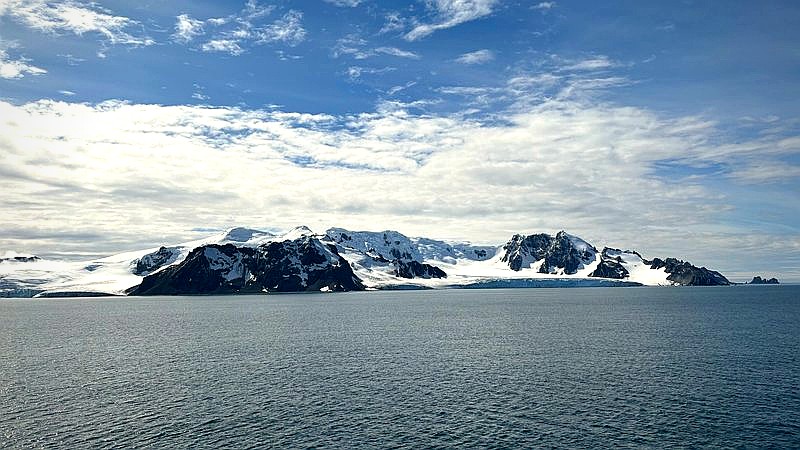
Deep Earth’s Slow Dance: Mantle Wave Effects and Continental Uplift Geology
Okay, so what exactly are these “mantle waves” I’m talking about? Forget crashing ocean waves or even seismic waves from an earthquake. These are different. The Earth’s mantle, lying beneath the crust, isn’t a liquid, but it’s not a rigid solid either. Think of it more like very, very thick, slow-moving taffy or extremely viscous plastic. Over geological timescales, this semi-molten rock can flow and convect. These are the mantle waves – vast, incredibly sluggish currents and upwellings within the Earth’s interior.
Real talk: And these aren’t quick processes. We’re talking about movements measured in centimeters per year, if that. But here’s the kicker: even these minuscule movements, sustained over immense periods, can have profound effects on the surface. Imagine putting a heavy book on a slowly rising blob of thick mud. The book would gradually lift. That’s a simplified way to picture what happened to Antarctica. For more than 100 million years leading up to that 34-million-year mark, these deep-seated mantle waves had been steadily, imperceptibly pushing parts of the Antarctic continent upwards.
This process of continental uplift geology isn’t a sudden mountain-building event, but a broad, gentle swelling of the landmass. And why does elevation matter so much? Well, anyone who’s ever driven up a mountain knows the answer. Even on a hot summer day at the base, you’ll find snow and significantly colder temperatures at the summit. For every 1,000 meters (or roughly 3,300 feet) you go up, the temperature drops by about 6.5°C. That’s a significant chill!
So, even if the global average temperature was warmer 34 million years ago, a continent that was steadily being lifted to higher and higher elevations would eventually reach a point where its mountain ranges and interior plateaus became cold enough for snow to persist year-round. It’s a simple thermodynamic principle, but applied on a truly grand scale. The deep Earth was doing the heavy lifting, literally, to prepare the continent for its icy fate.
The Perfect Storm: Uplift Meets Climate for Antarctica Ice Sheet Origin
This is where the story gets really interesting and all the pieces start to click into place. The new research suggests that Antarctica reaching a critical elevation was the absolute prerequisite for the formation of its massive ice sheet. It wasn’t enough for the climate to just get a little cooler; the land itself needed to be high enough for that cooler air to make a difference. Without that prolonged, slow uplift from the mantle, even a significant global cooling event might have just meant a colder, but still ice-free, Antarctica.
Think of it like building a house. You can have all the best materials and the perfect design, but if your foundation isn’t solid and level, the whole structure is compromised. The mantle waves provided that geological “foundation” for the ice sheet. Once the continent was lifted sufficiently, it became a giant cold trap. Any precipitation that fell at higher elevations would increasingly fall as snow, and crucially, that snow wouldn’t fully melt during the warmer summers. This is the essence of ice sheet formation history – a delicate balance of precipitation and temperature.
This elevation created a tipping point. Once high enough, even relatively subtle shifts in ancient Earth climate – perhaps a slight dip in CO2, a change in ocean currents that brought colder water closer to the continent, or even minor orbital variations – could then trigger widespread glaciation. The continent was primed, ready to freeze over. And freeze over it did. What started as patches of persistent snow and ice in the high elevations eventually grew, over thousands and millions of years, into the vast, continent-spanning ice sheet we see today.
For me, this research really drove home an “aha!” moment about the scale of geological time and the interconnectedness of Earth’s systems. We often look for immediate causes and effects, especially in our own lives or when considering recent climate changes. But sometimes, the biggest, most monumental transformations on our planet come from processes that are so incredibly slow, so deep, and so long-term that they’re almost invisible on a human timescale. It makes you realize that sometimes the solution to a puzzle isn’t just about what happened recently, but what was set in motion eons ago. And it makes me think about my own projects. Sometimes the prep work, the unglamorous, slow stuff, is the most critical.
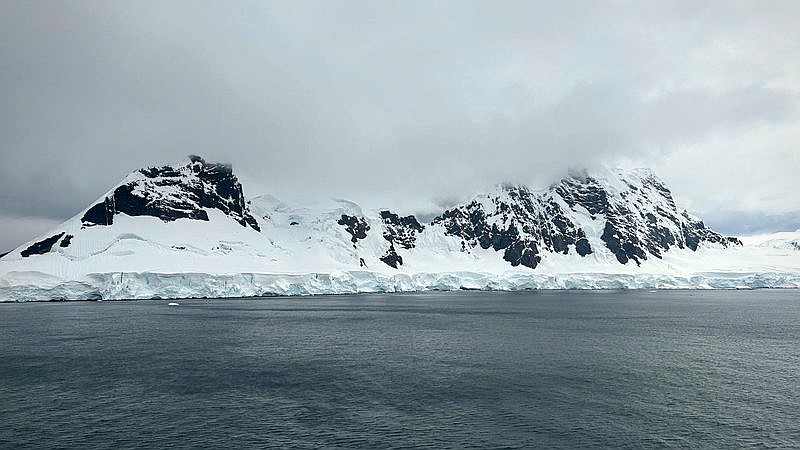
Beyond Antarctica: What This Means for Earth’s Climate Story
So, why does studying the Antarctica ice sheet origin, 34 million years ago, matter to us today? Well, understanding past climates is absolutely crucial for predicting future ones. Our planet has been through countless climate cycles, and by piecing together these paleoclimate research puzzles, scientists can build more accurate models of how Earth’s climate system responds to different forcings – whether natural or human-induced. It gives us context. It shows us the range of possibilities and the complex interplay of factors.
Here’s what most people miss: This particular discovery highlights the intricate dance between Earth’s interior and surface processes. It’s not just the atmosphere, oceans, and biosphere that influence climate. The solid Earth beneath our feet, with its incredibly slow but powerful geological mechanisms, is also a key player. From the movement of tectonic plates shaping continents and ocean basins to volcanic eruptions spewing greenhouse gases, and now, to these deep mantle waves causing continental uplift, the Earth’s interior is constantly, subtly, influencing our planet’s climate trajectory.
Ultimately, why studying deep time is vital for our present and future understanding of our planet boils down to this: Earth is a single, integrated system. You can’t truly understand one part without considering the others. The air we breathe, the water we drink, the land we stand on, and even the heat radiating from the planet’s core are all connected in ways we’re only just beginning to fully comprehend. This research on Antarctica’s icy past is a fantastic example of that ongoing scientific journey. It adds another critical layer to our comprehension of our planet’s incredibly rich and dynamic history, and helps us better appreciate the deep time forces that are still at play today. For more information on Earth’s deep processes, you can check out resources from institutions like the U.S. Geological Survey.
Frequently Asked Questions
What are mantle waves and how do they uplift land?
Mantle waves are incredibly slow, large-scale movements within Earth’s semi-molten mantle. Over millions of years, these movements can cause sections of the crust above them to subtly rise or fall, much like a slow, deep current can influence a floating object. It’s a geological process of continental uplift, not a sudden event.
How much warmer was Earth 34 million years ago?
Around 34 million years ago, when the Antarctica ice sheet began forming, global temperatures were approximately 5°C warmer than they’re today. This makes the formation of a continental ice sheet particularly intriguing and highlights the complexity of ancient Earth climate.
Why is elevation important for ice sheet formation?
Even in a generally warmer climate, higher elevations experience colder temperatures. For ice to accumulate and persist year-round to form an ice sheet, the land needs to be high enough for precipitation to fall as snow and for that snow to not melt entirely during the summer. This is a critical factor in ice sheet formation history.
what’s paleoclimate research?
Paleoclimate research is the study of Earth’s climate history, using evidence from geological records like ice cores, tree rings, sediment layers, and fossils. It helps scientists understand natural climate variations and predict future climate changes, providing valuable context for present-day climate discussions.