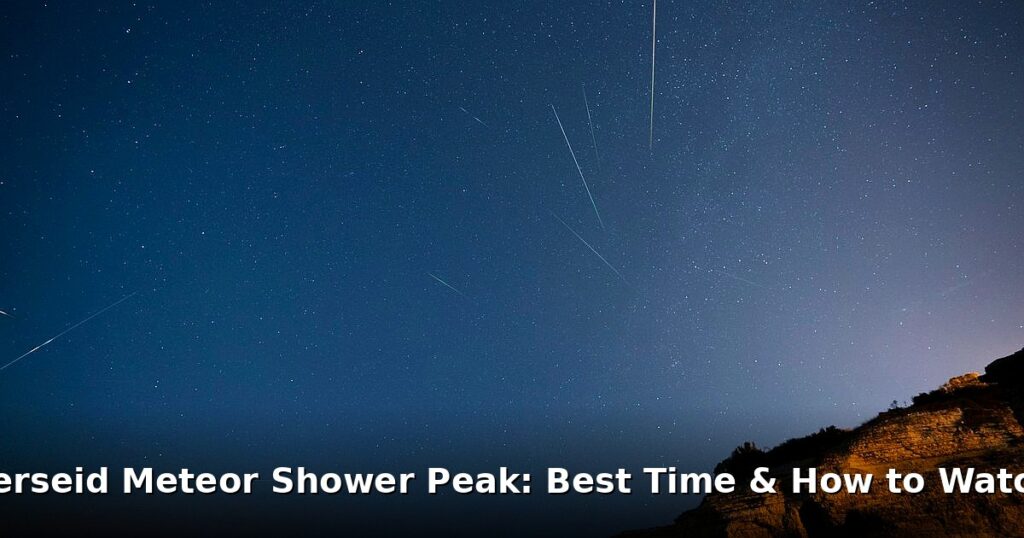

There’s something truly magical about looking up at a clear night sky, isn’t there? I’ve spent countless hours trying to identify constellations, and even tried my hand at astrophotography (with mixed results, let me tell you). But nothing quite beats the thrill of seeing a shooting star. And if you’re like me, constantly looking for those moments of wonder, then you’re in for a treat this August. The Perseid meteor shower is gearing up for its annual spectacular, and it’s one of the best celestial shows you can catch without any special equipment.
Table of Contents
- The Perseid Meteor Shower: What Makes It Special?
- When to Catch the Perseid Meteor Shower Peak
- Where to Find the Best Viewing Spots for the Perseids
- Essential Gear & Tips for Watching the Perseid Meteor Shower
- Photography Tips for Capturing the Perseids (If You’re Feeling Ambitious)
- Frequently Asked Questions
I remember one year, my family and I drove an hour out of the city just to escape the light pollution. We packed blankets, thermos bottles of hot chocolate, and enough snacks to feed a small army. Laying there, staring up at the inky blackness, seeing those bright streaks across the sky was an experience none of us have forgotten. It felt like the universe was putting on a private show just for us. That’s the kind of memory the Perseids can create, and with a little planning, you can experience it too.
The Perseid Meteor Shower: What Makes It Special?
So, what exactly are these bright streaks of light we call meteors? Well, the Perseids are essentially cosmic dust. Every year, Earth passes through the trail of debris left behind by Comet Swift-Tuttle. As these tiny bits of rock and ice (mostly the size of grains of sand, sometimes pebbles) hit our atmosphere at incredible speeds, they burn up, creating those brilliant flashes of light we see from the ground. It’s like a cosmic fireworks display, but instead of chemicals, it’s just friction and superheating. Check out our guide on Europe’s Looming Rocket Launcher Shortage: What Homeowners Need to Know. We covered this in Solar Eclipse Prep: Your Guide to Safely Viewing the Next Event.
What makes the Perseids stand out from other meteor showers? For starters, they’re incredibly reliable. You can pretty much count on them to put on a good show every summer. They’re also known for their brightness and speed, often leaving persistent trails that linger for a second or two after the flash. Plus, they occur during warm summer nights in the Northern Hemisphere, which makes them much more accessible and comfortable to watch than, say, the Quadrantids in January. Just something to think about.
Historically, people have looked at meteor showers with a mix of awe and superstition. Some cultures saw them as tears of the gods, others as omens. For me, they’re a powerful reminder of our place in the vastness of space. It’s pretty humbling when you think about it – tiny bits of a comet, billions of miles away, putting on a show just for us. Pretty neat. No joke.
When to Catch the Perseid Meteor Shower Peak
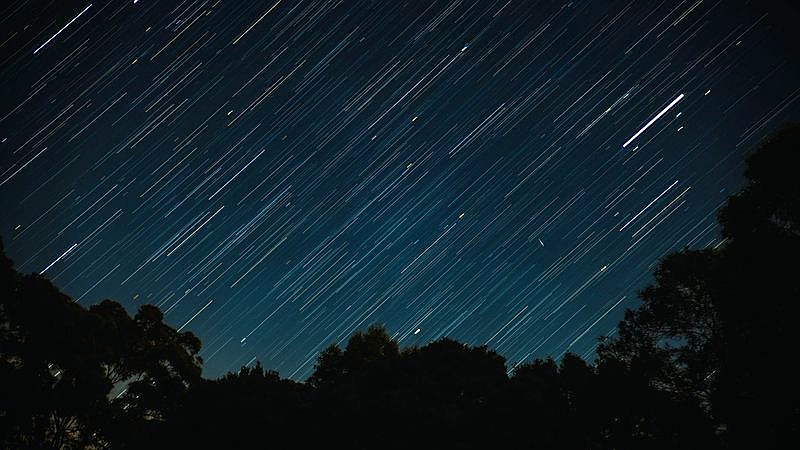
Timing is everything catching the best time to see meteors, and the Perseids are no exception. While the shower runs for several weeks, the absolute peak is usually in mid-August. For 2024, you’ll want to mark your calendars for the nights of August 11th, 12th, and 13th. The absolute best viewing will likely be in the late hours of August 12th into the early morning of August 13th.
Now, when I say “late hours,” I really mean it. The optimal viewing hours are typically after midnight local time, extending until just before dawn. That’s when the radiant point (the part of the sky where the meteors appear to originate from) is highest, and Earth is plowing head-on into the thickest part of the comet’s debris stream. My advice? Plan to be out there around 1 AM and stay as long as you can. It’s always worth it.
But there’s another crucial factor that can make or break your meteor shower experience: the Moon. A bright Moon can wash out all but the brightest meteors, making it much harder to see the show. For the 2024 Perseids, we’re in luck! The new moon occurs on August 4th, meaning the Moon will be a very slim crescent and will set early in the evening during the peak nights. This translates to wonderfully dark skies, significantly improving your chances of seeing a spectacular display. And this is a big deal, folks. A dark sky means you could see dozens of meteors per hour!
Where to Find the Best Viewing Spots for the Perseids
This might be the most critical tip I can give you for how to watch Perseids effectively: get away from light pollution! City lights are the archenemy of stargazing. Even a small town can cast enough glow to seriously diminish your view. My successful Perseid experiences have always involved a drive of at least 30-60 minutes out of town, often to a state park or a friend’s property in the countryside. The darker the sky, the more meteors you’ll see. Simple as that.
When you’re looking for a spot, try to find an open area with a wide, unobstructed view of the sky. A field, a hilltop, or even a large backyard if you’re lucky enough to live somewhere remote. You don’t need a specific direction to look, though the meteors appear to radiate from the constellation Perseus (hence the name). They’ll streak across various parts of the sky, so a broad view is better. Just lie back and let your eyes take it all in. Big difference.
And speaking of rural viewing locations, let’s talk about safety. Because you’ll be out in the dark, potentially in unfamiliar territory, it’s wise to go with a friend or family. Tell someone where you’re going and when you expect to be back. Check the weather forecast before you head out – clear skies are a must, but also be aware of any potential storms. And, seriously, wear appropriate footwear. I once tripped over a hidden root in the dark because I wore sandals. Not great.
Essential Gear & Tips for Watching the Perseid Meteor Shower
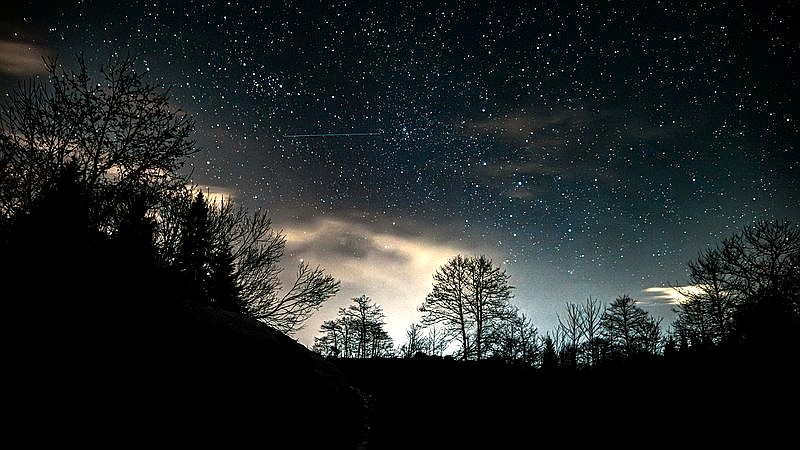
The beauty of a meteor shower is that you don’t need any fancy equipment. Forget the telescope or binoculars for this one. Your naked eyes are the best tools you’ve got for a proper meteor shower viewing guide. They allow you to take in the widest possible expanse of sky, which is exactly what you want when meteors can appear anywhere.
That said, some creature comforts will make your experience much more enjoyable. Trust me on this. Here’s my personal checklist:
- Comfortable Seating: A reclining lawn chair is ideal. You want to be able to lean back and look straight up without craning your neck. A thick blanket or sleeping bag laid on the ground works too.
- Warm Clothing: Even in August, nights can get surprisingly cool, especially when you’re just sitting still for hours. Layers are your friend. A light jacket, a hoodie, maybe even a hat. You can always take them off.
- Snacks and Drinks: Hot chocolate, coffee, water, some granola bars. Keeps you fueled and happy during the long wait.
- Bug Spray: OH MY GOSH, BUG SPRAY! I can’t stress this enough. One time, I was so excited to get out there, I completely forgot the bug spray. By the time I remembered, I was already a mosquito’s buffet. Ended up cutting the night short because I was so itchy. Learn from my mistakes, people. Don’t forget the bug spray.
Beyond the gear, there are a few important viewing tips. First, give your eyes time to adjust to the darkness. This means at least 20-30 minutes, sometimes more. Avoid looking at your phone screen or any bright lights during this period. Even a quick glance at a white screen will reset your night vision, and you’ll have to start all over again. If you absolutely need light, use a red-light flashlight. Red light preserves your night vision much better than white light. You can find these at most outdoor stores, or even put a piece of red cellophane over a regular flashlight in a pinch.
And finally, patience. You won’t see a meteor every minute. There will be lulls. Just relax, enjoy the dark sky, and let your eyes wander. The more sky you take in, the better your chances of catching a bright streaker.
Photography Tips for Capturing the Perseids (If You’re Feeling Ambitious)
If you’re anything like me, you might get the itch to try and capture the beauty of the Perseids. It’s challenging, but incredibly rewarding if you get a good shot. This isn’t a casual point-and-shoot situation, though. You’ll need some specific gear and settings.
First and foremost, a sturdy tripod is non-negotiable. You’ll be taking long exposure shots, and any camera movement will result in blurry stars. You’ll also need a camera that allows for manual settings (a DSLR or mirrorless camera is ideal) and a wide-angle lens (f/2.8 or wider is great). The wider the aperture, the more light it lets in, and the more stars and meteors you’ll capture.
Here are some basic camera settings to get you started:
- Manual Mode (M): Full control over everything.
- Focus: Manual focus set to infinity. Don’t rely on autofocus in the dark.
- Aperture (f-stop): As wide open as your lens allows (e.g., f/2.8, f/3.5).
- ISO: Start around 1600-3200. You might go higher (up to 6400 or even 12800) depending on how dark your sky is and how much noise your camera can handle.
- Shutter Speed: This is where it gets tricky. You want a long exposure to capture faint light and potential meteors. For wide-angle lenses, try 15-30 seconds. If you go too long, stars will start to trail due to Earth’s rotation. A good rule of thumb is the “500 Rule”: 500 / (Focal Length) = Max Shutter Speed. For a 20mm lens, that’s 500/20 = 25 seconds.
- White Balance: Experiment with Kelvin settings (around 3200K-4000K) or “Tungsten” to get a natural look for the night sky.
Set your camera to take continuous shots or use an intervalometer (a separate remote or built-in function) to take many photos back-to-back. You’ll end up with hundreds of photos, and hopefully, a few of them will have a brilliant meteor streaking through. It takes a ton of patience, and you might not get that perfect shot the first time, or even the tenth. But when you do, it’s incredibly satisfying. And if you don’t? Well, you still got to spend a night under the stars, and that’s a win in my book. You can find more in-depth photography guides from places like NASA or Sky & Telescope if you want to really dig in.
So, get ready to look up. The Perseid meteor shower is one of nature’s truly spectacular displays, and with a little preparation, you’ll be all set to enjoy it. Happy stargazing!
Frequently Asked Questions
Q: Do I need a telescope to see the Perseid meteor shower?
A: No, you absolutely don’t need a telescope. Meteor showers are best seen with the naked eye because they cover a wide area of the sky. Telescopes or binoculars actually limit your field of view too much, making it very difficult to spot the fleeting meteors.
Q: What time of night is best to watch the Perseids?
A: The best time to watch the Perseids is typically after midnight local time, continuing until just before dawn. This is when the radiant point is highest in the sky and Earth is rotating into the densest part of the meteor stream.
Q: How many meteors can I expect to see during the peak?
A: Under ideal dark sky conditions, away from light pollution, you might see anywhere from 50 to 100 meteors per hour during the peak. However, city lights or moonlight can significantly reduce this number, sometimes down to only a few per hour.
Q: What direction should I look to see the Perseid meteor shower?
A: While the meteors appear to originate from the constellation Perseus (the radiant), they can streak across any part of the sky. It’s best to look towards the darkest part of your sky, often directly overhead, and let your eyes take in as much as possible. Don’t focus on one spot; keep your gaze broad.