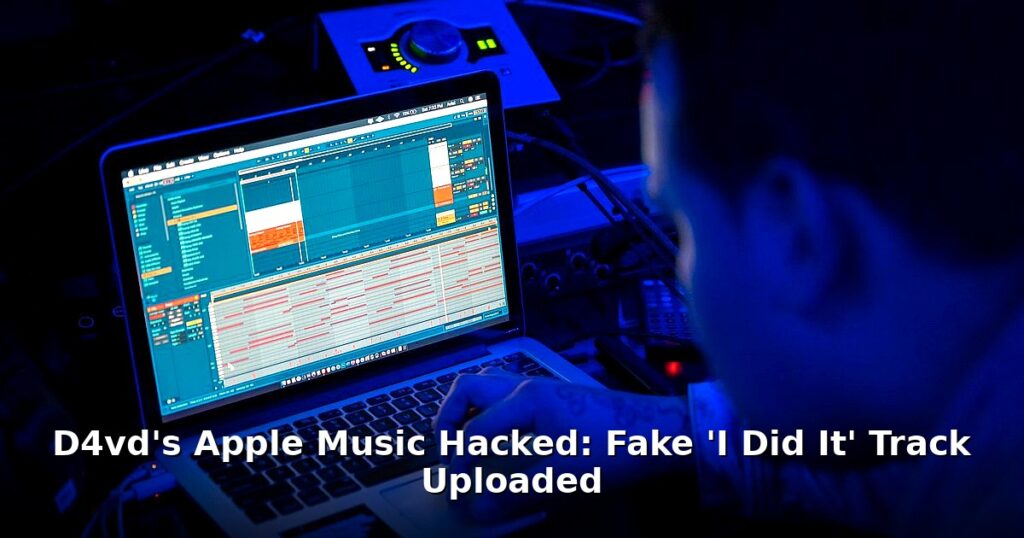

Imagine waking up, scrolling through your favorite artist’s profile on Apple Music, and seeing… a song you’ve never heard before. A song that sounds absolutely nothing like them. A track that feels like it’s been dropped in from another dimension. That’s exactly what happened to fans of the super talented D4vd recently, when his D4vd Apple Music hacked profile started streaming an unauthorized track called ‘I Did It’.
Table of Contents
- Wait, What Happened? D4vd’s Apple Music Hacked
- The Fallout: Confusion, Fan Reactions, and Swift Action
- Why Does This Keep Happening? The Bigger Picture of Music Platform Security
- Protecting Your Digital Empire: Lessons for Artists and Creators
- The Silver Lining? How D4vd Handled the Hacking Headache
- Frequently Asked Questions
I mean, talk about a Monday morning surprise, right? Except it was definitely not the fun kind. This wasn’t some quirky experimental b-side; this was a full-blown security breach, a digital invasion that left fans scratching their heads and D4vd himself utterly frustrated. Not ideal.
Wait, What Happened? D4vd’s Apple Music Hacked
I’ll be honest — The whole thing kicked off when eagle-eyed fans, probably just chilling and listening to ‘Romantic Homicide’ for the hundredth time, noticed something off. A new track, ‘I Did It,’ had mysteriously appeared on D4vd’s official Apple Music profile. And let me tell you, it stuck out like a sore thumb at a black-tie gala. If you know D4vd’s signature moody, alt-pop, often melancholic vibe, this track was… well, it was the opposite of that. It was described by many as a generic, perhaps even poorly produced, rap track. Not exactly his usual fare. Check out our guide on Your Sunday, July 26, 2026 Horoscope by Christopher Renstrom. We covered this in Diddy Reportedly in Solitary After Fight: What Happened?.
The immediate reaction was a mix of confusion and disbelief. Was this some kind of elaborate troll? A secret side project nobody knew about? But then, the truth started to trickle out. It wasn’t D4vd. It wasn’t a secret project. It was a hacker.
Soon enough, D4vd himself and his team confirmed the breach. He took to social media, expressing his annoyance and letting everyone know that his account had been compromised. It’s never a good look, and it’s always a huge headache for artists and their teams. This kind of thing just throws a wrench in everything.
The Fallout: Confusion, Fan Reactions, and Swift Action
The internet, being the internet, went into immediate detective mode. Twitter (or X, whatever we’re calling it these days) and TikTok lit up with fans sharing screenshots, speculating on what happened, and generally just being perplexed. You could almost feel the collective “WTF?” radiating through the screens.
Some fans were genuinely worried. Others were just plain annoyed, not only for D4vd but for themselves, having to wade through unauthorized content. It’s a breach of trust, isn’t it? When you follow an artist, you expect the content on their official channels to be, well, official.
For D4vd, I can only imagine the frustration. Imagine working tirelessly on your art, building a dedicated fanbase, and then some random person just waltzes in and slaps their garbage onto your profile. It’s gotta be infuriating. It’s like someone spray-painting graffiti on your carefully crafted masterpiece. Not great.
Thankfully, the response was relatively swift. Whether it was D4vd’s team working directly with Apple Music security or Apple Music themselves catching wind of the issue, ‘I Did It’ didn’t linger for too long. It was identified, removed, and the digital trespasser was hopefully shown the door. But the incident still left a sour taste.
Why Does This Keep Happening? The Bigger Picture of Music Platform Security
Now, if you’re thinking, “Wait, haven’t I heard about this before?” – you’d be absolutely right. This isn’t an isolated incident, not by a long shot. Artist account security is a persistent thorn in the side of the music industry. We’ve seen it happen to some of the biggest names out there.
Remember when Drake’s unreleased tracks mysteriously appeared online? Or when Beyoncé’s account had unauthorized content? It happens more often than you’d think. These aren’t just small-time indie artists; these are global superstars with entire security teams. And yet, vulnerabilities persist.
So, what gives? Why are these music platform hacks so prevalent? It often boils down to a few common culprits. Phishing scams are a huge one – those sneaky emails or messages designed to trick you into giving up your login credentials. Then there are weak passwords. I know, I know, we’ve all been guilty of using “password123” at some point, but for an artist’s main distribution channels, that’s just asking for trouble. And let’s not forget third-party access. Artists often link various apps and services to their accounts for promotion, analytics, or distribution. If one of those third-party services gets compromised, it can create a backdoor straight into the artist’s main accounts.
It’s a never-ending cat-and-mouse game. Platforms like Apple Music and Spotify are constantly upgrading their security, but hackers are always looking for new ways to exploit weaknesses. It’s a constant arms race in the digital realm. And artists, often busy creating and performing, might not always have the bandwidth to stay on top of every single security update or phishing attempt. Huge.
Protecting Your Digital Empire: Lessons for Artists and Creators
So, what can be done? While major platforms bear a lot of responsibility for Apple Music security, artists aren’t entirely powerless. There are crucial steps every creator, musician, or really anyone with a significant online presence, should be taking to prevent music piracy and unauthorized access.
Enable Two-Factor Authentication (2FA)
Okay, so This is non-negotiable, folks. If an account offers 2FA, turn it on. Immediately. It adds an extra layer of security, usually requiring a code from your phone in addition to your password. Even if a hacker gets your password, they’re stopped dead in their tracks without that second code. It’s like having a bouncer at the digital door. Pretty basic security, but so many people skip it.
Strong, Unique Passwords Are Your Best Friends
I know it’s a pain to remember a zillion complex passwords. But using the same password for your bank account, your email, and your streaming platform? That’s just asking for trouble. Use a password manager if you have to. Make them long, mix ’em up with numbers, symbols, and both cases. Seriously, this isn’t rocket science, but it makes a massive difference. The Federal Trade Commission has some great advice on strong passwords for everyone, not just artists.
Vigilance is Key: Regularly Check Your Profiles
Don’t just set it and forget it. Regularly log in, check your linked apps, review who has access to your accounts. If something looks off, investigate it. It only takes a few minutes, but it can save you massive headaches down the line. Keep an eye on your activity logs too, if the platform offers them. Better safe than sorry, as they say.
Communicate Officially During a Breach
If the worst happens, and your artist account security is compromised, communicate clearly and directly with your fans. Just like D4vd did. Use your other official channels – your website, your verified social media accounts – to inform people what’s happening. This prevents misinformation and keeps your fans in the loop. It also shows you’re on top of things, even when things are going sideways.
The Silver Lining? How D4vd Handled the Hacking Headache
While a hack is undeniably a nightmare scenario, D4vd actually handled it like a pro. His public response was honest and direct. He didn’t try to sweep it under the rug or pretend it didn’t happen. He went straight to his fans, told them what was up, and expressed his genuine frustration. This kind of transparency builds trust, even when things go wrong.
In a way, this negative situation was turned into an opportunity for dialogue. It highlighted the very real challenges artists face with online security and the constant threat of music platform hacks. It served as a reminder that even established artists aren’t immune.
And it also showed the resilience of artists in the face of these digital challenges. D4vd and his team acted quickly, got the fake song down, and moved on. It’s the fact that while technology can be a huge enabler, it also comes with its own set of risks. But artists, ever adaptable, continue to se choppy digital waters, focused on what really matters: creating and sharing their music. It’s a wild ride, this whole internet thing, but we’re all just trying to keep our digital ducks in a row.
Frequently Asked Questions
Q: What song was uploaded to D4vd’s hacked Apple Music profile?
Fair warning: A: A fake track titled ‘I Did It’ was uploaded to D4vd’s Apple Music profile after it was compromised. The song was quickly identified by fans and removed.
Q: How did D4vd respond to the Apple Music hack?
A: D4vd took to social media to confirm the hack, express his frustration, and communicate directly with his fans about the unauthorized upload. He worked with his team to get the song removed.
Q: Are music streaming accounts frequently hacked?
A: Unfortunately, yes. Artist accounts on various music streaming platforms are susceptible to hacking, often due to phishing scams, weak passwords, or compromised third-party access. It’s an ongoing issue for the industry.
Q: What can artists do to protect their music streaming accounts?
A: Artists should enable two-factor authentication, use strong and unique passwords for all accounts, regularly review linked third-party apps, and be wary of suspicious emails or messages that could be phishing attempts. For more general cybersecurity best practices, you can check out resources like the CISA website.