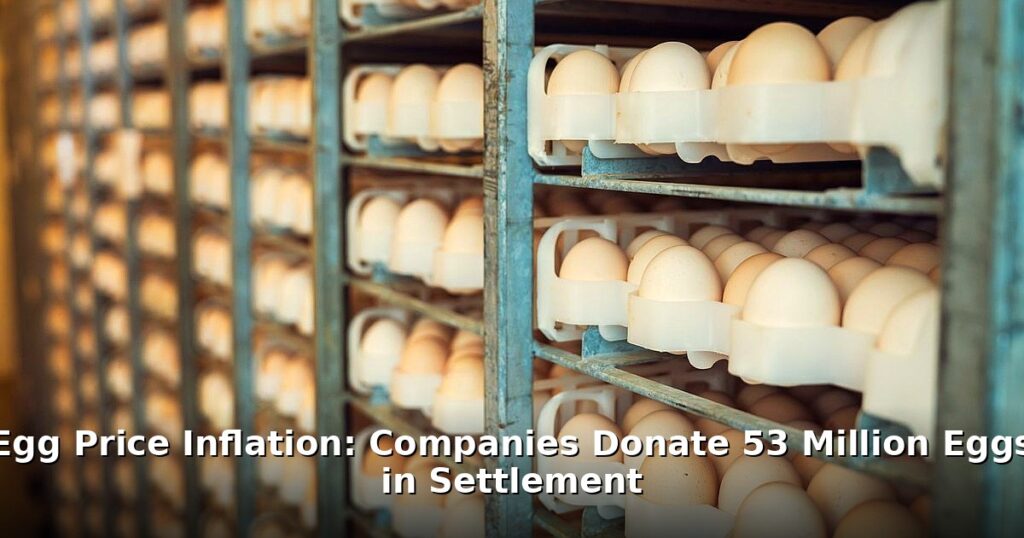

Imagine heading to the grocery store, grabbing a carton of eggs, and paying a little more than you expect. Annoying, right? Now imagine that extra cost wasn’t just market fluctuations, but something far more deliberate. That’s the heart of a long-running saga that recently culminated in a significant settlement, shining a bright spotlight on egg price inflation and alleged corporate misconduct.
Table of Contents
For years, a cloud has hung over some of America’s largest egg producers, with accusations of conspiring to artificially inflate prices. It’s a classic David vs. Goliath story, except David is millions of consumers and Goliath is a consortium of powerful companies. And now, after more than a decade, we’re seeing some resolution.
The Core of the Egg Price Inflation Allegations
This whole situation traces back to a class-action lawsuit filed against major egg producers, a legal battle that has been grinding through the courts for well over a decade. The central accusation? That these companies engaged in a widespread conspiracy to limit the supply of eggs and, in doing so, fix prices. The goal, allegedly, was to drive up costs for consumers and line their own pockets. Not a great look, is it? Check out our guide on American Airlines Debuts Grab-and-Go Lounge Concept at JFK. We covered this in Stock Futures Inch Higher: What Dow’s New Record Means for You.
Here’s the thing — The lawsuit specifically pointed fingers at key players in the industry. We’re talking about big names like Cal-Maine Foods, Inc., which is the largest producer and distributor of shell eggs in the United States, and Rose Acre Farms, Inc., another industry giant. These weren’t small, independent farmers; these were the titans of the egg world.
The allegations painted a picture of coordinated efforts – think industry meetings, information sharing, and agreements to reduce the number of hens, thereby shrinking the egg supply. Basic economics tells you that when supply goes down and demand stays steady, prices go up. And that’s precisely what consumers, particularly between 2004 and 2008, allegedly experienced at the checkout counter.
It’s a serious charge, suggesting a deliberate manipulation of a staple food item that millions of households rely on daily. You’d expect fair competition, not behind-the-scenes maneuvering to dictate how much you pay for your breakfast scramble. The legal process has been slow, intricate, and certainly costly for all parties involved, but the recent settlement is a clear indication that these allegations carried significant weight.

The 53 Million Egg Settlement: What It Means
So, what’s the big news after all these years? The headline grabbing part of the settlement is quite remarkable: the companies involved have agreed to donate a staggering 53 million eggs to food banks across the country. Yes, you read that right. 53 million eggs. It’s an unusual form of restitution, but one that will undoubtedly make a real difference to families struggling with food insecurity.
But the settlement isn’t just about eggs. There’s a significant monetary component too. An additional $75 million in cash payments has been set aside for consumers who were impacted by the alleged price fixing. That’s a lot of money, and it speaks to the scale of the potential harm caused.
What surprised me was that Who exactly benefits from this cash component? The settlement specifically targets “class members” – essentially, consumers who purchased shell eggs or egg products from the involved companies between January 1, 2004, and December 31, 2008. If you bought eggs during that window, you might be eligible for a piece of that $75 million pie. It’s not going to make you rich, but it’s a recognition of the overpayments many people likely made.
This egg industry settlement aims to address not only the past financial harm to consumers but also to serve as a deterrent for future anti-competitive practices. It sends a strong message that such alleged collusion won’t go unpunished. The combination of direct cash payments and charitable donations is designed to provide both individual relief and a broader societal benefit.
Who Was Involved in the Egg Cartel Lawsuit?
When we talk about an egg cartel lawsuit, it’s important to understand the scope. While Cal-Maine Foods and Rose Acre Farms are often highlighted, the litigation originally involved a broader group of defendants, including various subsidiaries and industry organizations. These entities were accused of orchestrating a system to reduce the supply of eggs by implementing specific animal welfare programs – ostensibly for ethical reasons, but allegedly used as a pretext to limit production and boost prices.
What surprised me was that The legal process for a consumer class action lawsuit like this is incredibly complex, involving mountains of evidence, expert testimony, and lengthy negotiations. Achieving a settlement of this magnitude demonstrates the seriousness with which the courts and the defendants viewed the allegations. It’s a long road from initial complaint to final distribution, but this stage marks a significant step towards closure.
Understanding Food Price Fixing and Its Impact
So, what exactly is food price fixing? At its core, it’s a nefarious agreement among competitors to control prices rather than letting them be determined by the natural forces of supply and demand. It’s illegal, unethical, and frankly, a betrayal of consumer trust. Companies are supposed to compete vigorously, driving down prices and improving quality. When they collude, that whole system breaks down.
The economic consequences of price fixing are pretty straightforward and entirely negative. For consumers, it means higher prices for essential goods – like eggs, in this case – stretching household budgets unnecessarily. For the economy as a whole, it reduces competition, stifles innovation (because why innovate when you can just agree on prices?), and ultimately harms overall market efficiency. It’s a lose-lose situation for everyone except the price fixers, if they get away with it.
This isn’t just an egg-centric issue, either. We’ve seen similar cases of alleged collusion and price fixing across various industries. Remember the cases involving memory chips, air cargo, or even chocolate? The patterns are often similar: a few dominant players, a market that seems stable, and then allegations of secret agreements to keep prices artificially high. The mechanisms might differ, but the intent and impact are often identical. The Department of Justice (DOJ) and the Federal Trade Commission (FTC) are constantly on the lookout for these kinds of anti-competitive practices because they fundamentally undermine free markets. You can learn more about how the FTC enforces antitrust laws on their official website.
I’ll be honest — A wish I knew this sooner moment for me personally? How quickly these kinds of schemes can escalate and impact everyday budgets. When you’re buying groceries, you often just assume the price is fair. You don’t usually stop to think that the cost of your milk or your bread might be artificially inflated by a handful of companies secretly agreeing not to compete. It makes you feel a little powerless, doesn’t it? It just underscores why these consumer class action lawsuit cases are so vital. Not even close.
Not ideal.
Consumer Recourse and Future Protections Against Price Gouging
For those eligible, claiming your portion of the cash settlement from the egg lawsuit is a pretty straightforward process, though it does require some action on your part. Typically, an official settlement website is established, providing all the details on eligibility, how to submit a claim, and deadlines. It’s usually a good idea to keep an eye on these sites or any official notices if you think you might qualify.
But beyond individual recourse, what’s being done to prevent this kind of alleged behavior in the future? Regulatory bodies like the FTC and the Department of Justice play a crucial role. they’re the watchdogs, tasked with enforcing antitrust laws and preventing anti-competitive practices. Their investigations, fines, and legal actions are designed to deter companies from engaging in price fixing, monopolies, and other market manipulations. It’s a constant battle, requiring vigilance and resources to protect consumers and ensure fair markets. For instance, the DOJ’s Antitrust Division has a whole section dedicated to explaining antitrust laws and how they protect competition.
What can you, as a consumer, do? A few things. First, stay informed. Understand market trends and be aware when prices for common goods seem to suddenly spike without a clear reason (like a natural disaster). Second, don’t be afraid to report suspicious pricing to the relevant authorities. While one person’s complaint might seem small, a pattern of complaints can trigger an investigation. Third, support policies that promote transparency in the food supply chain. The more information consumers have about where their food comes from and how it’s priced, the harder it’s for nefarious activities to take root.
Ultimately, these settlements, while providing some compensation, also serve as a powerful reminder of the ongoing need for consumer advocacy and regulatory oversight. We all deserve to shop in a market where prices are set by genuine competition, not by backroom deals.
Frequently Asked Questions
Q: Which companies are involved in the egg price inflation settlement?
A: Several major egg producers are involved, including Cal-Maine Foods and Rose Acre Farms, among others, who were accused of conspiring to fix egg prices over a period of years.
Q: How will the 53 million donated eggs be distributed?
A: The donated eggs will be distributed to various food banks across the country, aiming to support those in need and mitigate some of the past impact of the alleged price fixing.
Q: Am I eligible for a cash payment from the egg settlement?
A: Eligibility for cash payments is generally for consumers who purchased eggs from the involved companies between 2004 and 2008. Specific details and claim processes are usually outlined on official settlement websites.
Q: what’s price fixing and why is it illegal?
A: Price fixing is an agreement between competitors to set prices, rather than allowing them to be determined by market forces. It’s illegal because it eliminates competition, harms consumers by driving up costs, and is considered an anti-competitive practice.