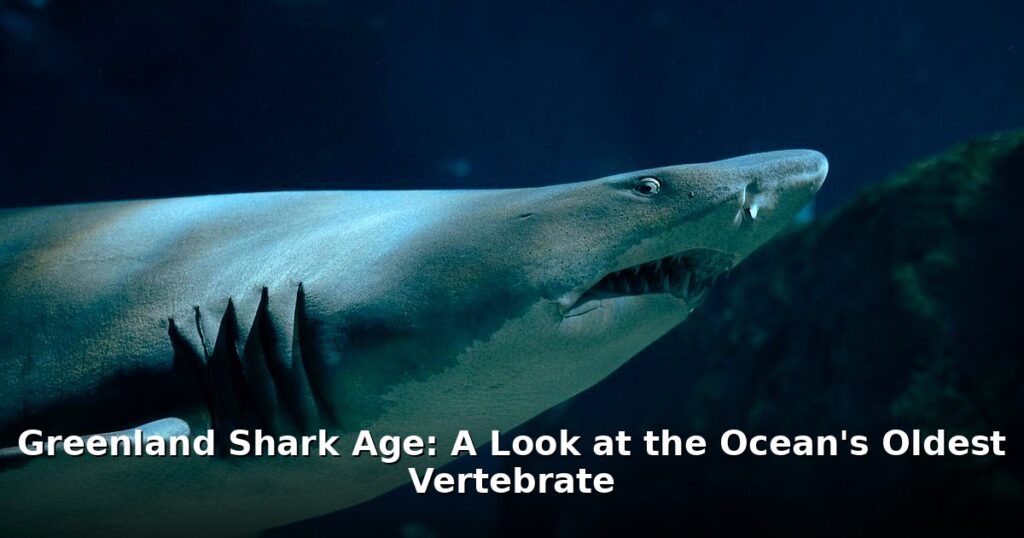

If you’ve been looking into Greenland shark age, imagine this: A creature born around the time William Shakespeare was penning his final plays, a creature that saw the Pilgrims land at Plymouth Rock, and would still be swimming in the icy depths of the ocean today. No, it’s not a character from a fantasy novel. It’s the Greenland shark, and its age is so mind-boggling, it completely changed our understanding of longevity on Earth.
Table of Contents
Back in 2016, a study dropped that shook the scientific world. Researchers estimated one particular Greenland shark was nearly 400 years old. Four hundred years! Think about that for a second. That shark was probably born in the early 1600s, living through centuries of human history, wars, revolutions, and technological leaps, all while slowly cruising the frigid North Atlantic.
This wasn’t just a cool factoid; it was a massive revelation. It instantly made the Greenland shark the longest living vertebrate known to science, shattering previous records held by bowhead whales. It also completely recalibrated our understanding of what’s possible for life spans in complex organisms. And for me, as a homeowner who sometimes feels like my own house is aging faster than I’m, it really puts things into perspective. We’re talking about a lifespan that makes our 80-year human existence look like a blink. Check out our guide on Rare Daytime Lunar Occultation: Watch Venus Disappear. We covered this in Satellite Internet Rescue Mission: Will It Save Your Connection?.
But why does this Greenland shark age discovery matter beyond just being astonishing? Well, when you have an animal living for centuries, it becomes a living archive of its environment. Its tissues hold clues about ocean conditions from hundreds of years ago. It also forces us to think differently about marine ecosystems and the incredible resilience, and fragility, of life within them. If we’re just now discovering creatures that live this long, what else don’t we know about the deep?
How Scientists Pinpoint the Greenland Shark’s Age
Aging a creature that lives for centuries in the deep, dark ocean isn’t exactly easy. You can’t just ask them for their birth certificate. For many fish, scientists look at otoliths – ear bones that grow rings like trees. But sharks, being cartilaginous fish, don’t have those.
For years, the Greenland shark’s age was largely a mystery. Scientists tried to estimate it based on size, but their growth rate is so incredibly slow that it was mostly guesswork. Then came the breakthrough: radiocarbon dating of their eye lenses.
The core of an animal’s eye lens is formed before birth and remains metabolically inert throughout its life. This means it’s a perfect time capsule. Researchers can analyze the carbon isotopes within this core. Specifically, they looked for carbon-14, which saw a significant spike in the atmosphere after nuclear bomb testing in the 1950s. This “bomb pulse” provided a clear chronological marker.
By comparing the levels of carbon-14 in different layers of the eye lens (the lens grows new layers over time, kind of like an onion), scientists could determine an approximate birth year. It’s ingenious, really. They took 28 female Greenland sharks caught as bycatch and applied this method.
Now, it’s important to acknowledge there’s a margin of error. For the oldest shark, the estimate was 392 years, with a range of plus or minus 120 years. So, it could have been 272 years old or 512 years old. Even at the lower end of that estimate, it’s still an astonishingly old animal. Still the longest-living vertebrate. Still a creature that has seen centuries pass by. And that’s what makes the Greenland shark lifespan so utterly fascinating. Just something to think about.
Life in the Slow Lane: Growth and Sexual Maturity
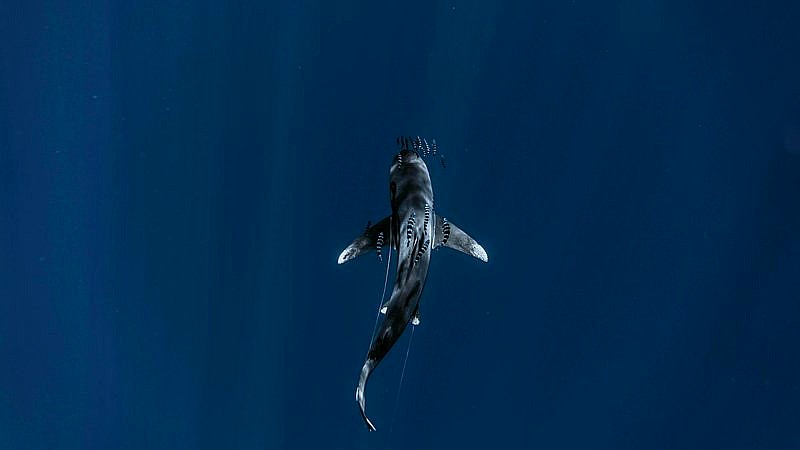
What surprised me was that If you live for nearly 400 years, you’re probably not in any hurry. And the Greenland shark certainly isn’t. Their entire existence is a masterclass in taking it slow.
What surprised me was that These sharks grow at an incredibly sluggish pace – literally just a few millimeters per year. We’re talking about the kind of growth rate that makes a snail look like a cheetah. A typical shark grows to be about 24 feet long. That’s a lot of millimeters to accumulate over hundreds of years.
But here’s the kicker, the part that truly boggles the mind: they don’t reach sexual maturity until they’re about 150 years old. One hundred and fifty years! Think about it: that shark that was 400 years old? It wasn’t even able to reproduce until the American Civil War was raging. That’s a longer childhood than any human, or really any other animal, could ever conceive.
This prolonged maturation period has huge implications. For one, it means they’re incredibly vulnerable to overfishing. If it takes 150 years for a shark to even have a chance to reproduce, removing even a few adults from the population can have devastating, long-term effects. The population simply can’t bounce back quickly. It takes generations for them to replace themselves. And by ‘generations,’ I mean multiple human lifetimes.
It also means that any environmental changes, like those driven by climate change, could have a disproportionate impact on their survival. A species that evolves for stability over centuries might not be equipped to handle rapid shifts. This deepens the mystery of marine longevity secrets and how such an extreme life history strategy actually works.
Deep-Sea Secrets: What Makes the Greenland Shark So Long-Lived?
So, what’s their secret? How does a creature manage to exist for so long? It’s likely a combination of factors, all tied to their extreme habitat.
Real talk: First and foremost, they live in incredibly cold water. We’re talking near-freezing temperatures, often below 39°F (4°C). This extreme cold drastically slows down their metabolism. Think of it like a refrigerator for life. Chemical reactions, cellular processes, and even growth all occur at a much slower rate. Slow metabolism means slow aging. It’s a key factor in the longevity of many cold-water species, but the Greenland shark takes it to another level.
Their deep-water habitat also . They live at depths of up to 7,200 feet, which is pretty much the definition of “out of sight, out of mind.” This offers them protection from most predators, including humans. While they can be caught as bycatch, their remote habitat historically shielded them from targeted fishing pressure. Less stress, fewer threats, more time to just exist.
Interestingly, their flesh contains high concentrations of trimethylamine N-oxide (TMAO), which helps them survive at extreme pressures and also makes their meat toxic to humans if not properly processed. This could be another defense mechanism, even if an unintentional one, contributing to their survival.
These deep sea shark facts paint a picture of an animal perfectly adapted to its niche. They’re not fast. They’re not flashy. But they’re incredibly resilient, the power of slow living in a harsh environment.
Conservation and the Future of the Greenland Shark
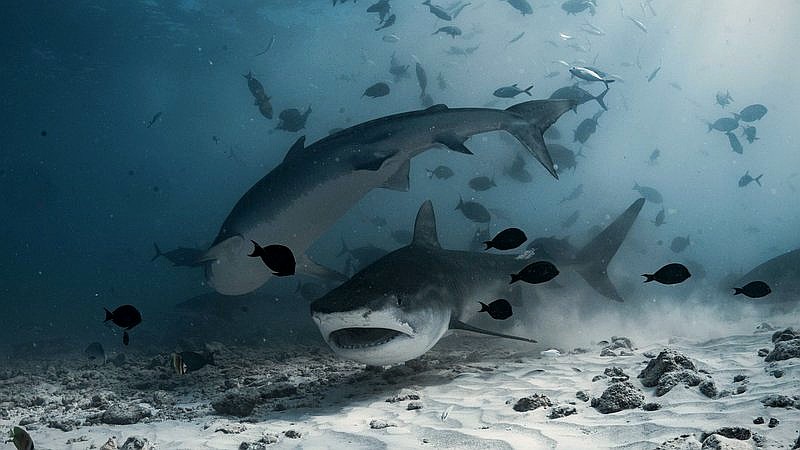
With such an extraordinary lifespan and slow reproductive rate, the Greenland shark is, ironically, incredibly vulnerable. Any threats they face can have devastating, long-lasting consequences for the species.
The primary threat right now is bycatch. While not often targeted, these sharks frequently get caught in fishing nets and lines set for other species, like halibut or shrimp. Given their 150-year wait to reach sexual maturity, losing even a few breeding adults can set the population back for literally centuries. Big difference.
Climate change is another looming concern. As ocean temperatures rise, even in the deep sea, it could disrupt the delicate balance that allows these sharks to thrive. Changes in their prey distribution or even slight increases in water temperature could accelerate their metabolism, potentially shortening their lifespan or impacting their ability to reproduce.
Why should we care about protecting these ancient creatures? For one, they’re a vital part of the Arctic ecosystem. As apex predators, they help maintain the balance of the food web. But more broadly, their existence is a marvel of evolution. They represent a unique branch of life that has found a way to essentially slow down time.
Protecting them is about preserving biodiversity, yes, but it’s also about preserving a living library of oceanic history. What more can we learn from a creature that’s lived through 400 years of change? There’s still so much we don’t know about their migratory patterns, their exact diet, and the full scope of their social behaviors. Scientists are continuing to study them, hoping to unlock more of their secrets before it’s too late. The continued research into the Greenland shark age and biology is critical for their long-term survival.
Look, If you’re interested in supporting marine conservation efforts, organizations like the Oceana and the World Wildlife Fund do incredible work protecting deep-sea species and their habitats. Every little bit helps ensure these amazing creatures continue to roam the depths for centuries to come.
Frequently Asked Questions
Q: How old can a Greenland shark get?
A: Greenland sharks are the longest-living vertebrates, estimated to live up to 400 years or even more. Some studies suggest individuals could reach over 500 years old, making them incredibly ancient creatures.
Q: Where do Greenland sharks live?
A: These sharks primarily inhabit the cold, deep waters of the North Atlantic Ocean, around Greenland and Iceland. They can be found at depths of up to 7,200 feet, thriving in frigid conditions.
Q: What do Greenland sharks eat?
A: Greenland sharks are opportunistic predators, feeding on a variety of fish, seals, and even polar bears. Their diet often includes slower-moving prey, which suits their own unhurried lifestyle.
Q: How big do Greenland sharks get?
A: Greenland sharks are large, growing up to 24 feet (7.3 meters) in length, making them one of the biggest shark species. Their massive size contributes to their ability to endure in extreme deep-sea environments.