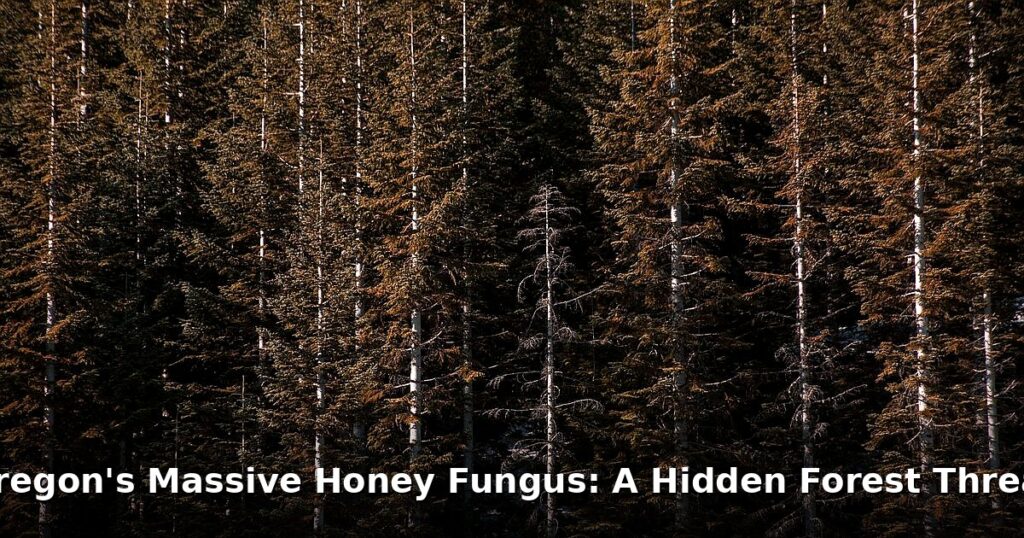

Imagine something growing right beneath your feet, silently spreading for thousands of years, covering an area almost as big as a small city. Not a mythical beast, not some alien invasion, but a fungus. A single, colossal organism living in the dark, damp soil of Oregon. We’re talking about the Oregon honey fungus, a true marvel of the natural world and, frankly, a little bit terrifying if you’re a tree.
Table of Contents
This isn’t your average garden-variety mushroom. Oh no. This is Armillaria ostoyae, affectionately (or perhaps apprehensively) known as the ‘humongous fungus.’ Nestled beneath the ancient Ponderosa pines and Douglas firs of Oregon’s Blue Mountains, this single organism spans an incredible 10 square kilometers. Think about that for a second. That’s nearly 2,500 acres, all connected by a vast, unseen network of fungal threads. It’s truly the largest organism on Earth, or at least, the largest single organism discovered so far.
How does something so immense stay hidden? Well, its genius lies in its stealth. The vast majority of this fungus exists as a mycelial network, a web of root-like structures called rhizomorphs, tunneling through the soil and wrapping around tree roots. It’s a silent assassin, slowly sapping the life out of its hosts. We only really know it’s there because of the trail of dying and dead trees it leaves in its wake. Check out our guide on Y Chromosome Loss in Men: Understanding Its Health Impact. We covered this in SpaceX Satellites: An Accidental Geoengineering Experiment.
Scientists estimate this monster has been at it for at least 2,400 years, possibly even longer. It’s been slowly, inexorably, expanding its reach, surviving forest fires, droughts, and countless generations of trees. Turns out, it really puts our own fleeting human existence into perspective, doesn’t it?
Signs of Trouble: How to Spot the Honey Fungus’s Presence
While the big beast in Oregon is mostly out of sight, its smaller, more localized cousins are quite common, and they can absolutely wreak havoc in your own backyard. Knowing the signs of this particular forest disease identification is crucial for any homeowner with trees they care about.
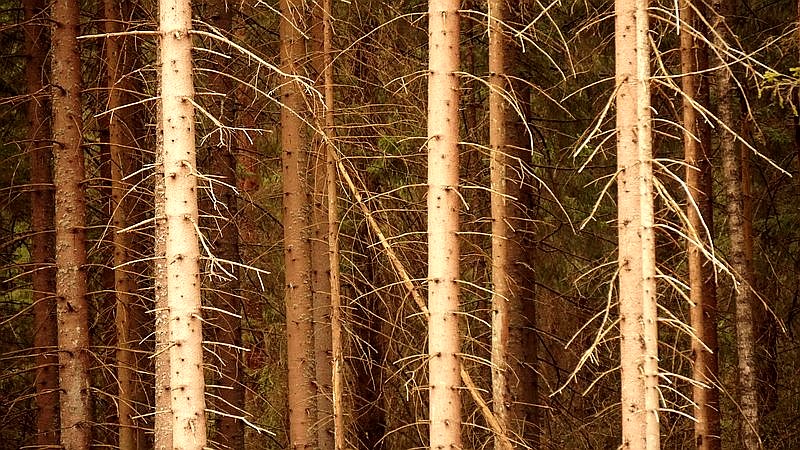
The most obvious, and often saddest, indicator is the state of your trees. Are they looking sickly? Yellowing leaves, premature needle drop, stunted growth, or branches dying back are all red flags. Conifers, especially, seem to be quite susceptible to Armillaria species, and you’ll often see them slowly dying from the top down or with sparse, weak foliage.
But the fungus does occasionally show its face, especially in the fall. You might spot clusters of golden-brown mushrooms growing at the base of infected trees or stumps. These are the fruiting bodies, the reproductive structures of the fungus, and they’re a dead giveaway. They’re usually umbrella-shaped with gills underneath and a ring on the stem.
If you’re really curious (and a bit brave), you can sometimes find more definitive evidence. If you have a tree that’s recently died or is clearly on its way out, carefully peel back some bark near the base. You might find white, fan-like fungal mats growing between the bark and the wood. These are mycelial fans, a tell-tale sign of a severe Armillaria infection.
And then there are the rhizomorphs. These are perhaps the creepiest part. Black, stringy structures, often described as ‘shoestrings,’ that spread through the soil and along roots. They’re like fungal highways, allowing the organism to travel from one tree to the next. Not a pretty sight.
Why This Oregon Honey Fungus Matters to Your Backyard
Okay, so the truly massive Oregon honey fungus is far away in the wilderness. Why should you, a regular homeowner, care? Well, because the same genus of fungi, Armillaria, is a common and destructive pathogen in urban and suburban landscapes. The principles of its impact are universal.
In a natural forest, these fungi play a role in decomposition, breaking down dead wood. But when they become pathogenic, they cause tree root rot treatment issues. In a backyard setting, where trees might already be stressed by construction, compacted soil, drought, or improper planting, they become even more vulnerable. A , healthy tree can often fend off minor infections, but a weakened one is an easy target.
I learned this the hard way years ago. We had a beautiful mature oak in our front yard, and after a particularly dry summer, it just started looking… sad. Yellow leaves, sparse canopy. I watered it, fertilized it, even talked to it (don’t judge). Nothing seemed to help. Eventually, it became clear it wasn’t going to make it. When we finally had it removed, the arborist found extensive root rot. Could it have been Armillaria ostoyae impact or a similar species? Absolutely. It really hit home how quickly these things can take hold, especially when you’re not paying close enough attention to subtle signs.
The main takeaway here is that prevention is always better than cure. Healthy trees are resilient trees. Proper planting—making sure the root flare is exposed, not buried too deep—is fundamental. Adequate watering, especially during dry spells, keeps the tree strong. And good soil care, perhaps with some compost to improve structure and nutrient availability, makes a huge difference. These simple steps can be your first line of defense against a host of fungal culprits, including those in the Armillaria family.
Protecting Your Trees from Root Rot and Fungal Invaders
So, you’ve got some trees you love. How do you keep them safe from these sneaky, destructive fungi? It starts with good horticultural practices, but sometimes, you need to be more aggressive. Big difference.
Best Practices for Tree Health
- Water Wisely: Over-watering can be just as bad as under-watering, creating anaerobic conditions that stress roots and invite fungal growth. Ensure good drainage. If your soil is heavy clay, consider ways to improve it, perhaps with raised beds for new plantings if appropriate.
- Proper Planting: I can’t stress this enough. Planting too deep is a death sentence. The root flare (where the trunk broadens at the base) should be visible and above the soil line. Mounding soil around the base of a tree, or “volcano mulching,” is another common mistake that traps moisture and encourages disease.
- Mulch, But Correctly: A 2-4 inch layer of organic mulch (like wood chips) spread out to the drip line helps retain moisture, regulate soil temperature, and suppress weeds. Just keep it a few inches away from the tree trunk itself to prevent rot.
- Avoid Injury: Mowers and string trimmers are notorious for wounding tree trunks, creating entry points for pathogens. Keep them clear!
Identifying and Removing Infected Wood
If you have an infected tree, especially if it’s dead, removing it promptly can prevent the spread of the fungus to nearby healthy trees. The mycelial network explained how these organisms can travel through the soil and roots, so getting rid of the host means getting rid of a major food source and infection point. This is particularly important for smaller, more isolated infections. Make sure to remove as much of the stump and root system as possible.
But be warned: trying to treat established root rot in a large, infected tree is often a losing battle. Once the fungus has taken hold in the root system and collar, it’s incredibly difficult, if not impossible, to eradicate without harming the tree further. Fungicides rarely penetrate deeply enough or are effective enough to stop a widespread infection. And that matters.
When to Call an Arborist
This is where the pros come in. If you suspect a serious fungal problem, especially if multiple trees are affected or a valuable specimen is at risk, call a certified arborist. They can properly diagnose the issue (there are many types of root rot, not just Armillaria), assess the extent of the damage, and recommend the best course of action. Sometimes it’s a matter of improving cultural practices, sometimes it’s removal, and sometimes there might be a specific treatment protocol they can attempt. Don’t guess. It’s often too late by the time you’re sure there’s a problem.
Living with the Humongous Fungus: Ecological Role and Future Outlook
The story of the Oregon honey fungus isn’t just about tree death; it’s also a fascinating look at the dual nature of fungi and their vital, if sometimes destructive, role in ecosystems. Fungi are nature’s ultimate recyclers. They break down dead organic matter, returning nutrients to the soil. In this role, Armillaria ostoyae is a decomposer, helping to clear out weak or dead trees, making way for new growth.
Here’s what most people miss: But it’s also a pathogen. It actively attacks living trees, often targeting those stressed by drought, insects, or other diseases. This might seem like a bad thing from a human perspective, but in a vast, ancient forest, it’s part of the natural cycle. It prunes the forest, so to speak, ensuring only the strongest and most adaptable trees survive. It’s a brutal kind of natural selection, but selection nonetheless.
Scientists continue to study this massive organism, trying to understand its longevity, its genetic makeup, and its precise impact on the forest. They monitor its spread and its interaction with other species. This ongoing research helps us grasp the complex dynamics of forest ecosystems and provides valuable insights into how such a unique organism can thrive for millennia.
The broader implications for forest management are significant. Understanding pathogens like Armillaria helps foresters make informed decisions about logging practices, species diversity, and how to create more resilient forests. It reminds us that nature is full of hidden complexities, and even something as unassuming as a fungus can be a dominant, ancient force shaping the world around us. It’s truly the power of the natural world, even if it does make my old oak tree story a little bittersweet.
Frequently Asked Questions
Q: what’s the Oregon honey fungus?
A: The Oregon honey fungus is a massive, single organism of the species Armillaria ostoyae. It lives almost entirely underground, spreading through the roots of trees in the Blue Mountains of Oregon, making it one of the largest known organisms on Earth. You can learn more about it from the U.S. Forest Service.
Q: How large is the Oregon honey fungus?
A: This particular honey fungus covers an area of nearly 10 square kilometers (about 3.8 square miles). It’s estimated to be thousands of years old, making it not only one of the largest but also one of the oldest living organisms.
Q: What are the signs of honey fungus infection?
A: Signs include dying or stressed trees, yellowing leaves, stunted growth, and the appearance of golden-brown mushrooms (fruiting bodies) at the base of infected trees in fall. You might also find white, fan-like fungal mats under the bark of dead trees, and black ‘shoestring’ rhizomorphs in the soil.
Q: Can honey fungus kill trees in my yard?
A: Yes, species of Armillaria, including the honey fungus, are pathogenic and can cause root rot, eventually killing susceptible trees and shrubs in home landscapes. It often targets stressed or weakened trees, but can spread to healthy ones. The Royal Horticultural Society has good information on managing it in gardens.
Q: How can I protect my trees from honey fungus?
A: Maintaining good tree health through proper watering, drainage, and planting practices is key. Avoid planting susceptible trees in areas with known infections. Removing dead or infected wood can help limit its spread, but professional arborist consultation is recommended for serious cases.