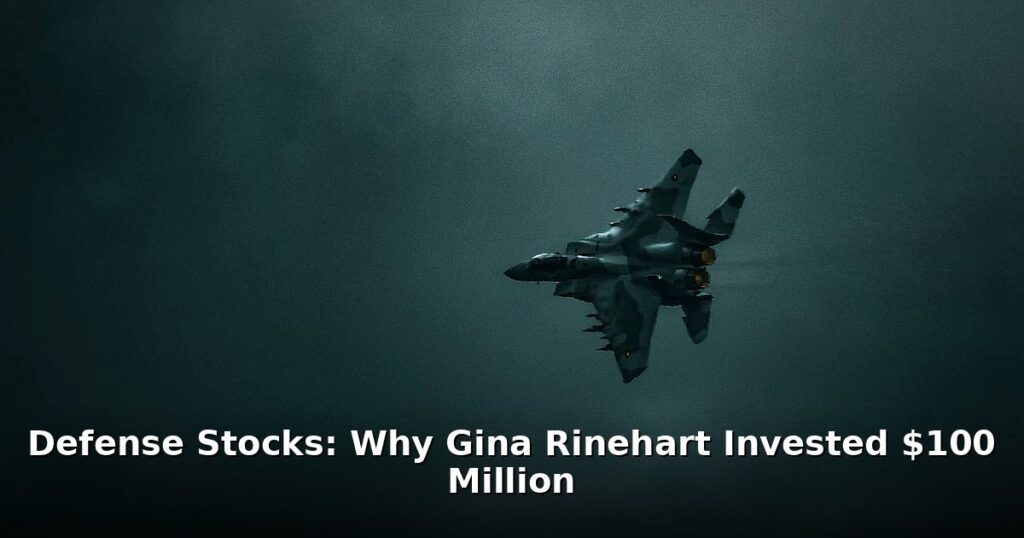

Gina Rinehart, the Australian mining magnate, is known for making bold moves. Her latest? A cool $100 million poured into defense stocks. This investment has raised eyebrows and sparked considerable debate. But what’s the rationale behind this strategic play, and what does it mean for the US defense industry?
Table of Contents
- Gina Rinehart’s $100 Million Bet on US Defense Stocks: What’s the Deal?
- Why Defense Stocks? Analyzing the Appeal of the US Defense Industry
- Which Defense Companies Did Rinehart Invest In?
- Is Investing in Defense Stocks Ethical? Considering the Moral Implications
- Could Defense Stocks Be Right For Your Portfolio?
- Other Billionaire Defense Stock Investments: Following the Smart Money
- Frequently Asked Questions
Gina Rinehart’s $100 Million Bet on US Defense Stocks: What’s the Deal?
Rinehart’s investment signals a significant vote of confidence in the US defense sector. A hundred million dollars isn’t exactly pocket change, and it underscores a belief in the industry’s potential for growth and stability. It’s a substantial amount that could influence smaller defense companies and potentially pave the way for further foreign investment.
Who is Gina Rinehart? She’s the Executive Chairman of Hancock Prospecting, a mining company founded by her father. She’s consistently ranked among the wealthiest people in Australia, and her investment decisions are closely watched. Her track record is impressive, to say the least, often characterized by long-term vision and strategic allocation of capital. Investing in defense stocks? Perhaps she sees something others don’t. Check out our guide on SpaceX IPO: What to Know About Potential Public Offering. We covered this in LIRR Disruption: Financial Impact of Penn Station Fire.

Why Defense Stocks? Analyzing the Appeal of the US Defense Industry
The US defense industry is a behemoth, driven by a complex interplay of geopolitical factors, technological innovation, and, of course, government spending. Several elements contribute to its enduring appeal for investors.
Geopolitical Tensions and Military Spending
Let’s face it: the world isn’t exactly getting more peaceful. Heightened geopolitical tensions – think Eastern Europe, the South China Sea, and various hotspots in the Middle East – are fueling increased military spending globally. Countries are bolstering their defense capabilities, and the US is often at the forefront of providing the necessary technology and equipment. The Stockholm International Peace Research Institute (SIPRI) tracks these trends closely, and their data consistently shows rising global military expenditure. That increased spending translates directly into revenue for the US defense stocks.
Technological Advancements and Innovation
The defense industry isn’t just about tanks and fighter jets anymore. It’s increasingly about technology: artificial intelligence, cybersecurity, advanced materials, and autonomous systems. These innovations require significant investment, creating opportunities for companies that are developing and deploying these new technologies. Investing in aerospace, for example, means betting on the future of warfare and national security.
Which Defense Companies Did Rinehart Invest In?
Unfortunately, the specific companies Rinehart invested in aren’t publicly available. Such details are often kept private, especially in the early stages of large investments. That said, we can speculate based on trends and industry knowledge. It’s likely she targeted established players with strong financials and a track record of innovation. Think companies involved in missile defense systems, aircraft manufacturing, or cybersecurity solutions. These areas are seeing significant growth and are considered strategically important. Not ideal.
Okay, so Comparing to other major players, companies like Lockheed Martin, Boeing, and Northrop Grumman dominate the US defense industry. These giants have deep pockets, extensive government contracts, and a history of delivering results. Smaller, more specialized companies also exist, focusing on niche areas like drone technology or electronic warfare. I’d be willing to bet Rinehart looked at a mix of both, perhaps favoring companies with a strong focus on future technologies.

Is Investing in Defense Stocks Ethical? Considering the Moral Implications
Now for the tricky part. Investing in defense stocks isn’t a purely financial decision. It comes with ethical considerations. This is where things get complicated. For some, profiting from war is morally reprehensible. For others, it’s a necessary evil, supporting national security and protecting citizens. There isn’t a single right answer.
Arguments against investing in companies that profit from war often center on the human cost of conflict. These companies benefit directly from violence and instability, which can feel deeply uncomfortable. Critics argue that such investments incentivize war and prolong suffering. And they have a point.
On the other hand, proponents argue that defense companies provide essential services, protecting nations from aggression and maintaining global stability. They also point out that these companies employ millions of people and contribute significantly to the economy. Furthermore, many defense technologies have civilian applications, benefiting society in unexpected ways. Consider the internet, GPS, and countless other technologies that originated in the defense sector.
ESG (Environmental, Social, and Governance) factors are becoming increasingly important for investors. Many ESG funds specifically exclude defense stocks due to the social and ethical concerns. Investors who prioritize ESG principles may find it difficult to reconcile their values with investing in the defense industry.
Could Defense Stocks Be Right For Your Portfolio?
Okay, let’s get practical. Should you invest in defense stocks? That’s a personal decision based on your individual circumstances, risk tolerance, and financial goals. I’m not a financial advisor, so this isn’t financial advice! I can only offer some general observations.
Defense stocks can offer diversification and potentially stable returns, particularly during times of geopolitical uncertainty. Government contracts often provide a steady stream of revenue, insulating these companies from some of the volatility of the broader market. But they’re not immune to risk.
How do defense stocks perform in different market conditions? Generally, they tend to hold up relatively well during economic downturns, as government defense spending is less cyclical than consumer spending. However, political and regulatory changes can significantly impact their performance. A shift in government policy or a major arms control agreement could negatively affect their prospects.
If you’re considering adding defense stocks to your portfolio, do your homework. Research individual companies, understand their business models, and assess their long-term growth potential. Consider the ethical implications and whether they align with your values. Diversification is key: don’t put all your eggs in one basket. And consult with a qualified financial advisor before making any investment decisions.
Other Billionaire Defense Stock Investments: Following the Smart Money
Gina Rinehart isn’t the only billionaire who sees value in the defense sector. Warren Buffett, for example, has made significant investments in defense companies through Berkshire Hathaway. These moves often send signals to the market, suggesting that sophisticated investors see long-term potential in the industry. It’s worth paying attention to where the “smart money” is flowing.
What can we learn from these investments? For one, it reinforces the idea that the defense industry is a stable, albeit controversial, sector with long-term growth prospects. Secondly, it highlights due diligence and understanding the underlying dynamics of the industry. These billionaires aren’t just throwing money around; they’re making calculated bets based on extensive research and analysis. Go figure.
For further research on this topic, explore resources like company SEC filings, industry reports from organizations like the Aerospace Industries Association (AIA), and financial news outlets that cover the defense sector. Bloomberg and the Wall Street Journal are good places to start. Pretty wild, right?
Frequently Asked Questions
What exactly are defense stocks?
Defense stocks represent shares in companies that manufacture military equipment, provide defense-related services, or develop technologies for national security. These companies often contract with governments to supply arms, vehicles, and other resources.
Are defense stocks a good investment?
Defense stocks can offer stable returns, especially during times of geopolitical instability. However, they’re also subject to political and regulatory risks. It’s crucial to conduct thorough research and consider your own risk tolerance (this isn’t financial advice).
What are the ethical considerations of investing in defense stocks?
Investing in defense stocks raises ethical questions because these companies profit from conflict and military spending. Some investors avoid these stocks due to moral objections, while others argue that they’re supporting national security.
How do defense stocks perform during economic downturns?
Here’s the thing — Defense stocks often show resilience during economic downturns because government defense spending tends to be less affected by economic cycles compared to consumer spending. However, this doesn’t guarantee positive returns (this isn’t financial advice).
What are some alternative investments to defense stocks?
If you’re looking for ethical alternatives, consider renewable energy stocks, healthcare stocks, or companies focused on sustainable development. These sectors offer growth potential without the ethical concerns associated with the defense industry.
Gina Rinehart’s $100 million investment is a noteworthy event. It shines a spotlight on a sector that’s both lucrative and morally complex. Whether or not you choose to invest in defense stocks is a matter of personal choice. But understanding the forces driving this industry is crucial for any informed investor. Will it pay off for her? Time will tell. But one thing’s for sure: it’s a move that demands our attention.