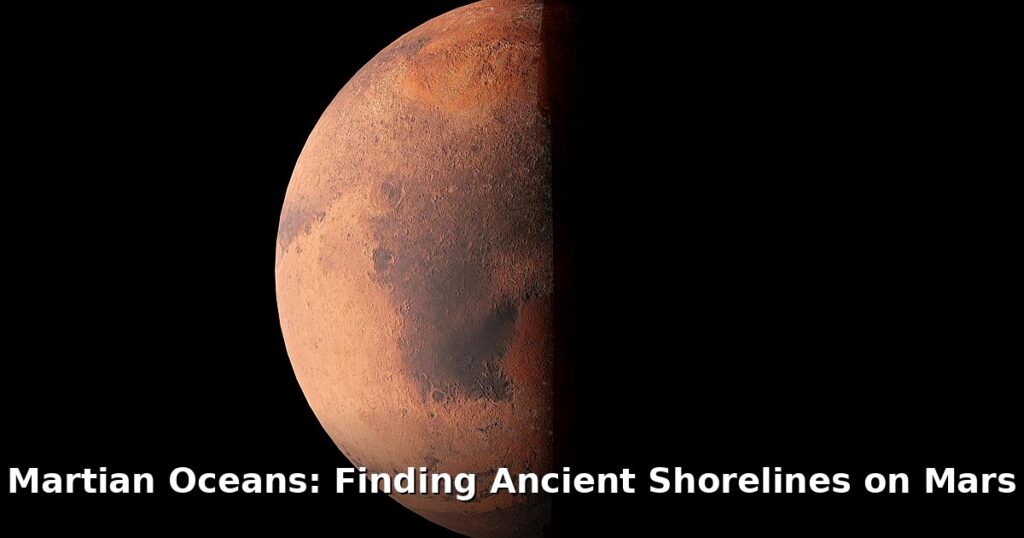

Imagine finding a seashell on a mountaintop. Pretty weird, right? That’s kind of what scientists are doing when they search for Martian oceans – piecing together clues from a planet that looks bone-dry today to figure out if it used to be a water world.
Table of Contents
- The Search for Martian Oceans: A Geological Detective Story
- Topographic Signatures: Clues from Elevation Data
- Geomorphological Features: Looking for Coastal Landforms
- Challenges and Controversies in Identifying Martian Oceans
- Future Missions and the Search for Further Evidence
- Frequently Asked Questions
The Search for Martian Oceans: A Geological Detective Story
Why all this fuss about water? Well, liquid water is essential for life as we know it. If Mars had oceans in the past, it dramatically increases the chances that life could have once existed there. Finding evidence of these ancient bodies of water is a key step in understanding Mars’ past habitability – or lack thereof.
Here’s what most people miss: But finding definitive proof after billions of years of geological activity isn’t easy. Think about how much Earth has changed over that time! Plate tectonics, erosion, volcanic eruptions – they all scramble the geological record. Mars may not have plate tectonics, but it’s had its fair share of impacts, dust storms, and volcanic activity. That’s a lot of history to sift through. Check out our guide on Sperm Whale Speech Patterns: What Scientists Discovered. We covered this in Creepy Headless Woman Photos: Prepare for Sleepless Nights.
One of the most important tools we have is remote sensing data. Orbiting spacecraft, like those equipped with high-resolution cameras and spectrometers, send back invaluable data. These instruments allow scientists to create detailed maps of the Martian surface, identify different minerals, and, crucially, spot potential ancient shorelines from hundreds of kilometers away. It’s like having a really, really powerful magnifying glass and being able to see things we could never see from Earth.
And it’s not just pretty pictures. Scientists use sophisticated software to analyze the data and create 3D models of the Martian surface. This allows them to see subtle changes in elevation that could indicate the presence of former coastlines.
Topographic Signatures: Clues from Elevation Data
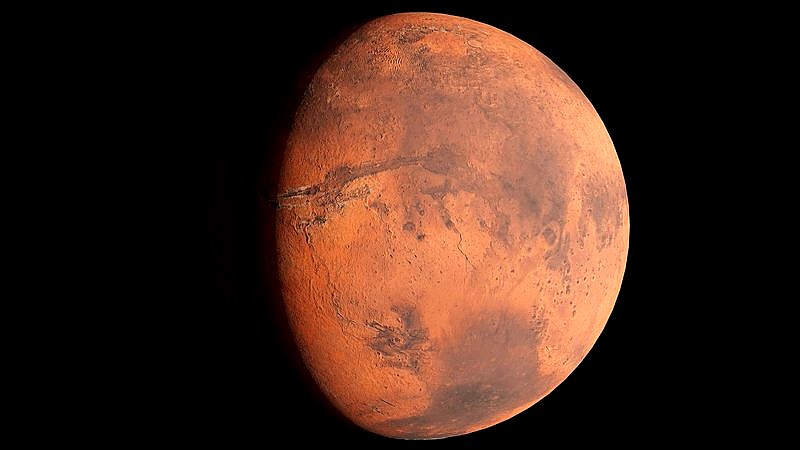
The truth is, Let’s talk about elevation data. It’s a game changer. Instruments like the Mars Orbiter Laser Altimeter (MOLA) aboard the Mars Global Surveyor spacecraft have been crucial. MOLA works by bouncing laser pulses off the Martian surface and measuring the time it takes for them to return. From this, scientists can precisely determine the elevation of different points on the planet. Big difference.
All that data is used to create topographic maps, which are essentially elevation maps. Think of those maps you see of Earth showing mountains, valleys, and plains. Now imagine one for Mars – but instead of just looking for mountains, we’re hunting for evidence of past sea levels.
Here’s how it works: If a large ocean existed on Mars for a significant period of time, it would have left behind a shoreline – a contour line representing a constant elevation. This would mark the boundary between the land and the water. Finding these contour lines at consistent elevations across large areas is strong evidence for a past sea level. They act as markers or benchmarks.
But, and this is a big but, it’s not always that simple. Other geological processes can create features that look like shorelines. Volcanic activity, for example, can create layered deposits that resemble terraces. Tectonic activity can uplift or deform the surface, creating ridges that might be mistaken for ancient coastlines. You really need to be careful.
Distinguishing between true shorelines and these other features requires careful analysis and consideration of the surrounding geology. Are the features consistent over long distances? Do they have the right shape and orientation? Are there other features nearby that support the idea of a shoreline, such as ancient river deltas or wave-cut platforms? All these things matter.
Looking for Mars Paleoshorelines
Fair warning: Finding Mars paleoshorelines is a tricky business, but it’s also incredibly exciting. The potential payoff – unlocking the secrets of Mars’ past habitability – makes all the hard work worthwhile.
Geomorphological Features: Looking for Coastal Landforms
Beyond elevation data, scientists also look for specific geomorphological features – landforms created by the action of water. These include things like ancient river deltas, terraces, and wave-cut platforms. Think about the features you see along Earth’s coastlines – similar features on Mars could be telltale signs of past oceans.
Ancient river deltas are particularly compelling. These are fan-shaped deposits of sediment that form where a river flows into a larger body of water. The famous Jezero Crater, where the Perseverance rover is currently exploring, is a prime example. It contains a well-preserved river delta, indicating that a lake once filled the crater. This is why Jezero Crater was chosen as the landing site!
Terraces are another important feature to look for. These are step-like landforms that can be created by the rise and fall of sea levels. As the water level changes, it erodes the land, creating a series of terraces at different elevations. Not ideal.
Wave-cut platforms are flat, gently sloping surfaces that are created by the erosive action of waves. These platforms are often found at the base of cliffs along coastlines. Finding similar features on Mars would be strong evidence for a past ocean.
By analyzing the distribution and orientation of these features, scientists can start to infer the extent of past oceans. For example, if you find river deltas all pointing towards a certain basin, it suggests that the basin was once filled with water.
Examples of Potential Shorelines
Some specific locations on Mars have attracted particular attention. Arabia Terra, for example, is a large region in the northern hemisphere that exhibits a number of features that could be ancient shorelines. Deuteronilus Mensae, another region in the northern hemisphere, also shows evidence of potential coastal landforms.
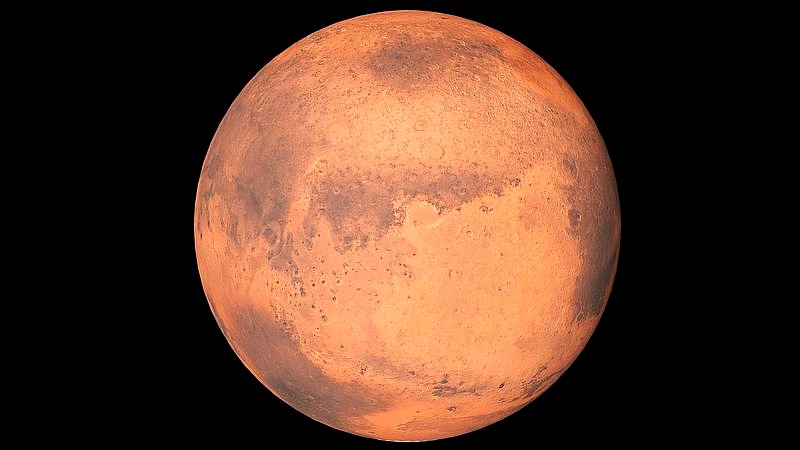
The truth is, One thing to bear in mind: the northern hemisphere of Mars is significantly lower in elevation than the southern hemisphere. Some scientists have proposed that a large ocean once filled the northern lowlands, covering a significant portion of the planet. The evidence is still being debated, but the possibility is certainly intriguing.
Challenges and Controversies in Identifying Martian Oceans
As you might expect, identifying ancient shorelines Mars comes with its fair share of challenges and controversies. One of the biggest difficulties is dating the age of potential shorelines. How do you know when a particular feature was formed? It’s not like you can just carbon-date a rock on Mars (well, not yet anyway).
Scientists rely on a variety of techniques to estimate the age of Martian features. One common method is crater counting. The more craters a surface has, the older it’s likely to be. By counting the number of craters on a potential shoreline, scientists can get a rough estimate of its age. But that method has its own problems — it’s not precise.
Another challenge is that there are often alternative explanations for observed features. For example, some features that look like shorelines could have been formed by glacial processes or volcanic activity. It’s crucial to carefully consider all the possible explanations before concluding that a feature is indeed an ancient shoreline.
And there’s plenty of debate within the scientific community about the existence and extent of past Martian oceans. Some scientists are convinced that the evidence is strong, while others are more skeptical. This is how science works! It’s a process of constant questioning, testing, and refinement.
You might not expect this, but But the debate itself is a good thing. It pushes scientists to gather more data, develop new analytical techniques, and refine their interpretations. The more we learn about Mars, the better equipped we will be to answer the question of whether it once had oceans. No joke.
Future Missions and the Search for Further Evidence
The search for evidence of evidence of water on Mars is far from over. Future Mars missions hold the potential to provide even more compelling evidence of past oceans. Sample return missions, for example, could bring back rocks and soil from potential shoreline locations. These samples could then be analyzed in Earth-based labs, providing much more precise dating and compositional data than we can obtain remotely. Imagine the possibilities! Not even close.
Ground-penetrating radar is another promising technology. This type of radar can be used to detect subsurface water ice or sedimentary layers. If there are buried sediments along suspected paleoshorelines, that would be huge.
And of course, there’s the continued exploration by robotic rovers. These rovers can be sent to suspected paleoshorelines to explore them in greater detail. They can take high-resolution images, analyze the composition of rocks, and even drill into the surface to look for evidence of past water activity.
These missions, and the data they collect, will be crucial in piecing together the puzzle of Mars’ past. Will we find definitive evidence of ancient oceans? Only time will tell. But the search is on, and the potential rewards are enormous. Learn more about ongoing and future missions from NASA’s Mars Exploration Program.
Frequently Asked Questions
What surprised me was that Let’s tackle some common questions about the search for Martian oceans.
Q: what’s the biggest piece of evidence for oceans on Mars?
A: The biggest hints are the topographic features that look like ancient shorelines and sedimentary deposits found in certain regions. These suggest a large body of water existed for a period of time. Huge.
Q: How long ago could oceans have existed on Mars?
A: Scientists estimate that if Mars had oceans, they likely existed billions of years ago, during the planet’s early history when conditions might have been warmer and wetter.
Q: Why did Mars lose its water?
A: The exact reason is still under investigation, but it’s thought that Mars lost its global magnetic field, which allowed the solar wind to strip away the atmosphere and eventually the water. Some water is now locked as ice in the polar regions.
Look, Q: Are there still any signs of water on Mars?
A: Yes, there’s evidence of water ice at the poles and in the subsurface. Recurring slope lineae, dark streaks that appear on slopes during warmer months, might also indicate the presence of liquid water, although this is still debated.
The quest to understand Martian geology and its watery past is one of the most exciting scientific endeavors of our time. As technology advances and new missions are launched, we’re sure to uncover even more clues about Mars’ fascinating history. The next big discovery could be just around the corner.