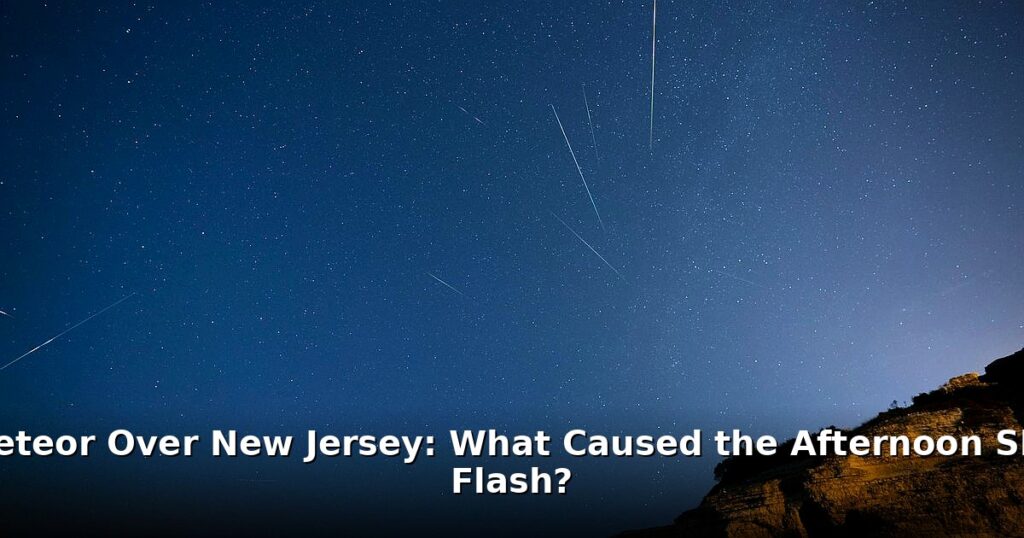

Did you see it? I almost didn’t. I was out back, trying to wrangle my tomato plants (those things are determined to take over the entire garden), when a flash of light caught my eye. I thought maybe a transformer blew, but there was no bang, no power outage. Just… light. Turns out, a lot of other folks saw it too. Social media went wild with reports of what turned out to be a meteor over New Jersey and several other eastern states.
Table of Contents
Reports of a Bright Flash: The Meteor Over New Jersey
The initial reports started flooding in around, oh, 2:30 PM Eastern Time. People described seeing a brilliant streak of light, moving generally from north to south. Now, I’m no astronomer, but even I know that’s not a normal Tuesday afternoon occurrence. Twitter, Facebook, Nextdoor — all lit up with people asking, “What was that bright flash in sky NJ?”. Some folks described it as white, others as having a greenish or bluish tint. The intensity varied depending on location, but the consensus was clear: something significant happened.
What surprised me was that One person on my local Facebook group swore it was a UFO. Another thought it was a reflection off a plane. But the sheer number of reports, combined with the descriptions, pointed to something else entirely. It’s not every day you see something like this! I’ve seen my share of weird stuff in the sky, but this was different. Check out our guide on Artemis 2 Lunar Mission: NASA’s Record-Breaking Moon Flight. We covered this in NASA Budget Cuts: Isaacman Defends Controversial Proposal.
Was It Really a Meteor? Identifying Space Debris
So, what exactly is a meteor, anyway? And how can you tell if what you saw was the real deal? The terms can be confusing, so let’s break it down.
- Meteoroid: This is the small rock or particle floating around in space. Think of it as space dust waiting for its big moment.
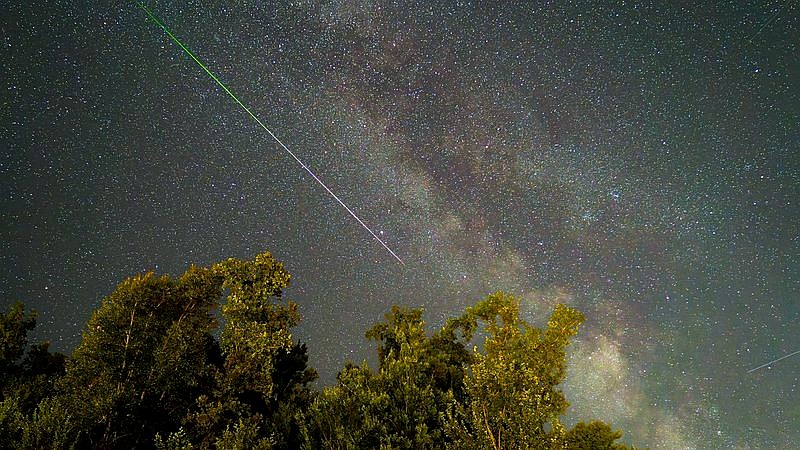
- Meteor: This is what happens when that meteoroid enters Earth’s atmosphere and starts burning up. Friction is a bear. That burning creates the bright streak of light we call a “shooting star.”
- Meteorite: If any of that meteoroid survives the fiery descent and actually lands on Earth, it becomes a meteorite. Finding one is like winning the cosmic lottery.
Differentiating between a meteor and, say, an airplane can be tricky, especially during the day. Airplanes have blinking lights and move relatively slowly. A meteor, on the other hand, is incredibly fast, produces a very bright, often colorful flash, and typically disappears within seconds. A drone? Forget about it. This thing was way faster and brighter than any drone I’ve ever seen. The afternoon meteor sighting NJ quickly became the talk of the town.
Daytime Meteors: A Rare Treat
Daytime meteor sightings aren’t as common as their nighttime counterparts. The sun’s glare usually washes them out. To see one during the day, it has to be relatively large and bright. This suggests the object that blazed across the eastern seaboard was substantial – or at least very reflective. I’m glad I didn’t miss it!
Meteor Sightings Across Eastern States: Who Else Saw It?
It wasn’t just New Jersey that got a show. Reports came in from Pennsylvania, New York, Maryland, and even as far south as Virginia. The eastern states meteor event was widely witnessed, sparking curiosity and wonder up and down the coast. And, naturally, plenty of speculation.
Why was it so widely visible? Several factors could have played a role. The altitude at which the meteoroid entered the atmosphere, its size, and its composition all affect its brightness and visibility. A larger object burning up higher in the atmosphere would be visible over a much wider area.
The American Meteor Society (AMS) is the go-to organization for collecting and analyzing meteor sighting data. They rely on reports from everyday folks like you and me to track these events and learn more about the space debris that’s constantly bombarding our planet. Pretty cool, huh?
What To Do If You Spot Space Junk: Reporting Meteor Sightings
Spotted something unusual in the sky? Don’t just post it on social media (though, by all means, do that too!). Report it to the American Meteor Society. Accurate reporting is crucial for scientists to analyze these events properly. Here’s what they need:
- Time: The exact time you saw the object. Even an estimate is helpful.
- Location: Your precise location. GPS coordinates are ideal, but even your town and state are useful.
- Direction: The direction the object was traveling (e.g., from north to south, east to west).
- Brightness: How bright was it compared to other objects in the sky (e.g., brighter than the moon, as bright as Venus)?
- Color: What color was the object?
- Duration: How long did you see it for?
Why does all this matter? Well, analyzing these reports helps scientists understand the composition and origin of meteoroids, track their trajectories, and even assess potential risks from larger objects. Plus, it’s just plain interesting to learn more about the stuff that’s floating around out there!
Cost of Meteor Finding/Identification Services
Okay, let’s say a piece of that meteor did make it to Earth and landed in your backyard. What then? Well, first, be careful! Don’t just pick it up with your bare hands. You don’t know what it’s or what it might contain. Second, you might be wondering if it’s worth paying someone to identify it.
Professional meteorite identification services can range from a few hundred dollars to several thousand, depending on the complexity of the analysis. And yes, it’s a real thing. Several universities and specialized labs offer this service. They’ll perform tests to determine the object’s composition, structure, and origin. The cost depends on the extent of testing needed.
Is it worth it? That depends on you. If you’re just curious, maybe not. But if you think you’ve found something truly rare or valuable, or if you’re concerned about potential hazards, then paying for professional identification might be a good idea. Think of it as peace of mind. Plus, you’ll have a cool story to tell.
But I’ll tell you this, If you find a meteorite the land on your land, its yours to keep!
So, keep your eyes on the skies, folks! You never know when you might witness the next amazing celestial event. And remember to report it!
Frequently Asked Questions
what’s the difference between a meteor, meteoroid, and meteorite?
A meteoroid is a small rock or particle in space. When it enters Earth’s atmosphere and burns up, it becomes a meteor (shooting star). If any of it survives the fall and lands on Earth, it’s a meteorite.
Are daytime meteor sightings rare?
Here’s the thing — Yes, daytime meteor sightings are less common than nighttime sightings because the sun’s brightness usually obscures them. Larger, brighter meteors are more likely to be seen during the day.
What causes a meteor to appear so bright?
I’ll be honest — The brightness of a meteor depends on its size and speed. Larger meteors entering the atmosphere at high speeds create more friction and heat, resulting in a brighter flash.
Is it dangerous to be near a meteor?
The truth is, Meteors themselves aren’t dangerous, as they burn up in the atmosphere. However, if a meteorite lands nearby, it’s best to observe it from a safe distance until it can be properly identified and handled. Don’t be a hero.
How can I tell the difference between a meteor and an airplane?
Meteors are characterized by their speed, bright flash, and often a visible tail. Airplanes move much slower and have blinking lights. Also, meteors usually disappear quickly. Big difference.